
On The Go Tours
Our agents are waiting to chat to you...
Are you a Travel Agent or Customer?
Do you have an booking reference?
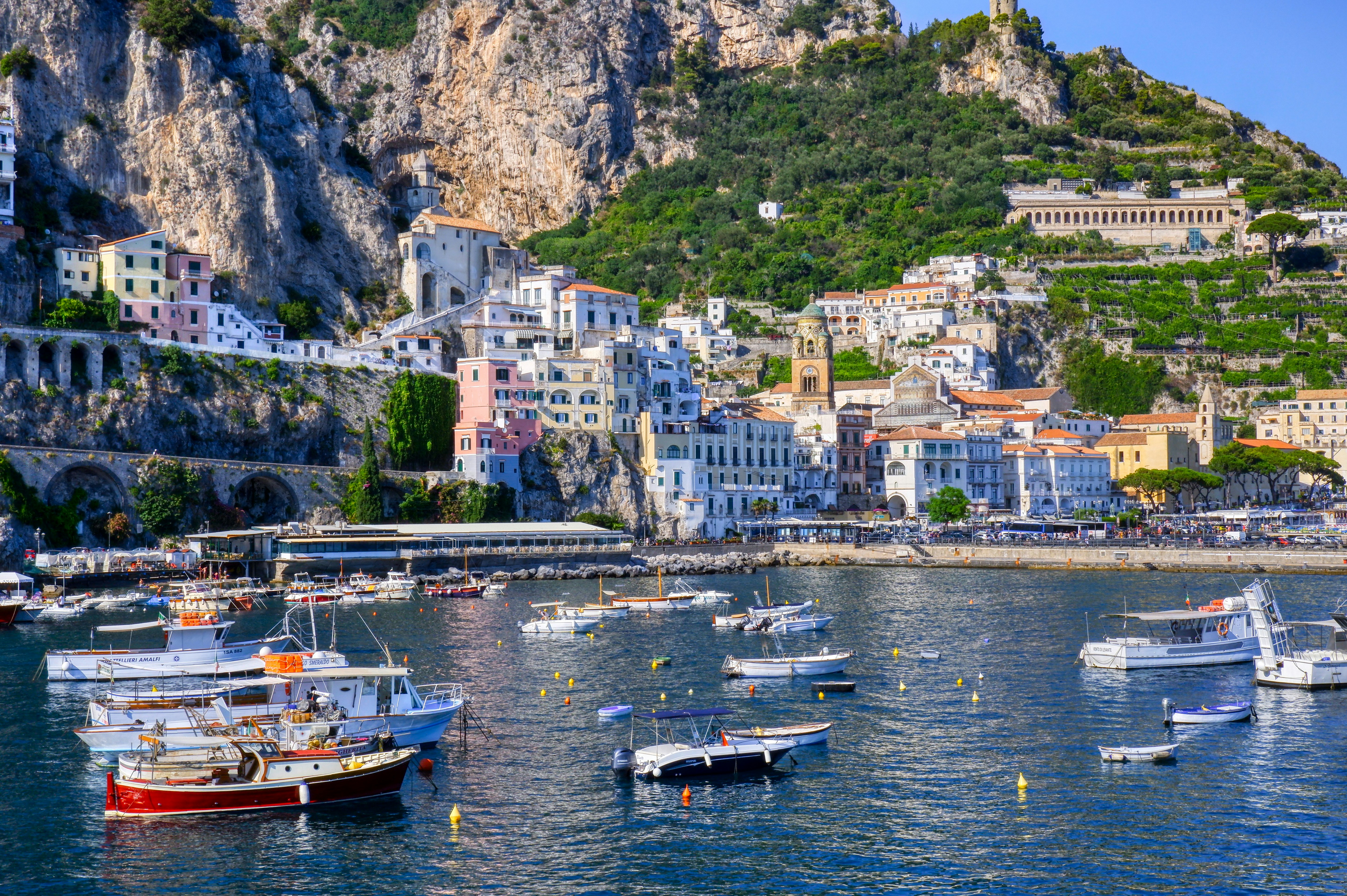
Cruising the Cliffs of the Amalfi Coast
Sea caves, a fjord cut into the rock and the Sirens' islands, seen the way the coast was meant to be seen, from the water.
Cruising the Cliffs of the Amalfi Coast
Sea caves, a fjord cut into the rock and the Sirens' islands, seen the way the coast was meant to be seen, from the water.
When do you want to go?
2026
I'm flexible
Passengers
Adults (18+)
Children (0 - 17)
A coastline made to be seen from the sea
The Amalfi Coast was built to be seen from the water. Cruising the Amalfi Coast, the towns arrive slowly from the sea, stacked up cliffs that fall straight into the Tyrrhenian, their pastel houses reading as neat rows only from a boat. The coast road threads the same cliffs, but it looks inland as often as out, and it cannot reach the sea caves, the narrow clefts or the offshore islands at all. From a boat you follow the shoreline the way the fishermen and the old Greek and Roman sailors did, past Positano, Praiano and Amalfi, into corners the road never sees.
The Emerald Grotto at Conca dei Marini
Amalfi Coast
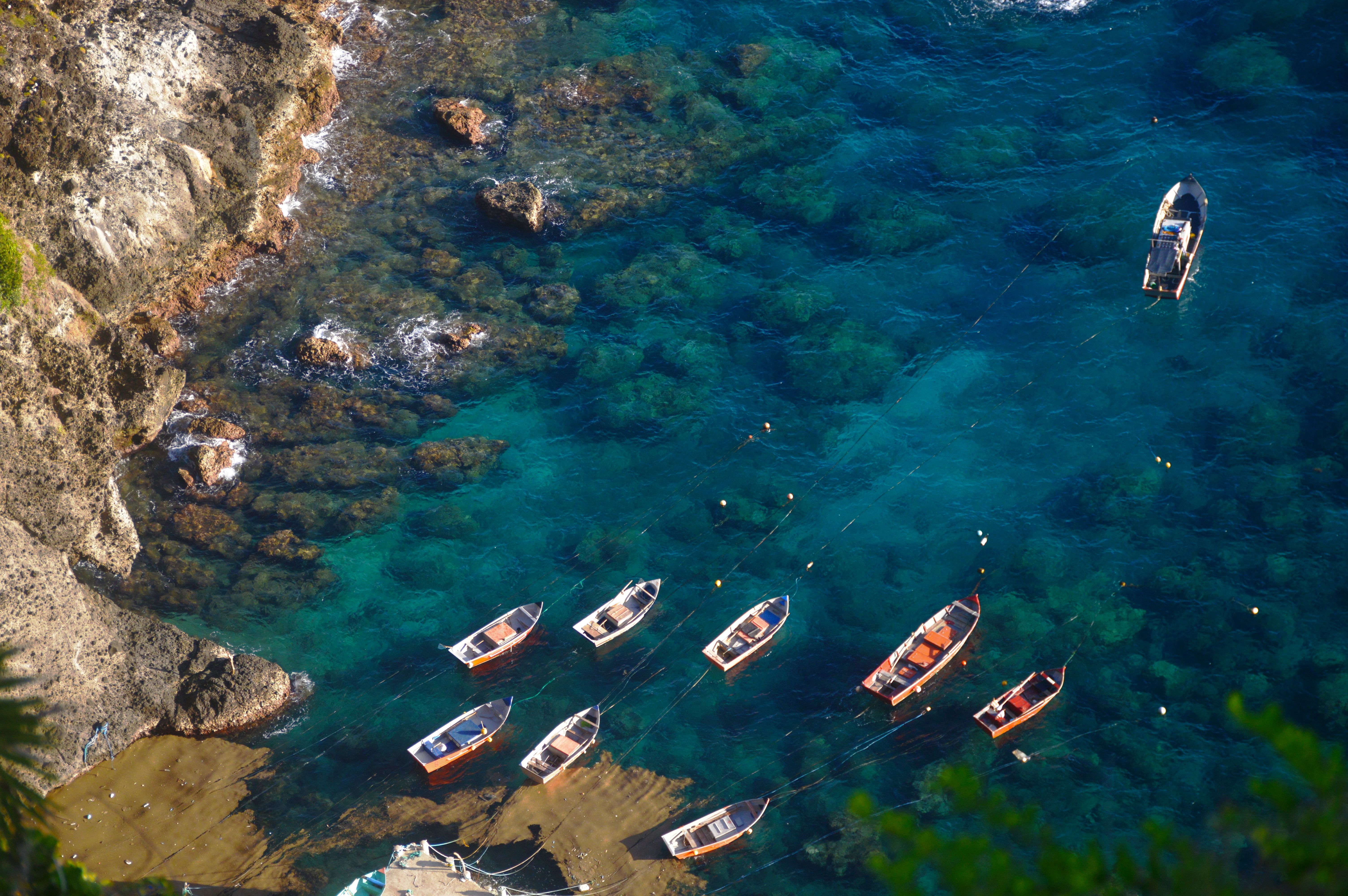
The entrance is easy to miss. A low opening in the limestone between Amalfi and Positano, near the village of Conca dei Marini, gives no sign of what sits behind it. A boatman rows you in through the gap, and once your eyes adjust the water turns a flat, lit green, the colour thrown up from below where sunlight enters through a submerged fissure in the rock. The green sits on the walls, on the oars, on the roof of the cave. This was dry land once. The grotto is a karst cavity in the Lattari limestone, and its stalactites and stalagmites grew in open air, some now joined into columns close to ten metres tall. Over thousands of years the sea rose and flooded the floor, leaving the formations half drowned and the whole chamber, roughly sixty metres across and twenty-four high, part cave and part pool. A local fisherman, Luigi Buonocore, is credited with rediscovering it in 1932, though villagers had long told stories of a green cave no one could find.
On the seabed, about four metres down, sits a ceramic nativity scene from Vietri, placed in 1956 and clearly visible through the water. Each Christmas divers descend to it in a small underwater procession, and over the years the group of figures has grown. The light is the whole point, so timing matters. Late morning to early afternoon, when the sun sits over the underwater opening, is when the green runs strongest, and by late afternoon it dims. Rough seas close the grotto without warning, even in summer, so a flat, clear day is worth waiting for. You reach it by taxi boat from Amalfi in around ten minutes, or by a lift down from the coast road, and the rowing boats inside carry a small group at a time for a slow turn of fifteen or twenty minutes.
The Fiordo di Furore, a cleft in the cliff
Fiordo di Furore
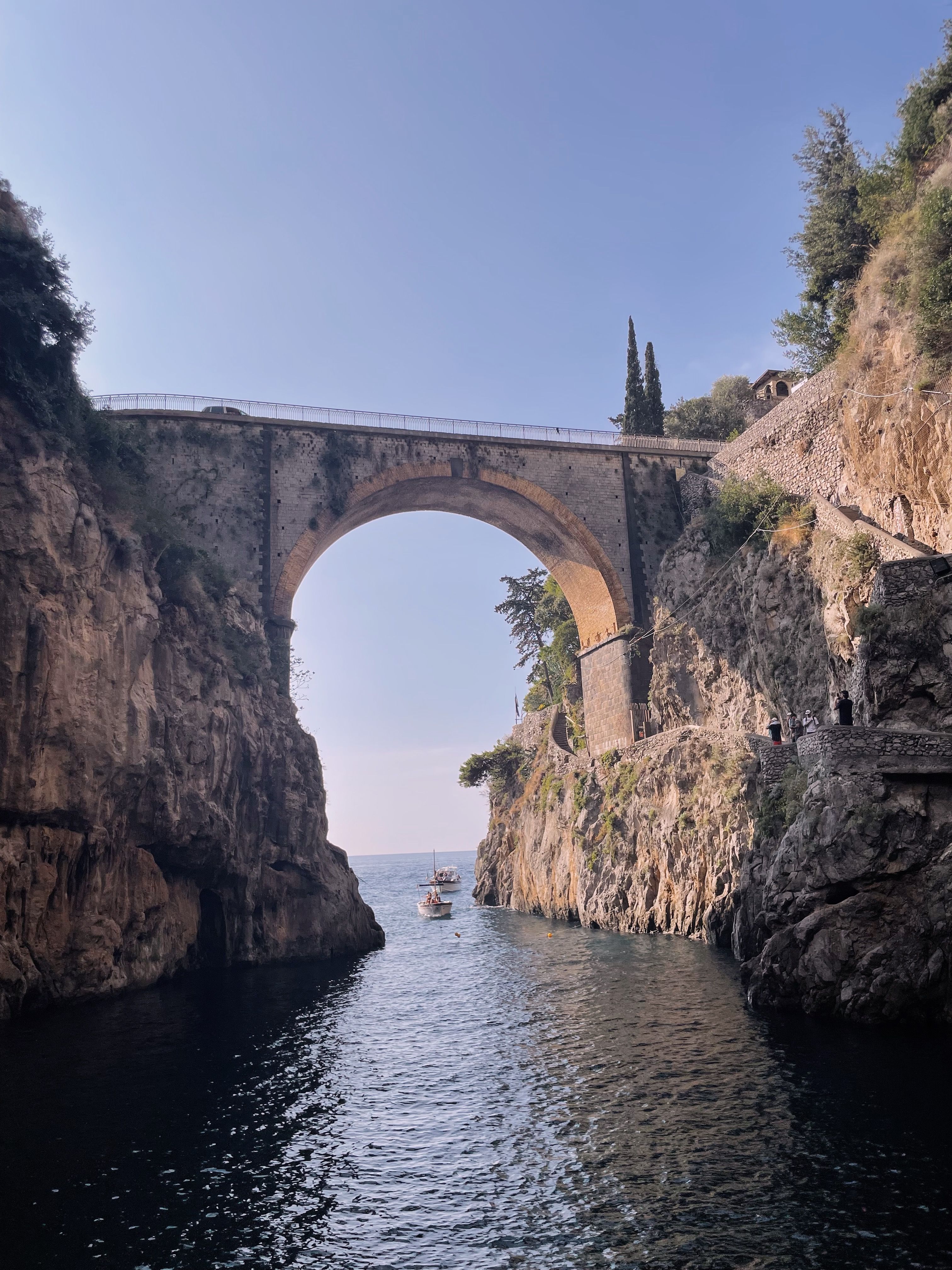
Between Praiano and Conca dei Marini the cliffs split. A narrow gorge cuts back into the rock, and unless you are level with it from the sea you would never know it was there. This is the Fiordo di Furore. Despite the name it is not a true fjord, which glaciers carve. This one was cut by the Schiato stream running down from the Agerola plateau, a drowned river valley the Italians call a ria. A single arched bridge carries the coast road across the mouth of the gorge, about thirty metres above the water. Beneath it a pebble beach barely twenty-five metres wide sits at the foot of the cliffs, backed by a handful of old fishermen's houses, the monazzeni, built into the rock. Some now hold a small museum tracing the paper mills and watermills that once ran on the Schiato. From a boat the beach and the houses reveal themselves only in glimpses, framed by the bridge and the sheer walls, which is why the fjord reads best from the sea.
The village of Furore itself sits high on the slopes above and has no real centre, which has earned it the nickname of the town that isn't there. In the late 1940s the director Roberto Rossellini filmed here with Anna Magnani, and one of the cottages by the water was hers. Each summer the bridge turns into a diving platform. The Marmeeting high diving championship brings divers who leap around twenty-eight metres from the arch into the narrow strip of sea below, usually in July. Boats generally cannot land inside the gorge, and the water there can get busy and choppy in season, so the clearest view is the one from just offshore.
Positano and the Li Galli islands from the sea
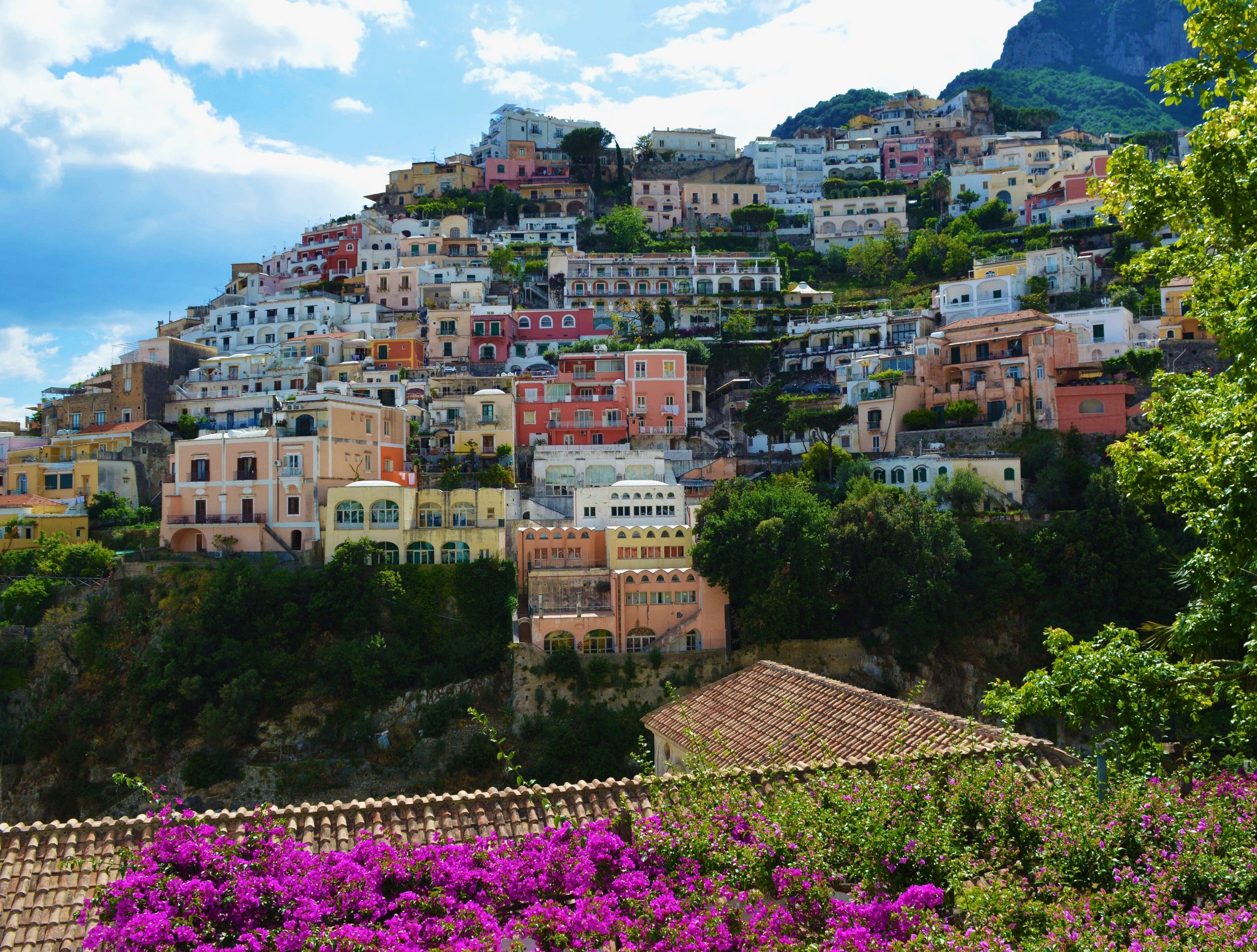
Positano
Positano is made to be approached by boat. Coming in from the water, the town rises in tiers of peach, coral and lemon houses stacked up the cliff to a single landmark, the majolica dome of Santa Maria Assunta, its yellow, green and blue tiles catching the light above the rooftops. John Steinbeck wrote an essay about the place in the 1950s, staying in a room just below that church. At the foot of it all is Spiaggia Grande, the dark sand beach where the boats come in. Inside the church, above the altar, hangs a thirteenth-century Byzantine icon of a Black Madonna. Local tradition ties the town's name to it, a ship becalmed offshore, a voice from the icon calling posa, posa, put it down, and the town that grew where it was laid ashore.
A few kilometres south-west, three rocky islets break the surface between Positano and Capri. These are the Li Galli, and their older name, Le Sirenuse, gives away their story. The Greek geographer Strabo placed the Sirens of the Odyssey here, on rocks where currents once wrecked passing ships. The largest islet, Gallo Lungo, is shaped like a leaping dolphin from above and carries an old watchtower and the remains of a Roman house. The islands' recent history is stranger still. The dancer Leonide Massine bought Gallo Lungo in 1924 and turned the tower into a home with a dance studio. After him, Rudolf Nureyev bought the islands in 1988 and kept a mirrored studio there, practising as his health failed, until he left for the last time in 1992.
Cetara and the working end of the coast
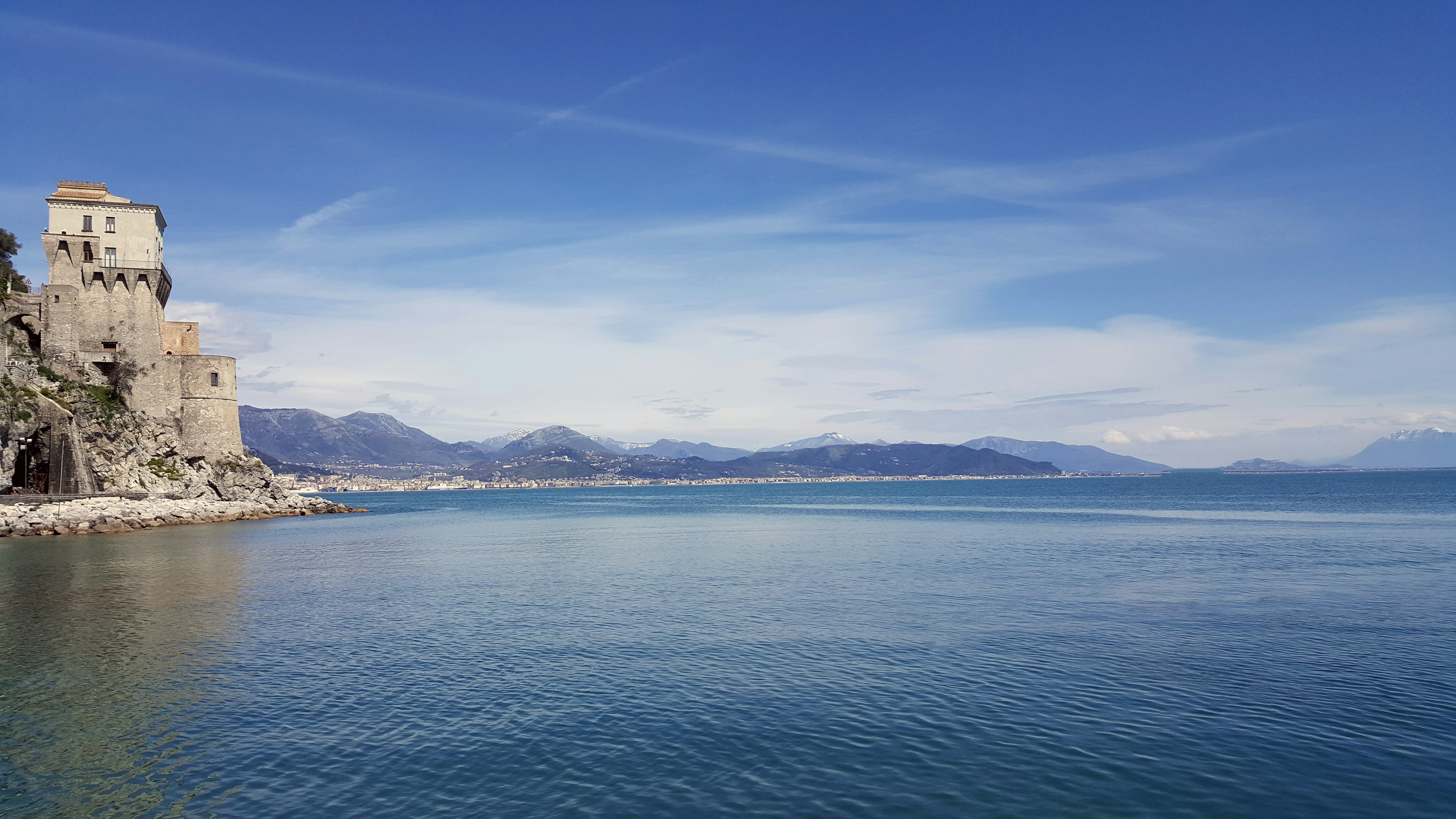
Cetara
The eastern end of the coast is where the crowds thin. Past Amalfi, beyond Minori and Maiori, the last village before Vietri sul Mare is Cetara, and it still works for a living. Its small harbour fills each morning with fishing boats, and a sixteenth-century watchtower, once part of the coast's warning system against Saracen raids, stands over the beach. Cetara has fished tuna and anchovies for centuries, so much so that its name is thought to come from cetaria, the Latin for a tuna fishery. The anchovies come from the Gulf of Salerno, caught between late March and July, often at night under the lampare, the lamps that draw the fish to the surface.
What the village is known for is colatura di alici. Salted anchovies are layered in wooden vats and left for months, and the amber liquid that drains off is collected, filtered and bottled. It descends from garum, the fermented fish sauce the Romans built a trade on, and local tradition holds that monks in a Cetara convent rediscovered the method by accident. Since 2020 it has carried protected status. The classic way to eat it is the simplest, stirred through spaghetti with oil, garlic and parsley and no added salt, a dish families here traditionally serve on Christmas Eve. Cetara reaches out towards the sea rather than up a cliff, so from the water it reads as a low cluster of houses around a church with a tiled cupola, boats pulled up on the sand. It has stayed this way partly because it never leaned on visitors the way Positano and Amalfi did. Spring and autumn are the quietest times to arrive, when the fleet is out and the town is going about its ordinary business.
Where the Amalfi Coast fits in a wider trip
The Amalfi Coast sits within easy reach of Naples, Pompeii and the island of Capri, so it usually forms one leg of a wider trip through southern Italy. Seeing it on a small group tour takes the narrow coast road off your hands and frees you to watch the cliffs and villages from the water, where the coast makes the most sense.

Frequently asked questions
Can you cruise the Amalfi Coast by boat?
Yes. Cruising the Amalfi Coast by boat is one of the most rewarding ways to see it, since the towns, sea caves and offshore islands were built around or shaped by the sea and many are hard or impossible to reach from the coast road. Boats work the whole coastline, roughly from Positano in the west to Cetara in the east, mainly from spring to autumn.
Can you go inside the Emerald Grotto by boat?
Yes. Small rowing boats take visitors inside the Emerald Grotto at Conca dei Marini, entering through a low opening in the cliff. You reach the grotto by taxi boat from Amalfi in about ten minutes, or by a lift down from the coast road. It closes in rough seas, and the green light is strongest from late morning to early afternoon.
Can you visit the Li Galli islands near Positano?
You can see the Li Galli islands up close by boat, but you cannot land on them. The three islets, about four kilometres south-west of Positano, are privately owned and sit within the Punta Campanella marine reserve. Boats circle them so you can take in the old watchtower and villa on Gallo Lungo from the water.
Is the Fiordo di Furore worth seeing from a boat?
Yes. The Fiordo di Furore is a narrow cleft in the cliffs between Praiano and Conca dei Marini, and it reveals itself best from the sea, framed by the high arched bridge crossing its mouth. Boats usually cannot enter the gorge itself, but the view from just offshore takes in the pebble beach, the old fishermen's houses and the bridge, which hosts a high diving championship each summer.