
On The Go Tours
Our agents are waiting to chat to you...
Are you a Travel Agent or Customer?
Do you have an booking reference?
Visiting KeralaDiscover the Best of Kerala: A Journey Through Nature, Culture, and Adventure
Visiting KeralaDiscover the Best of Kerala: A Journey Through Nature, Culture, and Adventure
When do you want to go?
2026
I'm flexible
Passengers
Adults (18+)
Children (0 - 17)
Welcome to Kerala
Kerala is one of the most distinctive regions of southern India, known for its palm-lined backwaters, lush hills, wildlife reserves and Arabian Sea coastline. The state combines tropical landscapes with historic towns, traditional arts, distinctive food and a slower pace of travel.
Summer (pre-monsoon)
March to May
The hottest, stickiest stretch of the year along the coast. Temperatures climb from March, the warmest part of the year, and can reach 35°C to 36°C before the monsoon breaks, with high humidity making it feel warmer still. The lowlands and backwaters can be hard going in the afternoons, which is exactly when the cooler hill stations come into their own.
Southwest monsoon
June to September
Kerala's main rains arrive, heaviest in June and July. June is the wettest month by a wide margin, and the downpours are frequent and dramatic rather than constant, often clearing to humid, green afternoons. Temperatures actually ease a little in the rain, and the landscape turns its lushest. Fewer travellers visit, so it is the quietest and most atmospheric season for those who do not mind getting wet.
Post monsoon
October to November
A softer, second monsoon phase as the northeast monsoon takes over. Rainfall is lighter than during the main monsoon, the countryside stays vividly green and temperatures sit in the high 20s to low 30s. It is a lovely shoulder window, quieter than winter but drying out and warming up, and a good time for the backwaters before the peak-season crowds arrive.
Winter (dry season)
December to February
This is Kerala at its most comfortable and the reason most visitors come now. The weather stays soothing, with temperatures roughly between 23°C and 30°C, humidity eases and the rain has largely cleared. Days are warm and bright, evenings pleasant, and the backwaters, beaches and hills are all at their best. It is the peak season, so expect the sights to be busier.
The Basics
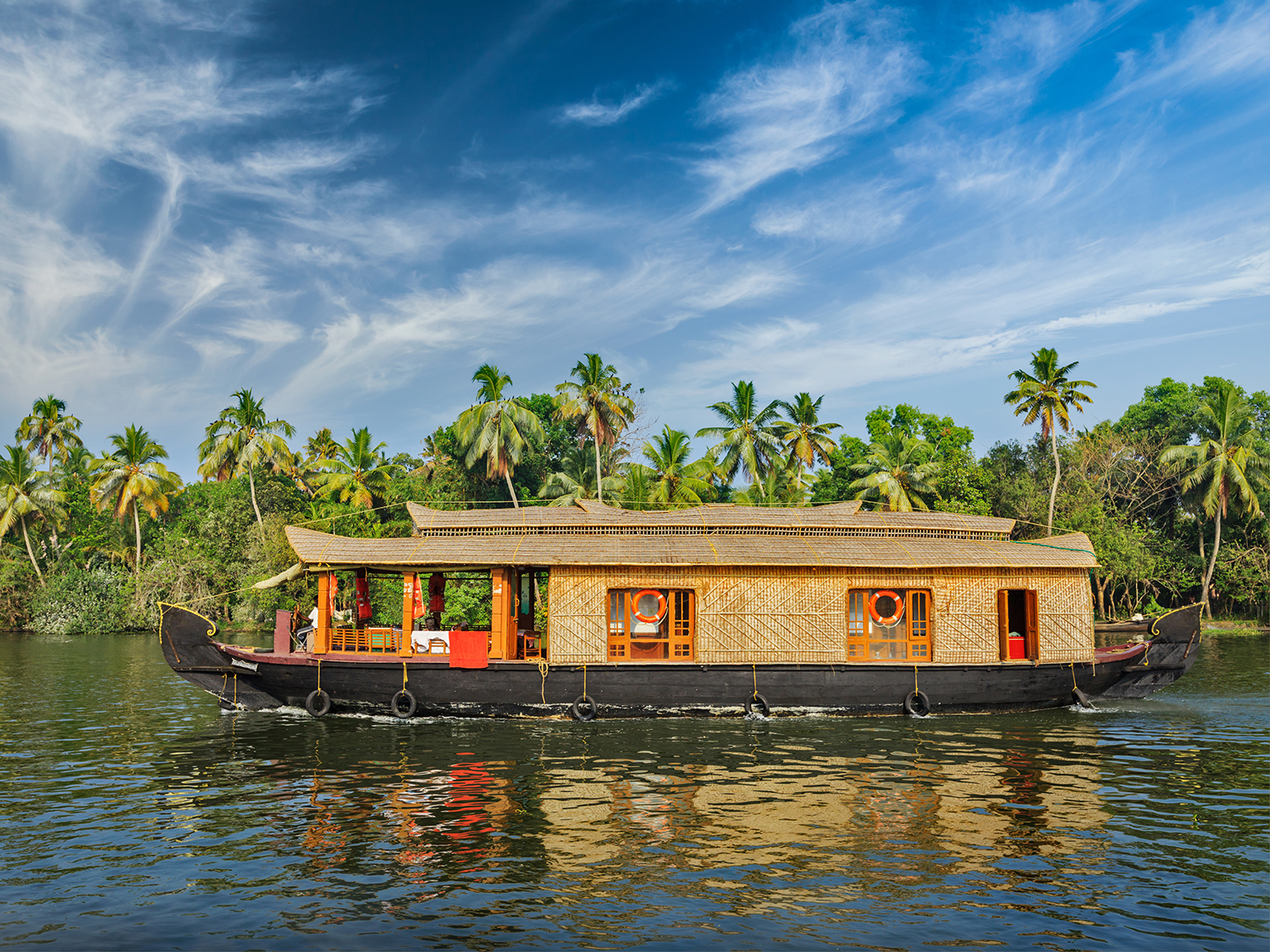
Kerala is best known for its backwaters, a network of canals, lagoons and waterways running through the lowlands behind the coast. An overnight stay on a traditional houseboat is one of the most characteristic ways to experience this landscape, allowing you to see villages, paddy fields and coconut palms from the water.
Away from the backwaters, Kerala's landscape changes considerably. The Western Ghats rise into the interior, where tea plantations, spice-growing areas and forested hills provide a cooler contrast to the coast. Munnar is particularly associated with its tea-growing landscape, while the forests around Periyar are known for their wildlife. Kerala also has a long history of international trade. Kochi, particularly the historic area of Fort Kochi, reflects the state's connections with traders and colonial powers and is known for features including its Chinese fishing nets and historic buildings.
Along the Arabian Sea, Kerala's coastline is dotted with beaches and coastal towns. Varkala and Kovalam are among the best-known places for combining the coast with a longer Kerala itinerary. The state's identity extends beyond its scenery. Kerala is known for its cuisine, festivals, religious traditions and performing arts, including Kathakali, a highly distinctive form of dance-drama.
Kerala is sometimes called God's Own Country, a nickname that originated as part of a tourism campaign. Its exceptionally green appearance is helped by the state's tropical climate and two monsoon seasons, which sustain its coconut palms, paddy fields, forests and plantations.

How long you need?
Seven days can provide a good introduction to Kerala. This gives you enough time to combine several of the state's main environments, such as Kochi, the backwaters and either the hill country or a wildlife area, without spending the entire trip travelling between destinations.
With around ten days, you can explore at a more relaxed pace and include more of Kerala's contrasting landscapes. This could mean combining the backwaters, hills, wildlife and coast, or spending longer in fewer places.
If Kerala is part of a wider trip around India, a shorter visit of three or four days can focus on one particular aspect of the state, such as the backwaters, before continuing elsewhere.
The amount of time you need ultimately depends on whether you want to see several different parts of Kerala or spend longer getting to know a smaller area.

When to go
The most popular period to visit Kerala is roughly November to March, when conditions are generally drier and more comfortable for sightseeing. These months are particularly suitable for combining inland sightseeing with time on the coast.
The monsoon season, which begins around June, brings substantial rainfall but also produces some of Kerala's greenest scenery. Visitor numbers can be lower, and the season coincides with events such as the traditional snake boat races.
The hotter period before the monsoon can also be useful for wildlife watching, as animals may congregate around remaining water sources as conditions become drier. There is no single best time for every traveller. The ideal season depends on whether your priority is comfortable sightseeing, beaches, wildlife, cultural events or experiencing Kerala during the monsoon.

Travelling Around Kerala
Kerala's main attractions are spread across several distinct areas, so travelling between destinations forms an important part of planning a visit. The backwaters, hill country, wildlife areas and coast each offer a different experience, and trying to include too many destinations in a short trip can make the journey feel rushed.
For a first visit, it can be useful to think of Kerala in terms of four broad experiences:
- Backwaters — canals, lagoons, villages, paddy fields and houseboats
- Hill country — tea plantations, spice-growing areas, forests and cooler temperatures
- Wildlife — forest reserves and opportunities to see Kerala's native animals
- Coast — beaches, seaside towns and the Arabian Sea
Kochi provides an additional historical and cultural dimension and can work well as an arrival point or starting place for exploring the state.
What to Expect from Kerala
Kerala is generally better suited to slow travel than to an itinerary packed with activities. Some of its most memorable experiences involve simply spending time in a particular setting rather than moving constantly between attractions.
A typical visit might include a peaceful morning on the backwaters, time among the tea plantations, an evening performance of traditional arts or several days on the coast.
Food is also an important part of experiencing Kerala. The state's cuisine has its own character, with rice, coconut, spices, seafood and vegetarian dishes featuring prominently.
Visitors should also expect considerable regional variation. The experience of staying in historic Kochi is very different from spending time in the Western Ghats or staying beside the backwaters.
Frequently asked questions
Is Kerala a good place to start a trip to India?
Yes, Kerala is one of the easier introductions to India, which is part of why so many first-time visitors begin here. The pace is slower than the northern cities, the state is compact, and a week covers the backwaters, hills and coast without long days on the road. It works equally well as a calm finish after a busier northern leg.
Should you combine Kerala with the rest of India?
Kerala pairs naturally with a longer India trip rather than standing alone. Many travellers add it to the Delhi, Agra and Jaipur circuit for a change of pace, using a short taster like the 3-day Keralan Backwaters, while others give the south a week or more of its own. How you split the time depends on how long you have and whether you want breadth or depth. See the wider range of India tours for the options.
Do Kerala tours include a houseboat stay?
A night on the backwaters is the centrepiece of most Kerala trips, so a houseboat or backwater stay features on itineraries such as Captivating Kerala and Kerala Discovery. The boat, the crew and the meals on board are arranged as part of the trip, so there is nothing to organise on the day. If the backwaters are your priority, look for an overnight cruise on the itinerary rather than a short daytime one.
Does the monsoon spoil visiting Kerala?
No, visiting Kerala during the monsoon is a different experience rather than a washout. The rain from June to September is heavy but often comes in bursts, and it brings the greenest scenery, thinner crowds and the snake boat races. The drier months from November to March are more reliable for sightseeing and beach time, so the season to choose depends on what you want from the trip.
Is Kerala a good honeymoon destination?
Yes, Kerala is a popular honeymoon choice, and its slower rhythm is much of the reason. A houseboat on the backwaters, a quiet stay in the tea country and a few days on the coast make an easy, unhurried route for two. A private tour gives couples the most freedom over dates and pace, though the smaller group trips work well too. Itineraries like the 8-day Captivating Kerala combine the settings most couples are after.
Is Kerala suitable for families with children?
Kerala suits families who want an active but not exhausting trip. The backwaters, spice farms, elephants at Periyar and easy beach days give children plenty to take in, and the touring days are shorter than on a northern India trip. A private tour is usually the better fit for a family, since the pace and the stops can be built around younger travellers. Confirm any minimum ages on the individual itinerary before booking.

