On The Go Tours
Our agents are waiting to chat to you...
Are you a Travel Agent or Customer?
Do you have an booking reference?
Visiting Rajasthan
How the cities compare, what the road between them is like, and the food and traditions you meet along the way
Visiting Rajasthan
How the cities compare, what the road between them is like, and the food and traditions you meet along the way
When do you want to go?
2026
I'm flexible
Passengers
Adults (18+)
Children (0 - 17)
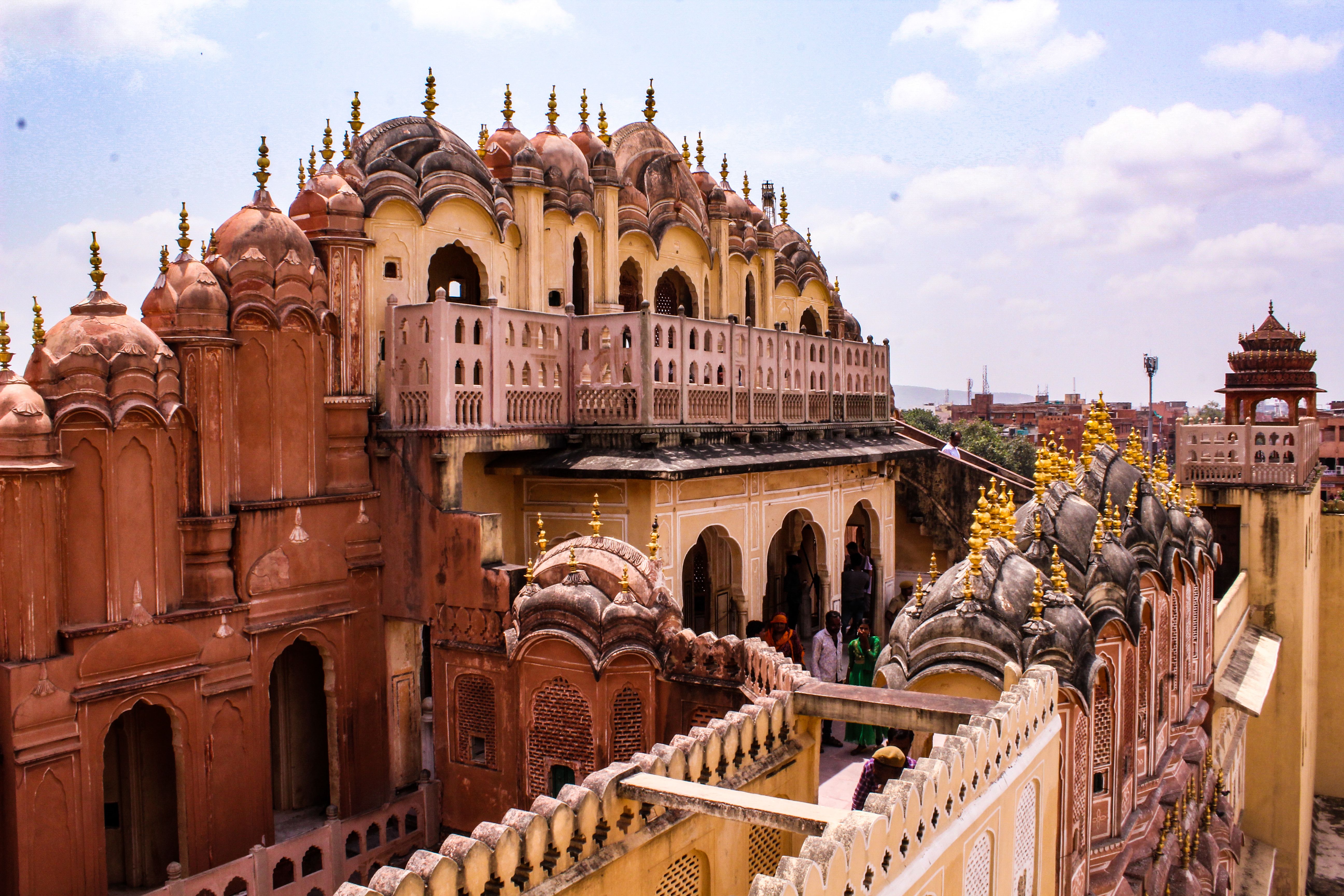
Visiting Rajasthan is less about one famous sight than about how differently its cities feel. Jaipur is planned and busy. Udaipur is built around water, Jodhpur lives in the shadow of a single fortress, and Jaisalmer rises out of the Thar Desert in yellow sandstone.
Most people arrive expecting forts, and there are plenty. Fewer expect the painted courtyards of Shekhawati's merchant houses, a stepwell cut 13 storeys into the ground, or the quiet of a desert camp once the last lamp goes out.
Rajasthan's cities compared and where to spend your time
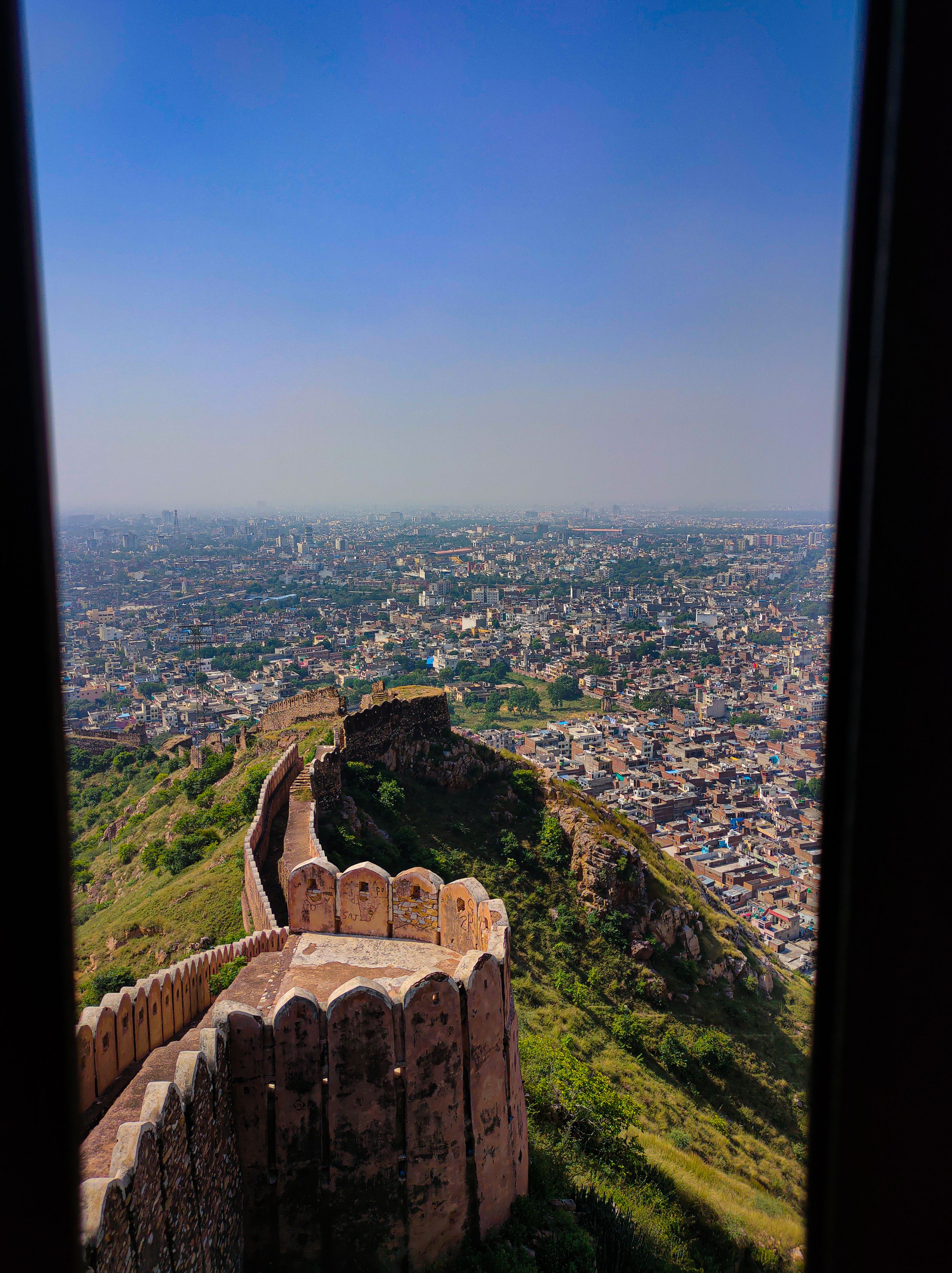
The top places to visit in Rajasthan fall into two groups. There are the cities that feature on most trips, and there are the smaller forts, desert towns and merchant villages that give a longer journey its texture. Jaipur or Udaipur? It is the question people ask most. The honest answer is that they suit different moods, and most trips end up including both.
Jaipur
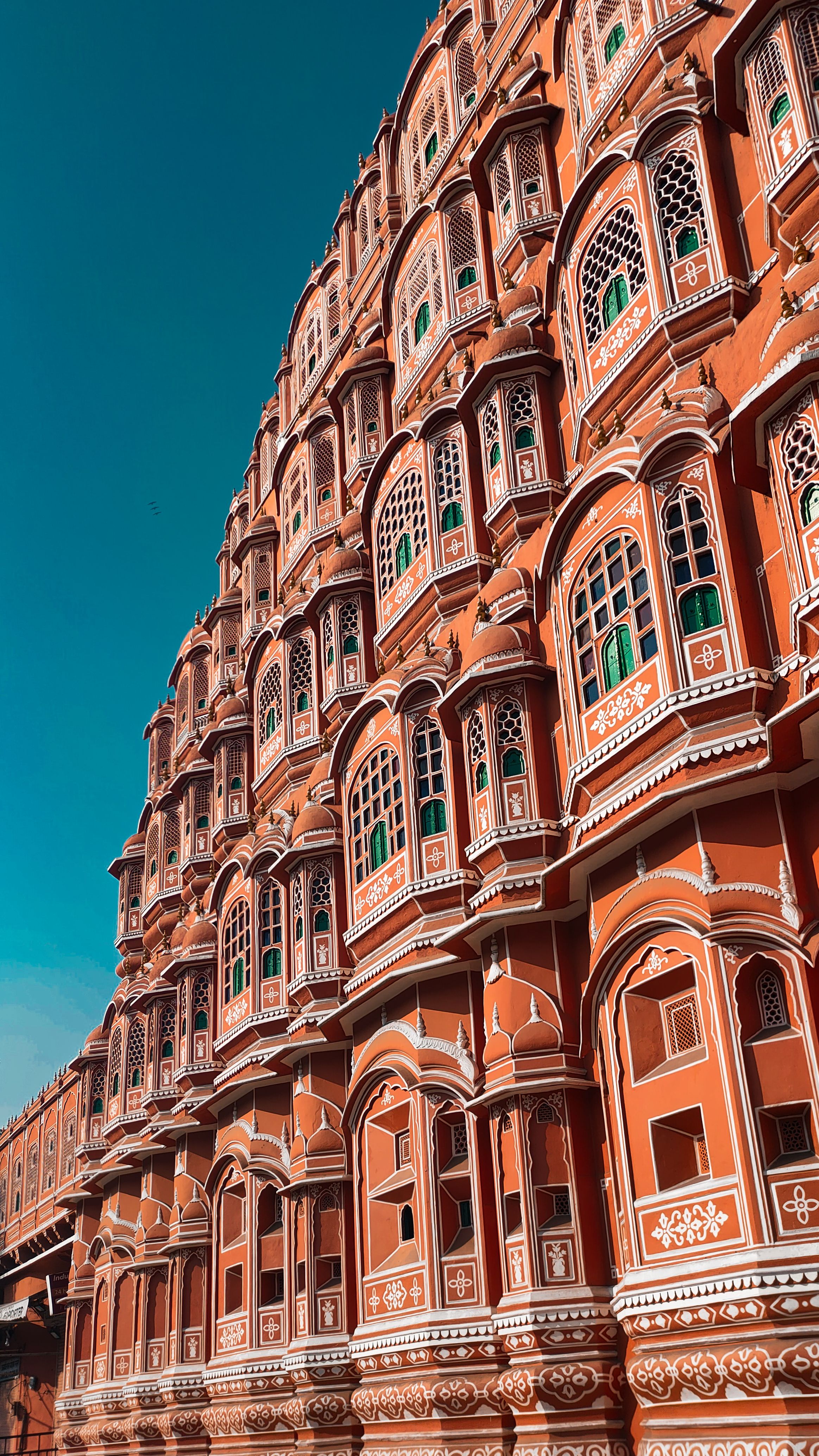
Jaipur is the city nearly every Rajasthan trip passes through. Sawai Jai Singh II laid it out in 1727 on a grid of broad streets and squares, rare for an Indian city of the time, and that order is why it is known as the Paris of India. When people ask which city is called the Paris of Rajasthan, this is the one they mean.
The old city was painted pink in 1876 to welcome the Prince of Wales, and the colour stuck. Part of the City Palace is still home to the former royal family. Hawa Mahal makes most sense from the street, a honeycomb of 953 small windows built so the women of the court could watch processions without being seen. Up on the ridge, Amber Fort looks down over Maota Lake, its mirrored Sheesh Mahal throwing back whatever light gets in. Back in town, the giant stone sundial at Jantar Mantar still reads the local time by shadow.
Udaipur
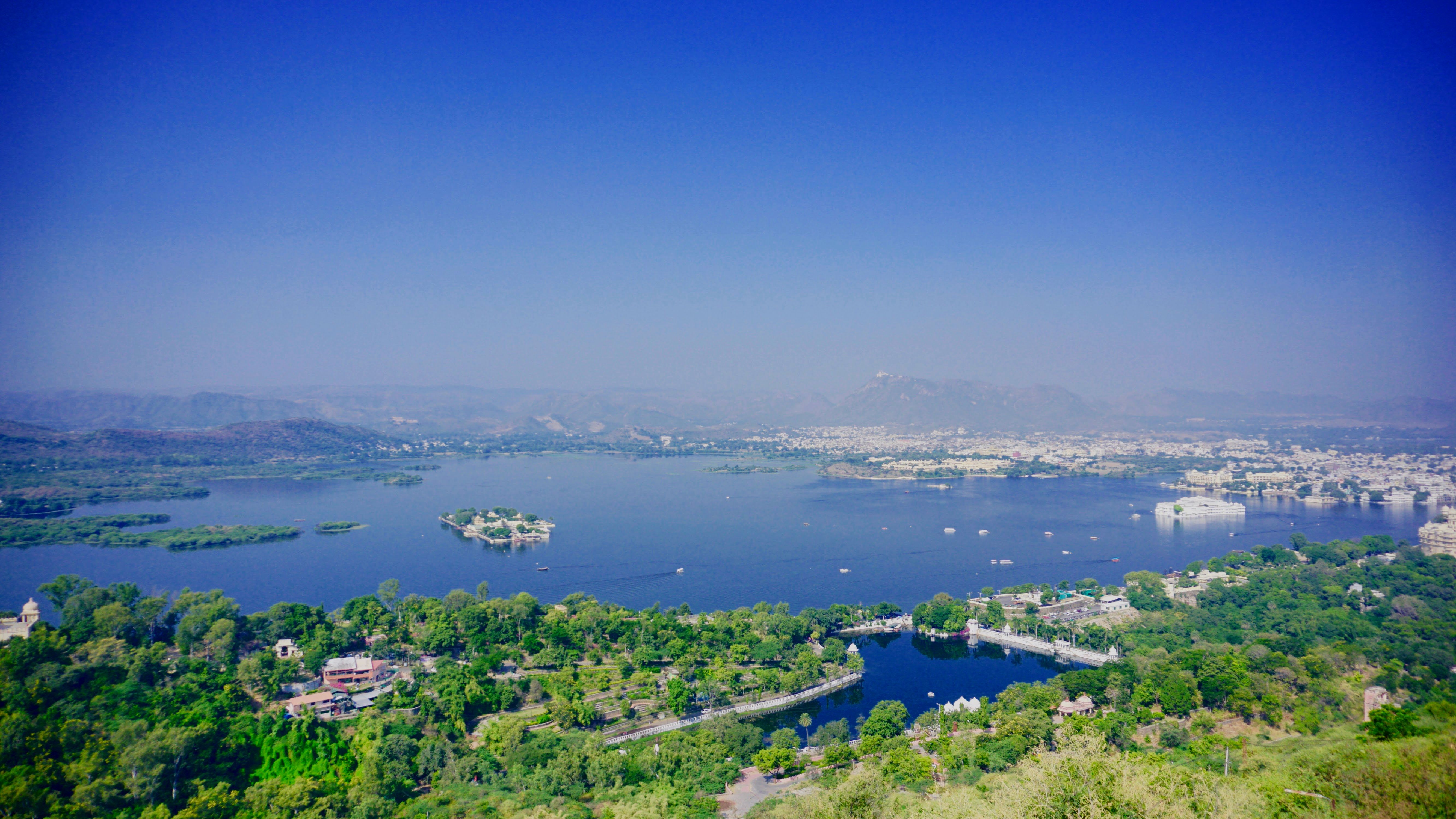
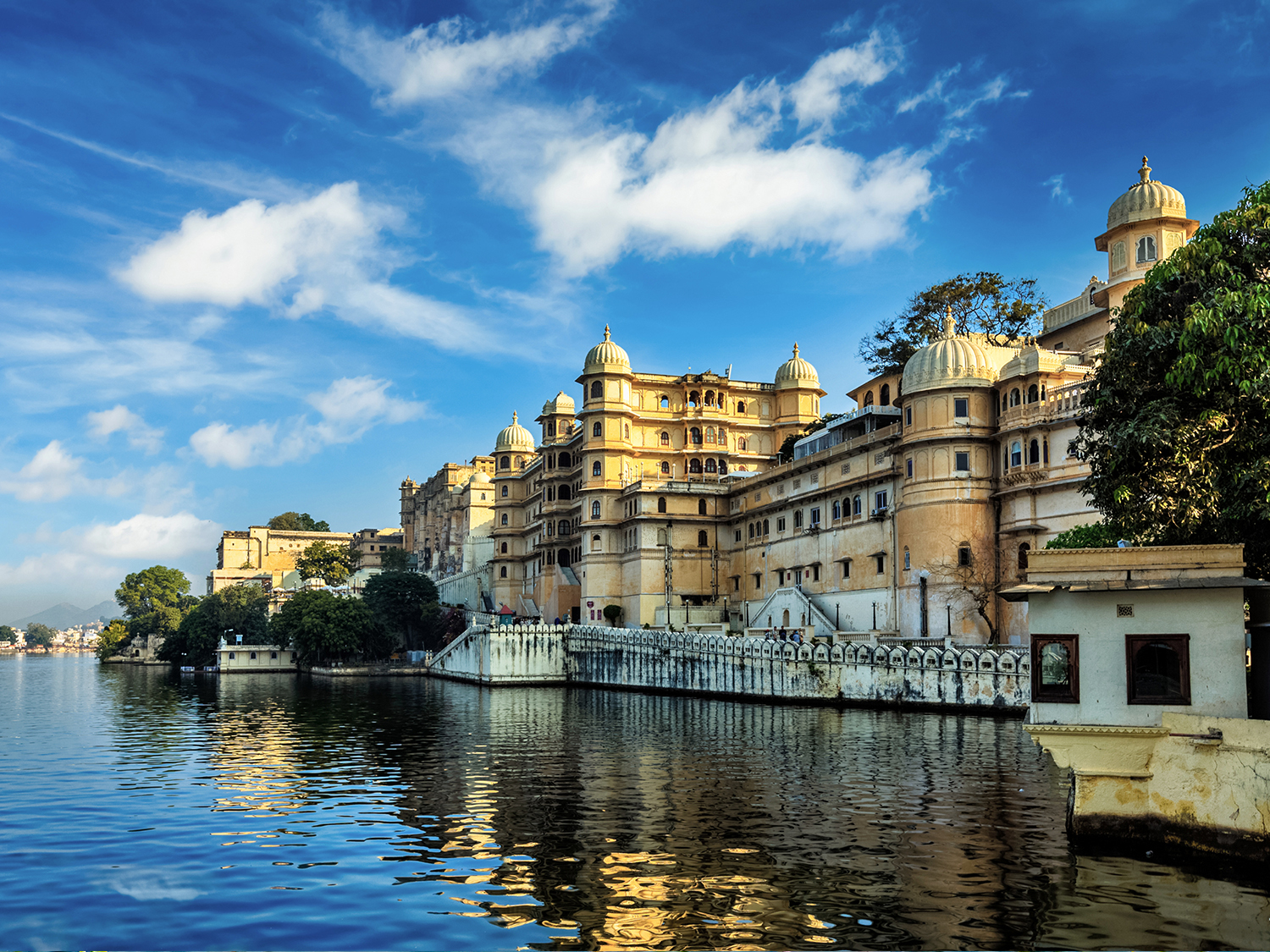
Udaipur is where Rajasthan slows down. Maharana Udai Singh II founded it in 1559 on the shore of Lake Pichola, and the City Palace grew along the eastern bank over roughly four centuries of Mewar rule. Most things to do in Udaipur come back to that water.
A Lake Pichola boat ride shows the palace the way it was built to be seen, from the lake, with the white Lake Palace and Jag Mandir sitting out on their islands. Ask which city is the most beautiful in Rajasthan and Udaipur is the answer you hear most.
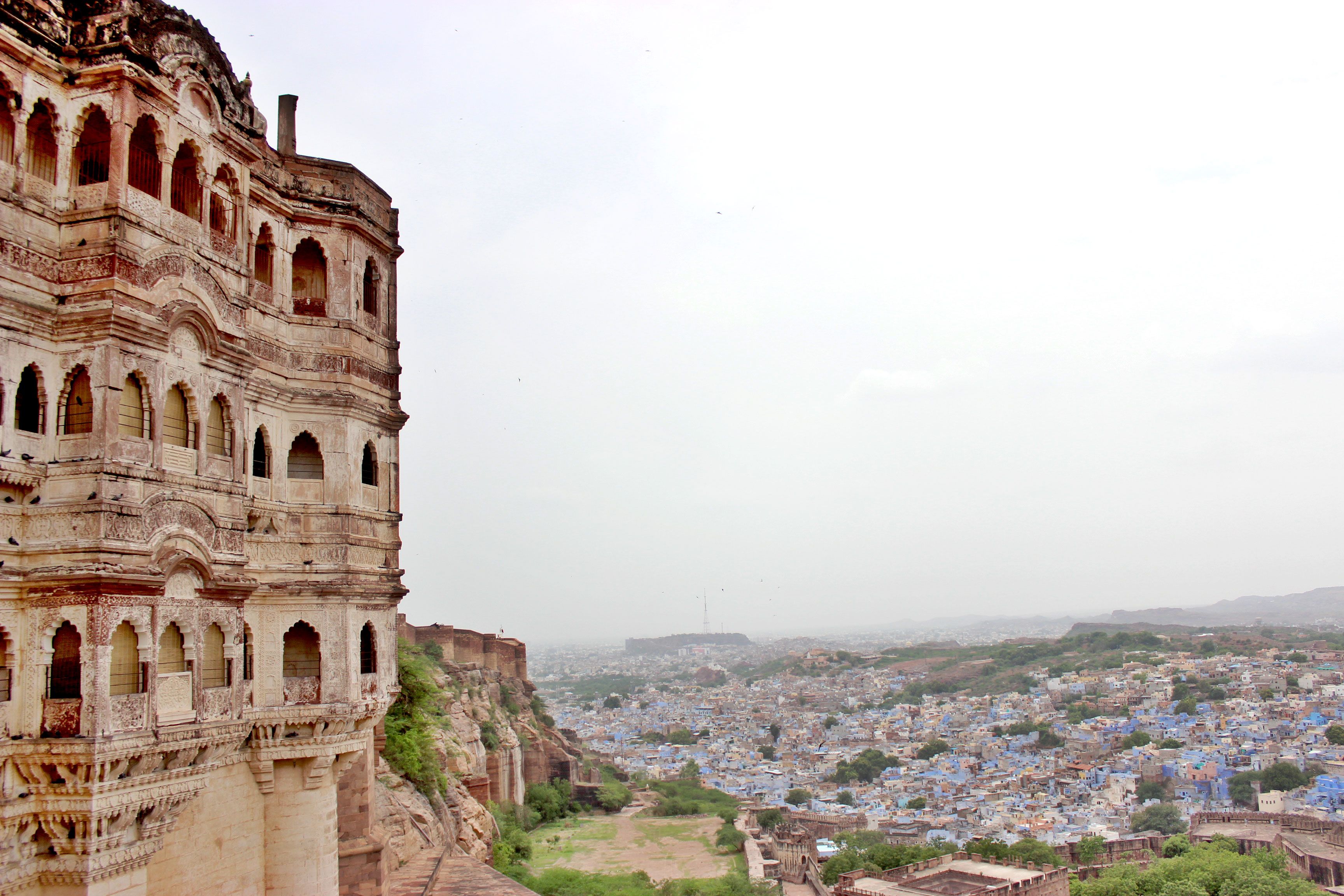
Jodhpur
Mehrangarh sits on a cliff roughly 125 metres above Jodhpur, founded by Rao Jodha in 1459. Below it, the houses of the old quarter are washed in indigo. A blue city walking tour takes you through those lanes at street level, past carved doorways, small shrines and the Toorji ka Jhalra stepwell, until the fort walls fill the sky again above the rooftops.
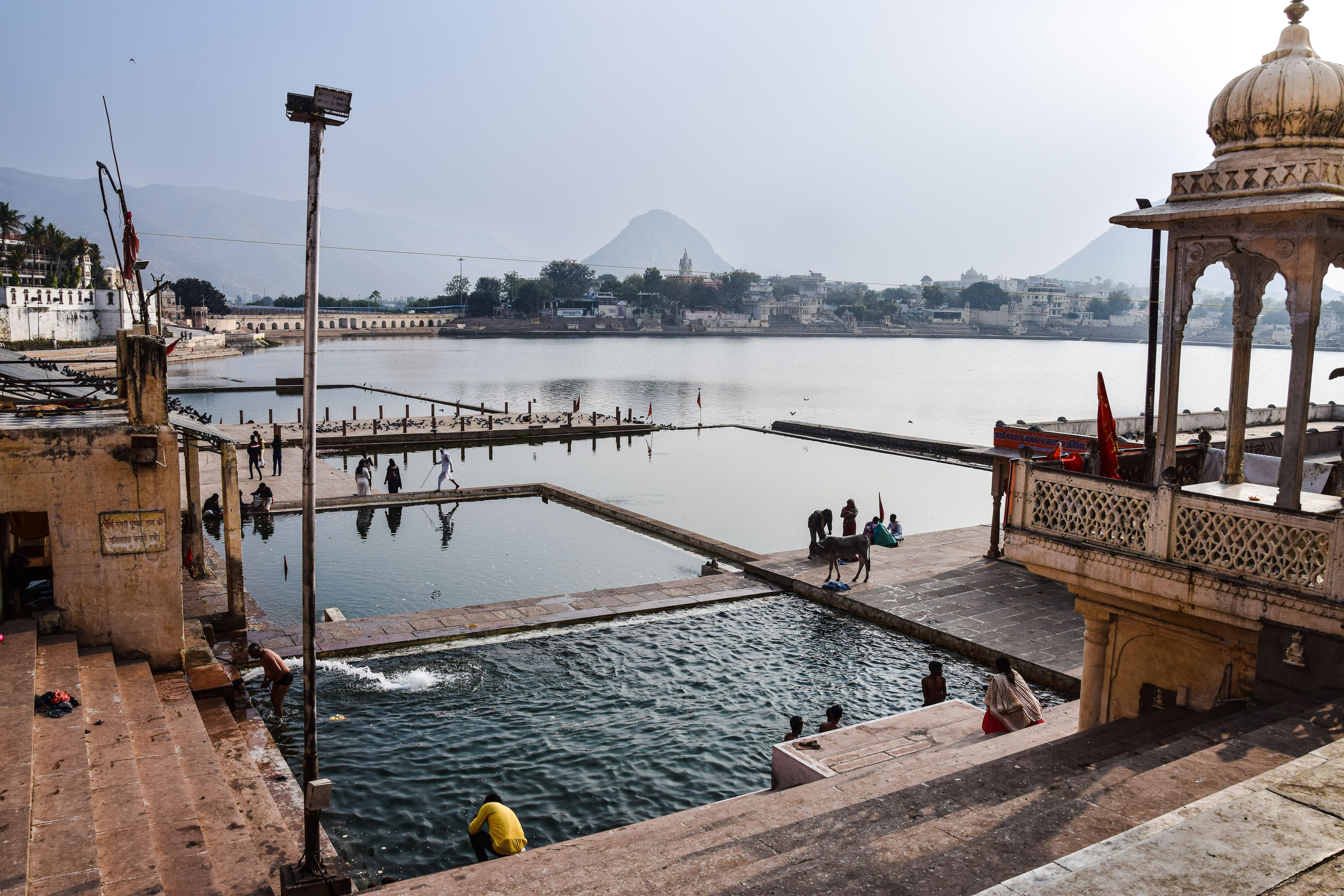
Pushkar
Pushkar is a pilgrimage town first. Its small lake is ringed by 52 ghats where pilgrims bathe and pray, and the Brahma Temple is one of very few in India dedicated to the creator god. Visiting the Brahma Temple in Pushkar means climbing the steps alongside families who have travelled across the country to be there.
The things to do in Pushkar are simple ones. Walk the ghats, listen to the bells and chanting drift across the water, and wander the bazaar lanes between them.
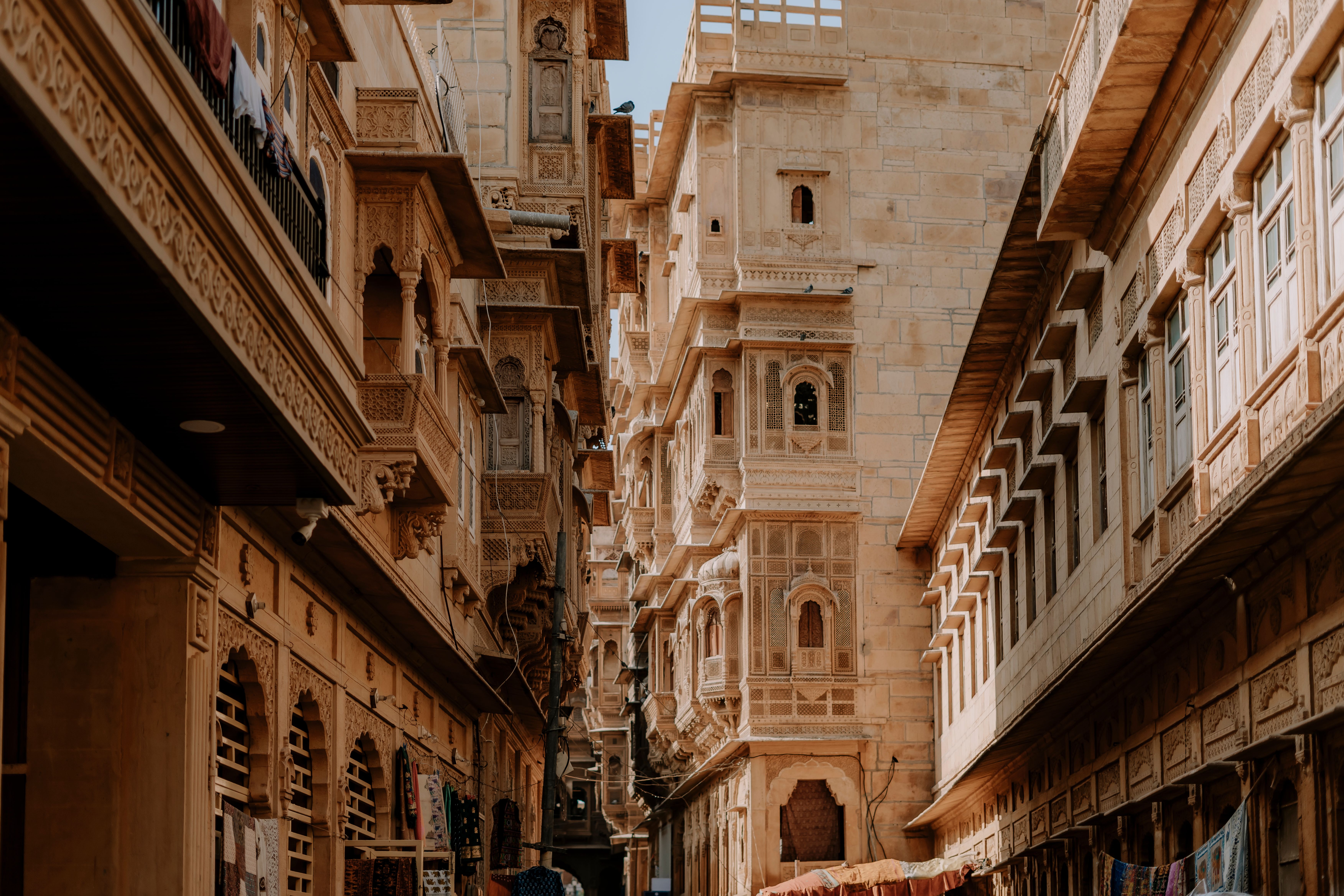
Jaisalmer
Jaisalmer is a long way west, close to the border with Pakistan, and fewer trips make the journey. Those that do reach a city built almost entirely from yellow sandstone. Jaisalmer Fort was founded in 1156 and is still lived in, with homes, shops and temples inside its walls. In the town below, Patwon Ki Haveli is a cluster of five merchant houses begun in 1805, their facades carved as finely as wood.
Out on the dunes, the Thar takes two shapes. A Thar Desert jeep safari heads out in the late afternoon and stops on a ridge to watch the sun go down before returning to town. A desert camp keeps you out overnight, with dinner, folk music and a sky full of stars. Only some trips include a camp night, so don't assume one.
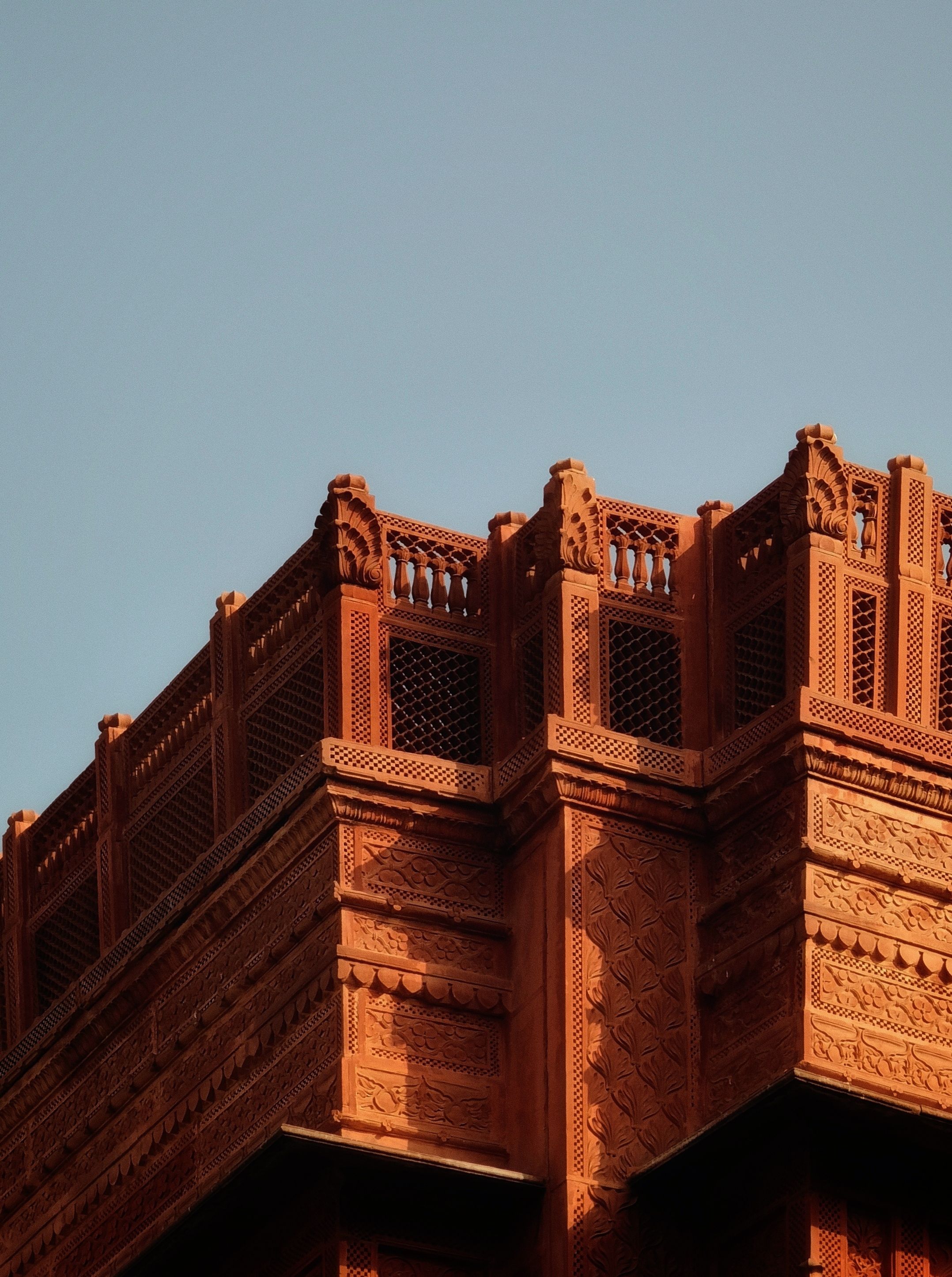
Bikaner
Junagarh Fort in Bikaner was built between 1589 and 1594 under Raja Rai Singh. Unlike most Rajasthan forts, it sits on flat ground, defended by a moat and high walls rather than a hilltop. Junagarh Fort's history is that of a desert kingdom made rich by the trade routes, and inside, successive rulers layered its palaces with gold leaf, painted ceilings and mirrorwork.
South of the city at Deshnoke, the Karni Mata Temple is an active place of worship dedicated to a mystic revered locally as a form of the goddess Durga.
Chittorgarh
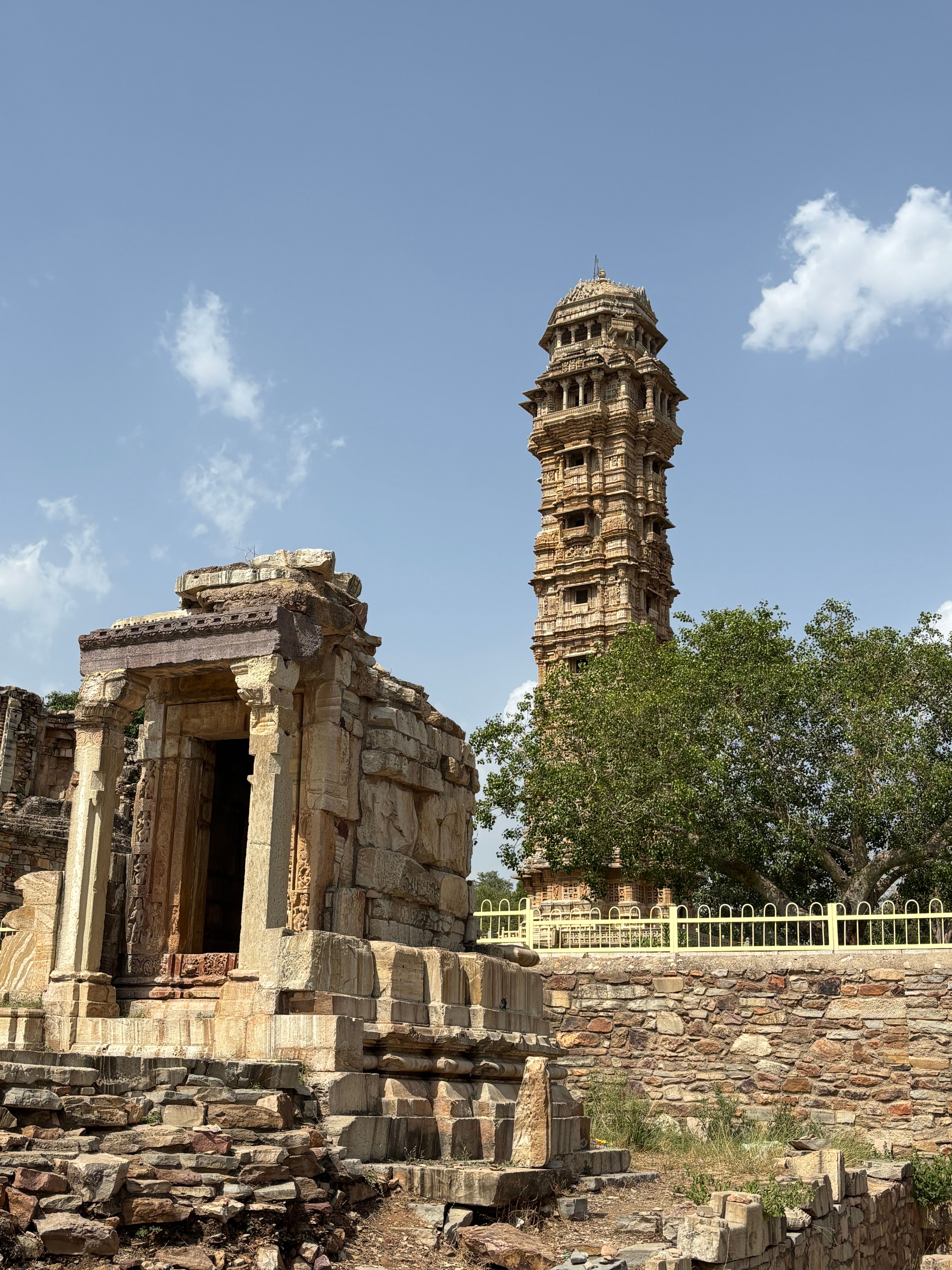
Chittorgarh is the largest fort complex in the state, spread across a plateau of close to 700 acres above the town. It was the capital of Mewar before Udaipur, and it holds the heart of Rajput memory. Three great sieges, the legend of Rani Padmini, and the 15th century Vijay Stambha, a nine storey victory tower visible from across the plateau.
Bundi
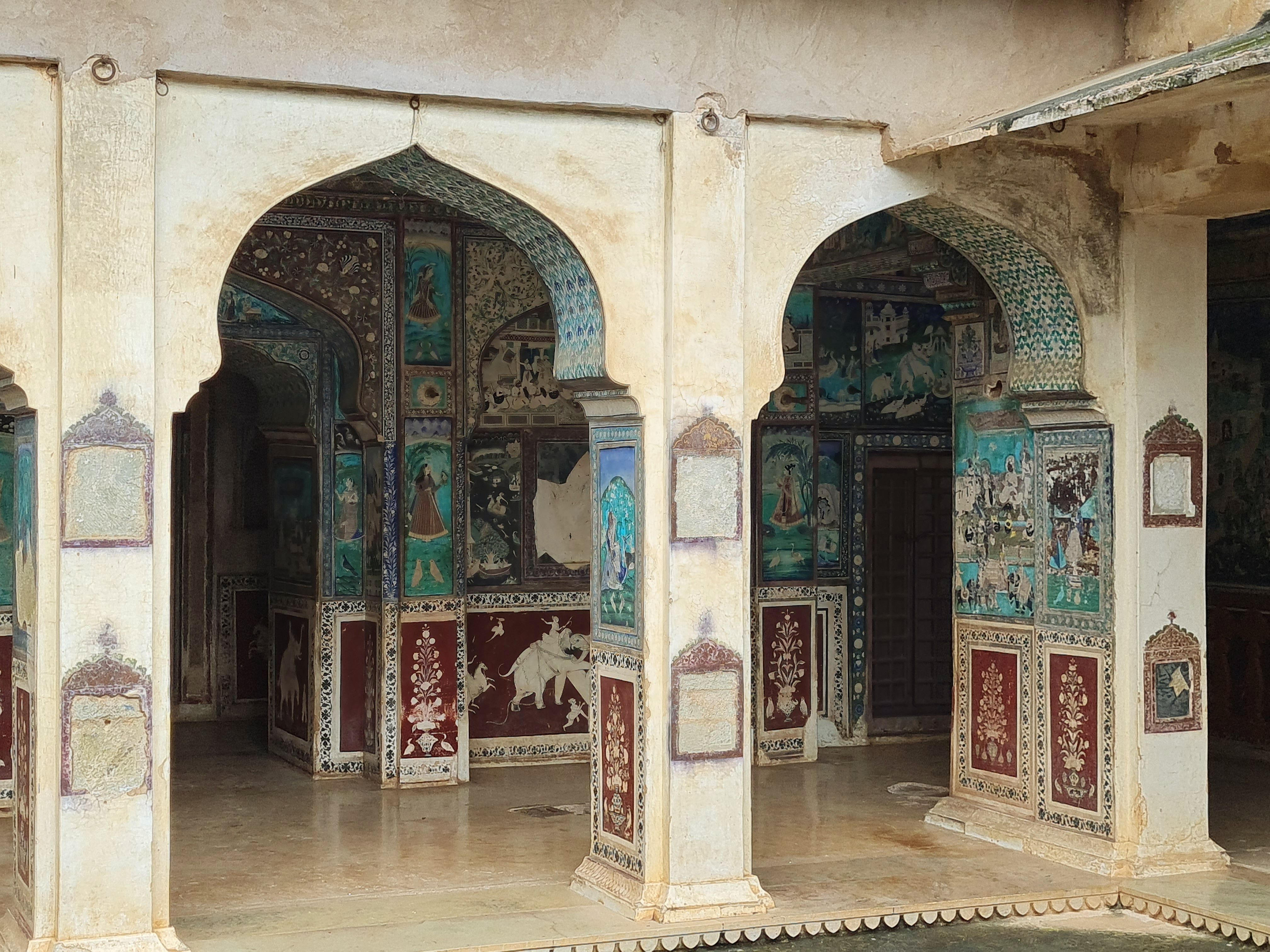
Bundi runs at a quieter pace than the main cities. Its stepwells sit right in town, the carved Raniji ki Baori among them. Inside Bundi Palace, the Chitrashala is lined with murals in deep blues and greens, scenes of court life and Krishna legends painted room after room.
Shekhawati and Mandawa
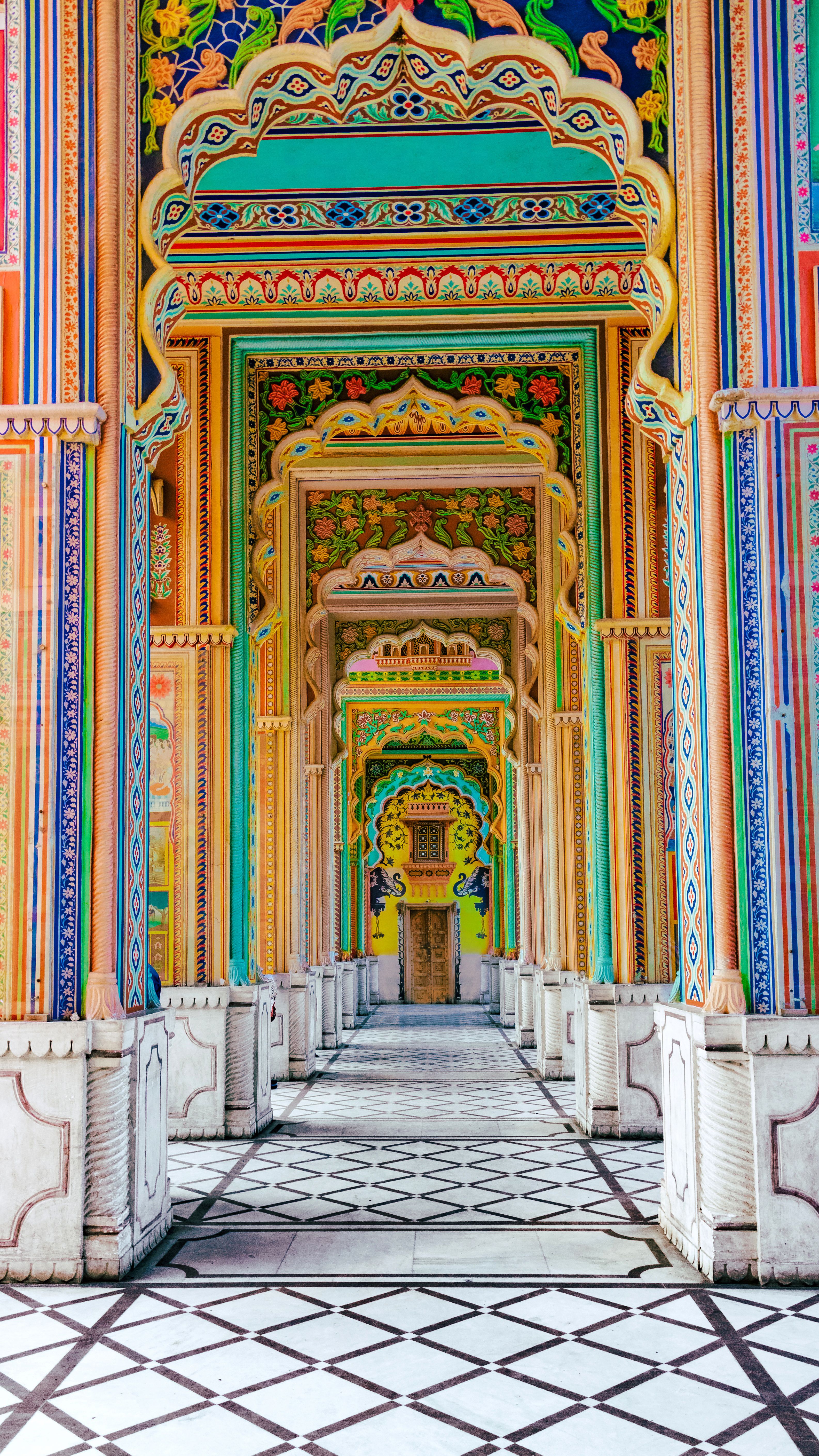
The merchant towns of Shekhawati, Mandawa among them, are covered in painted havelis. Marwari trading families made fortunes in the 18th and 19th centuries and spent them on murals, filling courtyards and outer walls with gods, battle scenes and, later, trains, motor cars and Europeans in hats.
Some houses have been restored. Many have faded. Walking the streets feels a little like leafing through an old family album.
Kumbhalgarh and Ranakpur
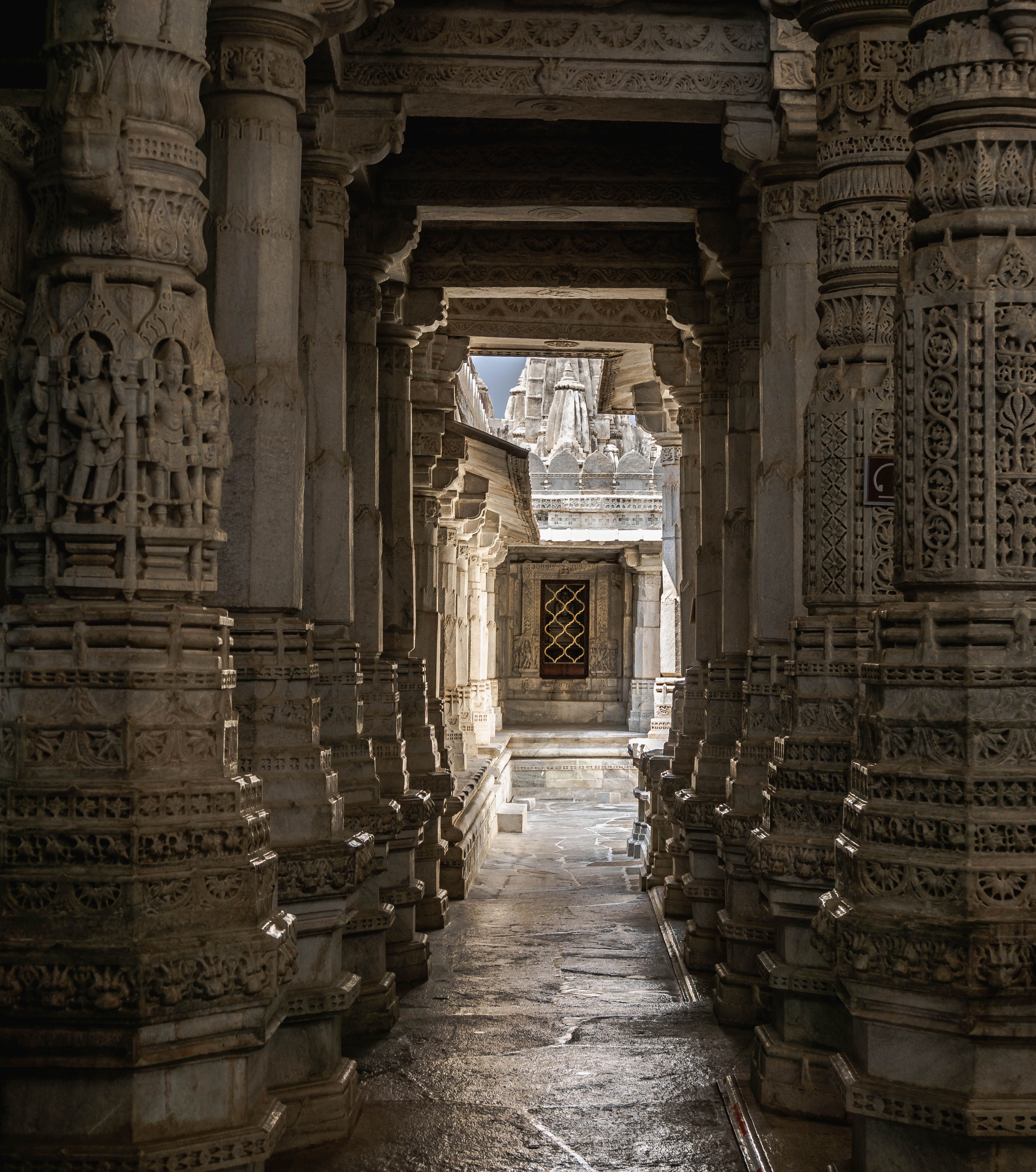
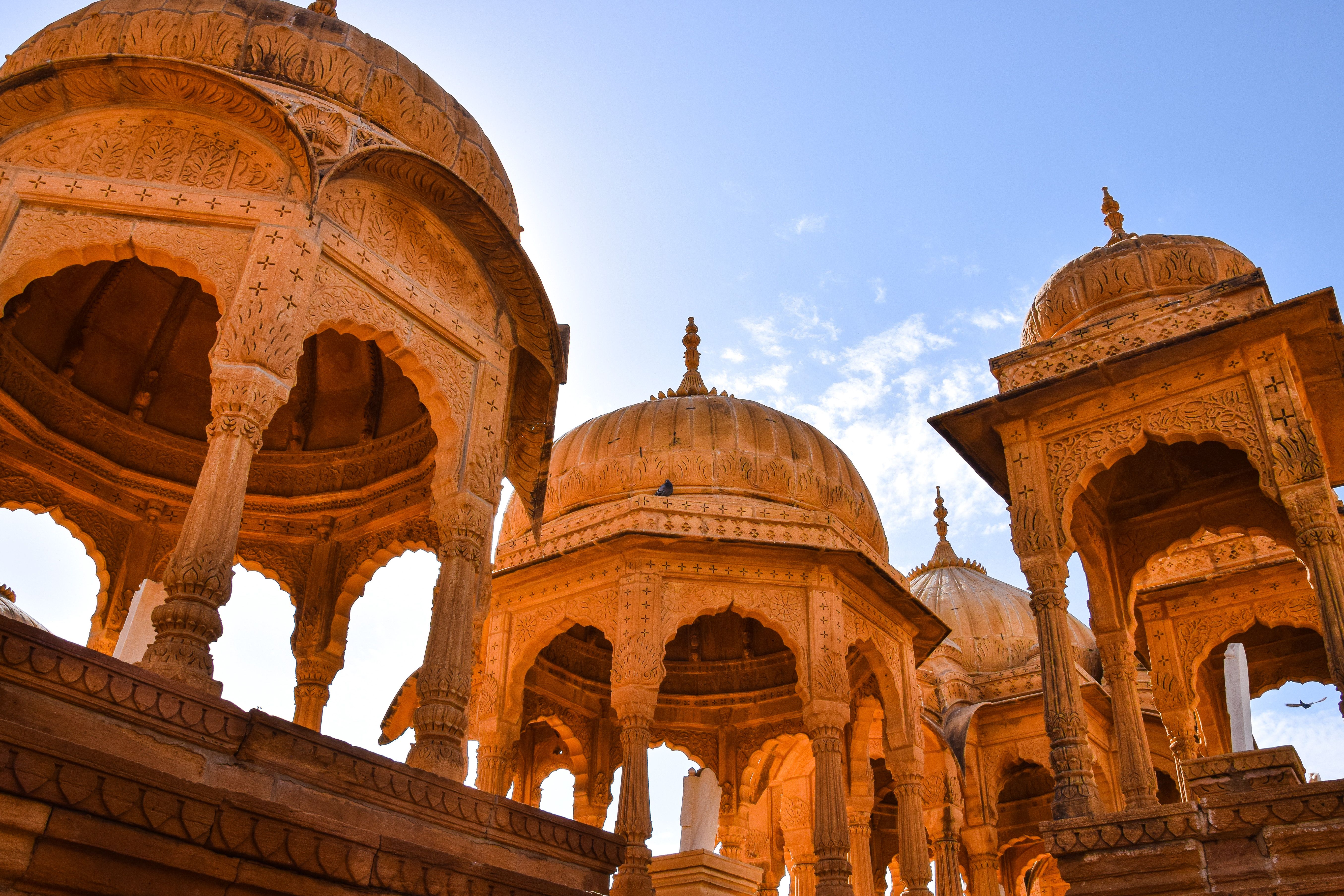
Between Jodhpur and Udaipur, the Aravalli hills hold two stops that usually share a day. Kumbhalgarh's walls run for around 36 kilometres over the ridges, built by Rana Kumbha in the 15th century. A short drive on, Ranakpur is a Jain temple of pale marble held up by 1,444 carved pillars, no two of them alike.
If time is short
On a first trip, Jaipur, Jodhpur and Udaipur give the clearest picture of the state, three very different cities on a route that flows well. Add Pushkar or Jaisalmer and the character shifts again.
Bikaner, Chittorgarh, Bundi and Shekhawati reward a longer trip or a second one. By then the famous names are behind you, and there is room for quieter places when visiting Rajasthan again.
What travel days look like in Rajasthan
Most routes loop out of Delhi or Jaipur and come back round, so the journey itself becomes part of the trip. Almost every move between cities is by road, and the landscape changes more than you might expect, from farmland around Jaipur to the Aravalli hills and the dry scrub of the west.
The far west is where distances stretch, and getting around Rajasthan there takes patience. Jaisalmer sits a long way from everywhere else, so trips that go there build in full days on the road in each direction.
A few group trips take the train for one leg. It is a chance to share a carriage with families and commuters, hear the chai sellers calling down the aisle, and watch the country pass at ground level.
Stops along the way break up the longer drives. The Chand Baori stepwell at Abhaneri, 13 storeys and around 3,500 steps deep, sits just off the road east of Jaipur. Ranakpur's marble temple divides the drive between Jodhpur and Udaipur. Trip lengths and routes for visiting Rajasthan are set out on the Rajasthan tours page.
Culture in Rajasthan, food and local life
Forts, havelis and the princely states
Until India's independence, Rajasthan was a patchwork of princely states ruled by Rajput clans whose power rested on land, lineage and the ability to hold a hill. That is why forts sit above towns. The fort was refuge, treasury and seat of government, and the town grew up underneath it.
Havelis came later and lower down. These were the townhouses of merchants and nobles, built around inner courtyards that kept rooms cool and family life private.
Stepwells and Bishnoi villages
Stepwells were working architecture long before they were sights. In a dry state they stored rainwater, and people walked further down the steps as the level fell, which is why they go so deep.
Near Jodhpur, Bishnoi villages keep a conservation tradition that dates to the 15th century. Their founder, Guru Jambheshwar, set out 29 principles that include protecting trees and wildlife. In 1730, 363 Bishnoi villagers died at Khejarli trying to stop khejri trees being felled.
Music, dance and crafts
Evenings often bring folk music and dance. Manganiyar and Langa musicians from the Thar sing songs passed down through families for generations, and the ghoomar and kalbeliya dances are all spinning skirts and quick footwork. You will also pass block printing workshops and the odd kathputli puppet show.
Rajasthani food
The desert shaped the food. Dal baati churma pairs baked wheat dumplings with lentils and a sweet, buttery crumble. Ker sangri is a tangy dish of dried desert berries and beans, and laal maas is mutton cooked a deep red with Mathania chillies.
Vegetarian cooking runs deep here, and plenty of families eat no meat at all. Some trips include a cooking class or demonstration, which is the easiest way to see how a baati is actually made.
Temples and ghats
At temples, shoes come off at the door and shoulders and knees are covered. On the ghats, people are bathing and praying, so ask before photographing anyone and step around offerings rather than over them. Pushkar has a few extra rules of its own as a pilgrimage town, and those are set out on the Rajasthan tours page.
Rajasthan myths versus reality
Is Rajasthan safe?
For most visitors, yes, with the everyday awareness any crowded place asks for. The fort cities and bazaars get busy, and pickpocketing and hard selling happen where people gather. Touts work the entrances to the major sites and the ghats at Pushkar, offering guides, blessings and shop visits. A polite, firm no usually ends it.
Plenty of solo and female travellers make the trip. Dressing modestly, taking care after dark and travelling with a group or guide makes the older, busier quarters easier going.
It's all forts
The forts are real. But visiting Rajasthan also means Udaipur's lakes, the Bishnoi villages, the desert camps, the stepwells and the painted merchant towns of Shekhawati.
The desert is hot around the clock
Not after dark. Desert nights on the Thar are cold, and anyone spending a night at a camp will be glad of a warm layer.
Rajasthan is just Jaipur
Jaipur is the gateway, not the whole story. Adding Jodhpur's blue lanes, Udaipur's lake or Jaisalmer's fort gives each trip a very different character.
Staying well
Stomach upsets are the most common complaint, and the India travel tips guide covers food, water and hygiene in detail.
Frequently asked questions
Which city is called the Paris of Rajasthan?
Jaipur is the city given this name, though it is more widely known as the Paris of India. The comparison comes from its planned layout, set out in 1727 by Sawai Jai Singh II on a grid of broad streets and squares that was unusual for an Indian city of its time. It is also called the Pink City, after the colour it was painted in 1876. Udaipur, with its lakes, is more often likened to Venice.
Is Jaipur or Udaipur better for a first visit?
Jaipur suits a first visit if you want the headline sights close together, with Amber Fort, the City Palace, Hawa Mahal and Jantar Mantar all within easy reach. Udaipur is calmer and built around Lake Pichola, with a slower rhythm and a boat ride that shows the City Palace from the water. The two cities feel very different, and many first trips include both, often with Jodhpur in between.
Is Jaisalmer worth the journey west?
Yes, if your trip has the days for it. Jaisalmer is a long drive from the other main cities, but it gives you a sandstone fort that is still lived in, the carved merchant houses of Patwon Ki Haveli and the dunes of the Thar Desert. Fewer trips reach it, so it tends to feel less crowded than Jaipur or Udaipur.
Can you camp in the desert in Rajasthan?
Yes, some trips include a night in a desert camp in the Thar near Jaisalmer, with dinner and folk music out on the sand. Others visit the dunes on a sunset jeep safari and return to town the same evening. Check each itinerary, since a camp night is not standard on every trip.
How much time do you spend on the road when visiting Rajasthan?
A fair amount, because most moves between cities are by road. Visiting Rajasthan usually means a mix of full sightseeing days and travel days, with stops such as the Abhaneri stepwell or Ranakpur's Jain temple breaking up the longer drives. Trips that head west to Jaisalmer include the longest days on the road. A few group trips swap one road leg for the train.
What should you pack for Rajasthan?
Pack for warm days, cold desert nights and temple visits that call for covered shoulders and knees. The What to Pack guide for India goes through clothing, footwear and everything else in detail.
Reaching Rajasthan's less visited regions
Some of the places above sit off the usual loop, and only certain trips reach them.
Royal India takes in Bikaner's Junagarh Fort, the Karni Mata Temple at Deshnoke and the fort complex at Chittorgarh. Rajasthan Forts & Villages heads to Chittorgarh and the long walls of Kumbhalgarh. Golden Triangle & Rajasthan Villages adds Bundi's stepwells and the painted havelis of Shekhawati.
Every current trip through the state is listed on the Rajasthan tours page.