
On The Go Tours
Our agents are waiting to chat to you...
Are you a Travel Agent or Customer?
Do you have an booking reference?
Exploring the Tuscan Hill Towns and Wine Country
Tower skylines, Renaissance streets and cellars of Sangiovese across southern Tuscany
Exploring the Tuscan Hill Towns and Wine Country
Tower skylines, Renaissance streets and cellars of Sangiovese across southern Tuscany
When do you want to go?
2026
I'm flexible
Passengers
Adults (18+)
Children (0 - 17)
The Tuscan hill towns and wine country reward a slower kind of travel, where the drive between two villages matters as much as the villages themselves. Set out across this stretch of countryside and the pattern soon repeats. A town on a ridge, walls the colour of the earth around them, and vineyards falling away on every side. Sangiovese grows on these slopes, and the wine is not a souvenir here but part of the reason many of the towns exist at all. What follows is four ways into the region, each tied to one place and the particular thing it does better than anywhere else nearby.
Climbing the medieval towers of San Gimignano
San Gimignano
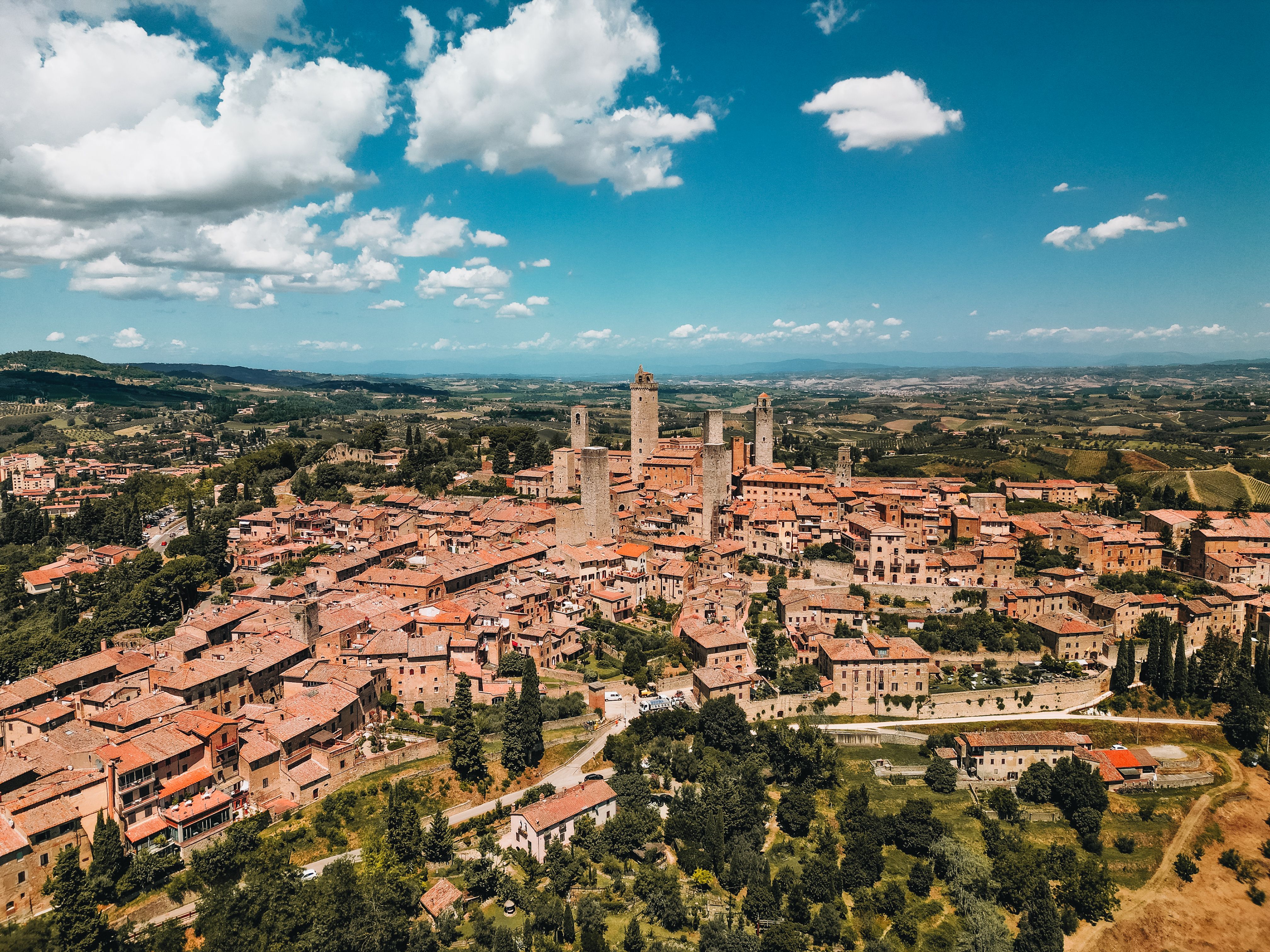
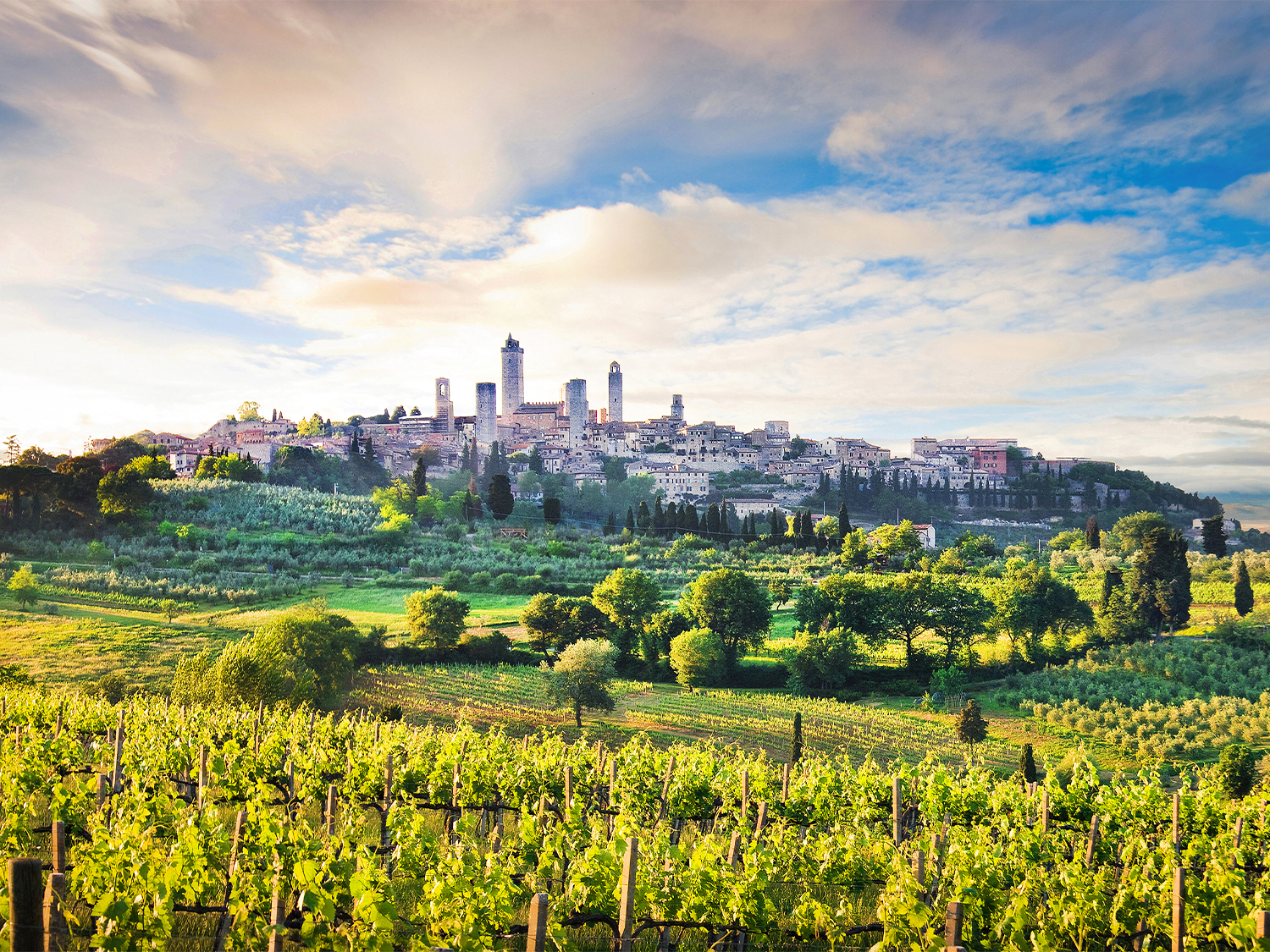
From a distance San Gimignano looks wrong for a small town. A cluster of square towers rises off the ridge, too many and too tall for the handful of streets below them. Fourteen survive today. In the town's wealthy centuries there were around seventy, built by rival families who measured status in height and kept adding storeys to outdo their neighbours. The competition ran so hard that the council eventually capped new towers at the height of the tallest, Torre Grossa, which still stands at 54 metres, and even that only pushed families to build faster before the rule took hold. You can climb Torre Grossa, and it earns the effort. The stairs turn from broad stone to steeper, narrower flights as you go, and the last of them open onto a small terrace with the countryside laid out below, vineyards and olive terraces running to the next ridge. Come early. The tower and the frescoed Collegiata both open at around ten, and by late morning the lanes fill with visitors and stay full until roughly four.
The money that raised the towers came partly from saffron, grown in the fields below and traded along the Via Francigena, the old pilgrim road that still runs through the town. It also came from wine. Vernaccia di San Gimignano, a crisp white off these same slopes, was the first Italian wine to be granted DOC status back in 1966, and the enotecas around Piazza della Cisterna still pour it by the glass. Be realistic about time. You can walk the length of the old town in twenty minutes, so the place rewards staying past the afternoon rush rather than passing through it. Late in the day the coaches leave, the stone warms to gold, and the towers do their real work over an almost empty square.
Tasting Brunello in the fortress at Montalcino
Montalcino
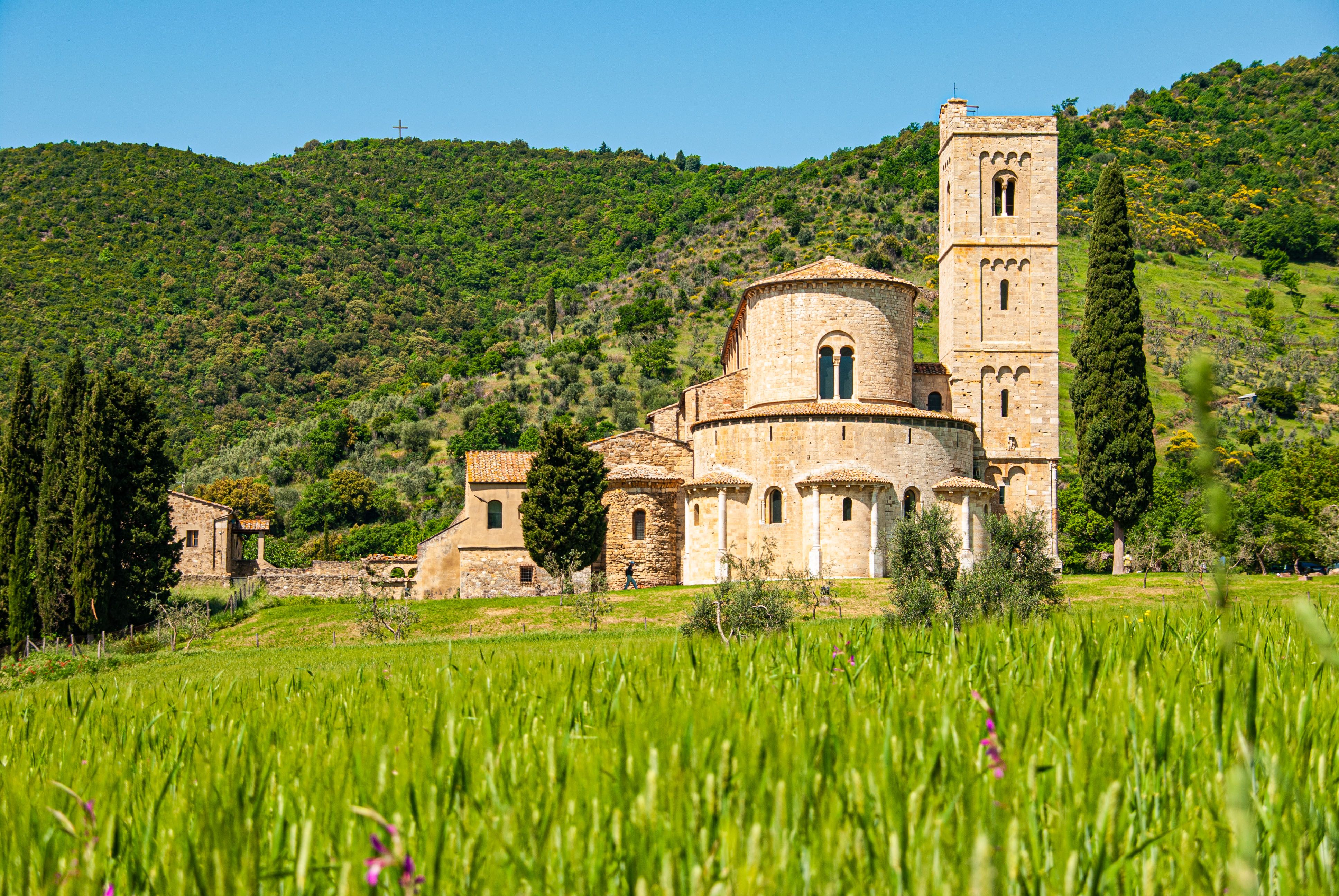
Montalcino keeps its best room for wine. Inside the fortress on the town's high point, built in 1361 to hold out first against Siena and later the Medici, a vaulted enoteca lines its walls with bottles and pours Brunello beneath the old stone. Take a glass out to one of the ramparts, look over the vineyards falling towards the Val d'Orcia, and the reason this wine asks for patience starts to make sense. Brunello di Montalcino is made from a single grape, the Sangiovese Grosso clone that locals call the little brown one. A winemaker named Biondi-Santi isolated it here in the 1860s, and the wine went on to become one of Italy's first to earn top DOCG status in 1980. By law it cannot be sold until the first of January in the fifth year after the harvest, and much of that time is spent resting in large oak casks. Young Sangiovese Grosso is high in tannin and acid, almost severe on the tongue. Those years of rest are what turn the grip into something softer and more savoury.
Altitude plays its part. The town sits close to six hundred metres up, cooler than the valley floor, so the grapes ripen slowly and hold their freshness. If a serious Brunello feels like a lot to open on a weekday, order a Rosso di Montalcino instead. Same grape, same slopes, aged only about a year, and built to drink young rather than to wait. Pair either with the local pecorino and a plate of cured meats, which is how the wine is meant to be met. The fortress enoteca is the simplest place to try several side by side without committing to a cellar tour, though the small producers in the surrounding hills will happily receive you if you want to see where it is made.
Driving the cypress roads of the Val d'Orcia
Val d'Orcia
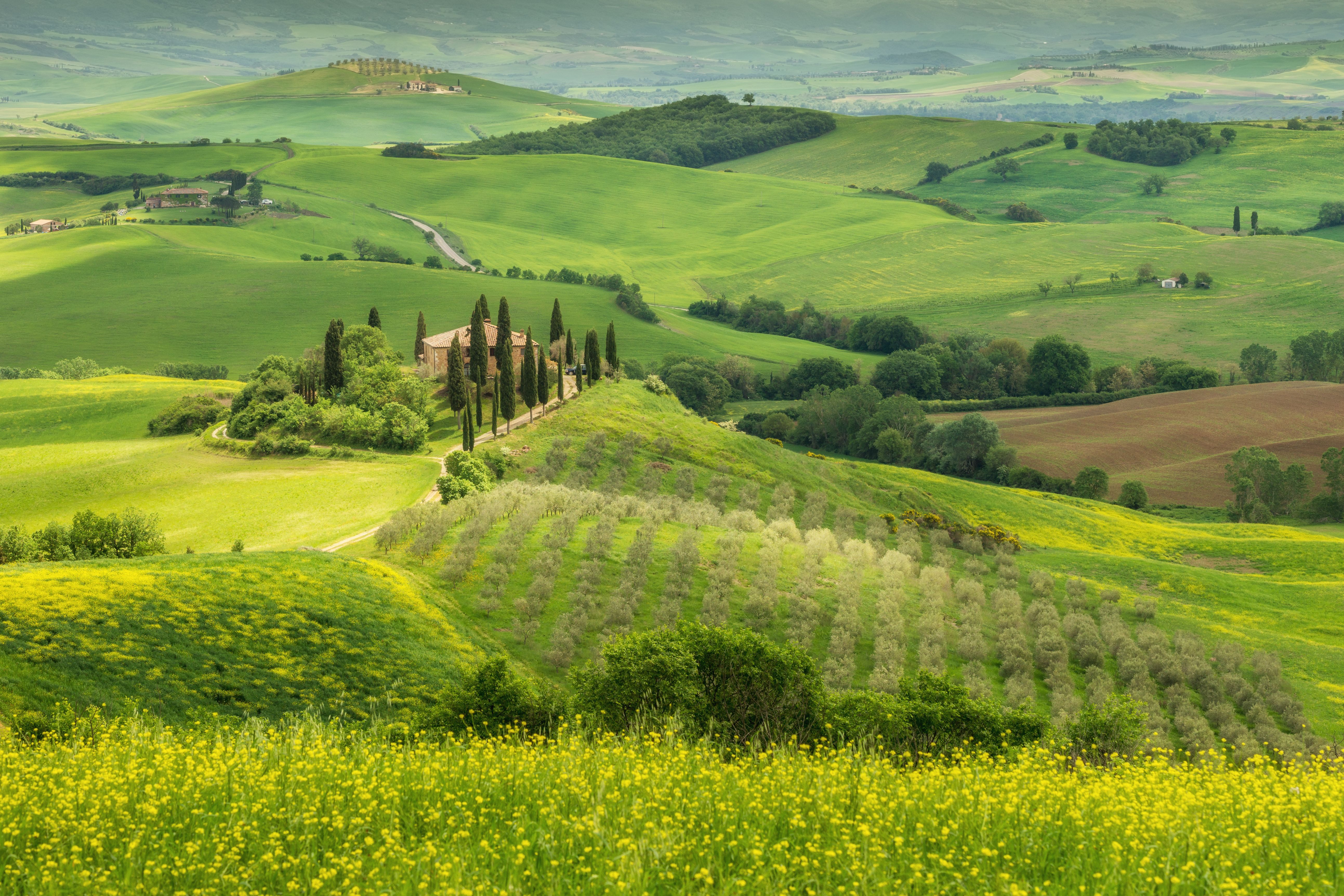
The Val d'Orcia is the Tuscany of the postcards, and for once the postcards undersell the driving. The road rolls south from Pienza in long curves, past wheat fields that run green in May and fade to bare ploughed earth by autumn, with cypress trees standing along the ridgelines in twos and threes. Near San Quirico d'Orcia, a small cluster of them beside the Vitaleta chapel has been photographed so often it has its own places to pull over, though it still holds its quiet at first light before anyone else arrives. What looks wild is anything but. UNESCO protected this valley in 2004 precisely because it is a farmed landscape, shaped over centuries into the balance of hill, field and tree that Renaissance painters used as their backdrop. Pienza makes the point in stone. The town was rebuilt between 1459 and 1462, when a local boy, by then Pope Pius II, hired the architect Rossellino to turn his home village of Corsignano into an ideal city. The result is small and deliberate. A single main square, herringbone paving underfoot, and a palazzo whose hanging garden looks straight out over the valley.
Travel through Tuscany's hill towns and vineyards
The hill towns and vineyards in this guide sit close together, which makes Tuscany well suited to a multi-day trip. On The Go Tours features a range of trips through Italy that pair time in Tuscany with other regions, across different durations and travel styles. Browse the options below to compare routes and see what each trip includes.


Frequently asked questions
Which Tuscan hill towns are best for wine tasting?
Montalcino and Montepulciano are the two names to know. Montalcino produces Brunello, a Sangiovese aged for years and poured in the enoteca inside its hilltop fortress, while Montepulciano is built over tufa cellars where Vino Nobile is aged and tasted. San Gimignano rounds out the list with Vernaccia, a crisp white you can drink in the square beneath its medieval towers.
Can you climb the towers in San Gimignano?
Yes. Torre Grossa, the tallest of the fourteen surviving towers at 54 metres, is open to climb, with steep internal staircases leading to a terrace and views over the surrounding vineyards. It opens at around ten in the morning, so arriving early means shorter queues and quieter lanes before the day's visitors arrive.
What is the difference between Brunello and Rosso di Montalcino?
Both are made in Montalcino from the same Sangiovese grape, but they are aged very differently. Brunello di Montalcino cannot be sold until the fifth year after harvest and spends much of that time in oak, which softens its firm young tannins. Rosso di Montalcino is aged only about a year and is built to drink sooner, which usually makes it the better value on a weekday.
When is the Bravio delle Botti barrel race in Montepulciano?
The Bravio delle Botti takes place on the last Sunday of August. Two runners from each of Montepulciano's eight districts push an eighty kilo barrel up the steep main street to Piazza Grande at the top of the town. It is a modern revival of a medieval contest, and the town fills for the day, so expect crowds and book accommodation ahead.