
On The Go Tours
Our agents are waiting to chat to you...
Are you a Travel Agent or Customer?
Do you have an booking reference?
Essaouira, Morocco and the Windy Atlantic Coast
Wind, working port and rampart workshops on Morocco's Atlantic coast
Essaouira, Morocco and the Windy Atlantic Coast
Wind, working port and rampart workshops on Morocco's Atlantic coast
When do you want to go?
2026
I'm flexible
Passengers
Adults (18+)
Children (0 - 17)
A coastal town that moves at its own pace
Most people reach Essaouira, Morocco as a day trip from Marrakech, spend three hours photographing the ramparts, and drive back before dark. They see the postcard and miss the town. Essaouira sits on an exposed headland on the Atlantic coast, roughly 175 kilometres west of Marrakech, and it moves at the pace of the wind and the tide rather than the tour clock. The medina is walled and compact, the light is clear and salt washed, and the sea is always close. What follows are four ways into the place, each worth slowing down for.
The Alizé wind and the crescent bay
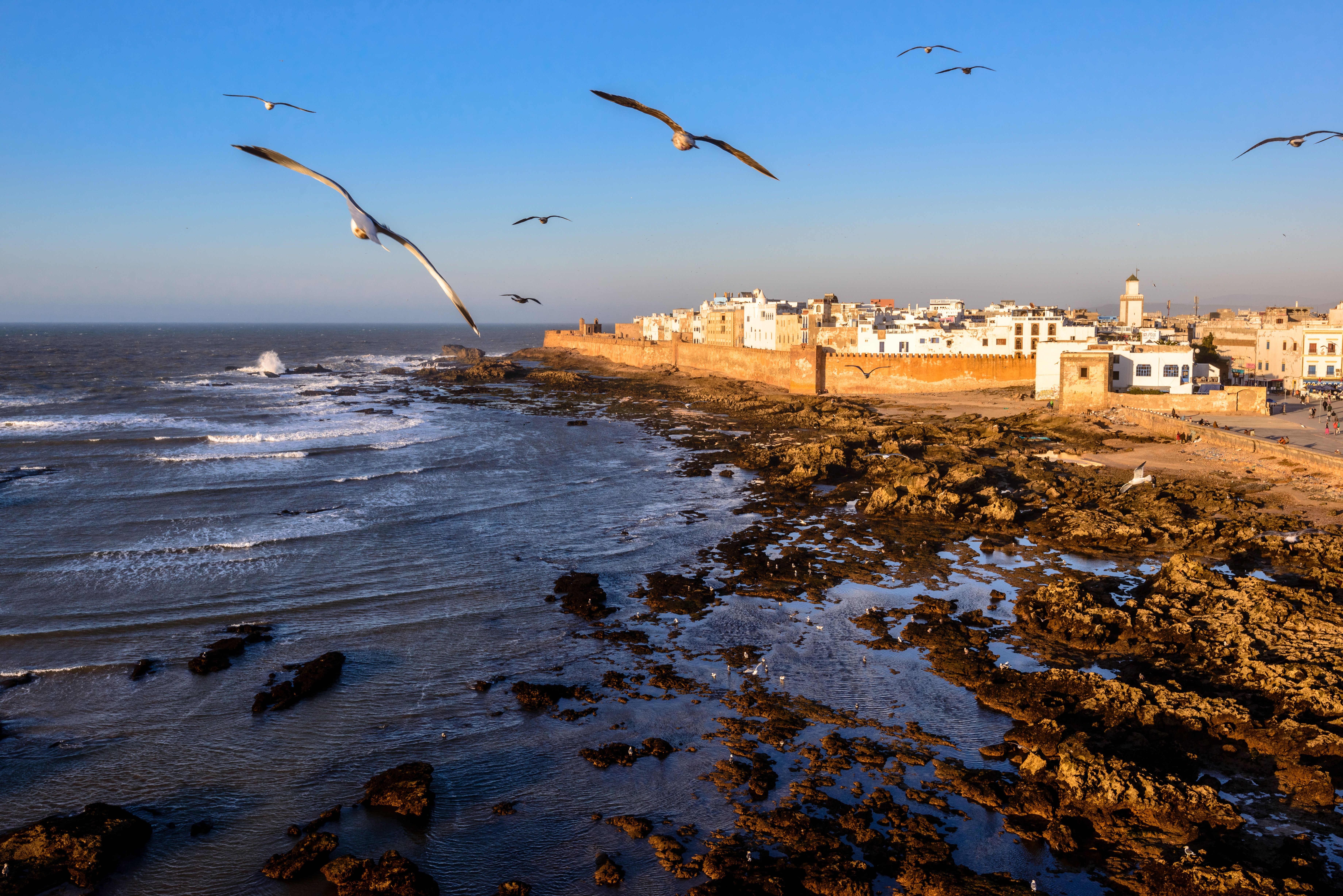
The wind is the first thing you notice and the last thing you forget. Essaouira earned the name Windy City of Africa because the Alizés, the Atlantic trade winds, blow across the bay for much of the year. They arrive from the north and northeast, funnelled and sped up by the coastline and the distant Atlas mountains, and on a summer afternoon they can push past 25 knots. Walk the beach at midday in July and the sand travels sideways at ankle height. This is not a spot for lying still on a towel.
The main beach is a wide crescent that curves south from the medina for a couple of kilometres, and it is where the kites go up. The wind tends to build through the late morning as the land heats and the air above it rises, then holds steady into the evening. That daily rhythm is the reason Essaouira suits people learning. The wind comes on gradually rather than in sharp gusts, and the bay sits side onshore, so a lesson that drifts ends up back on the sand rather than out to sea.
The blue boats and the port grills
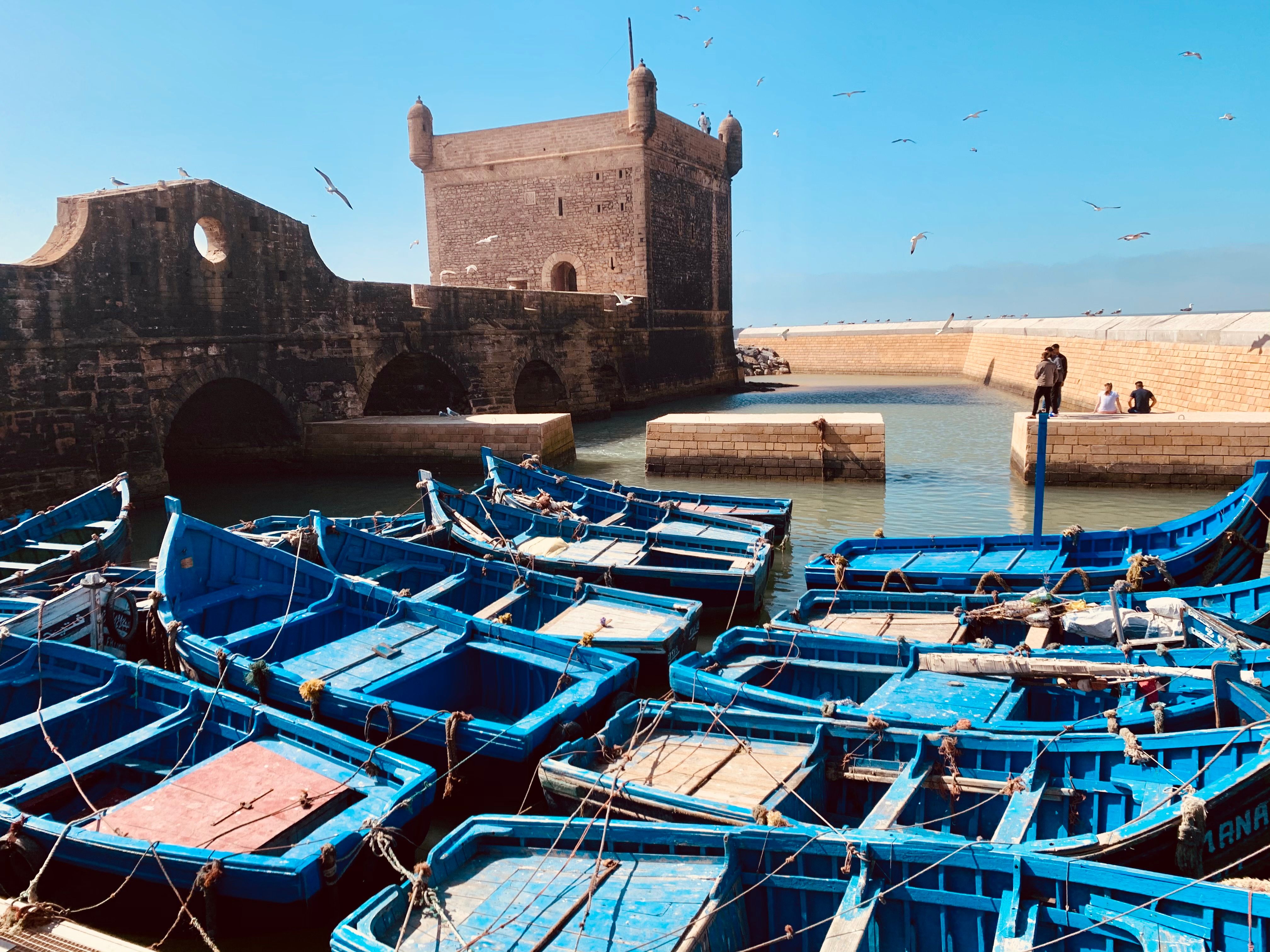
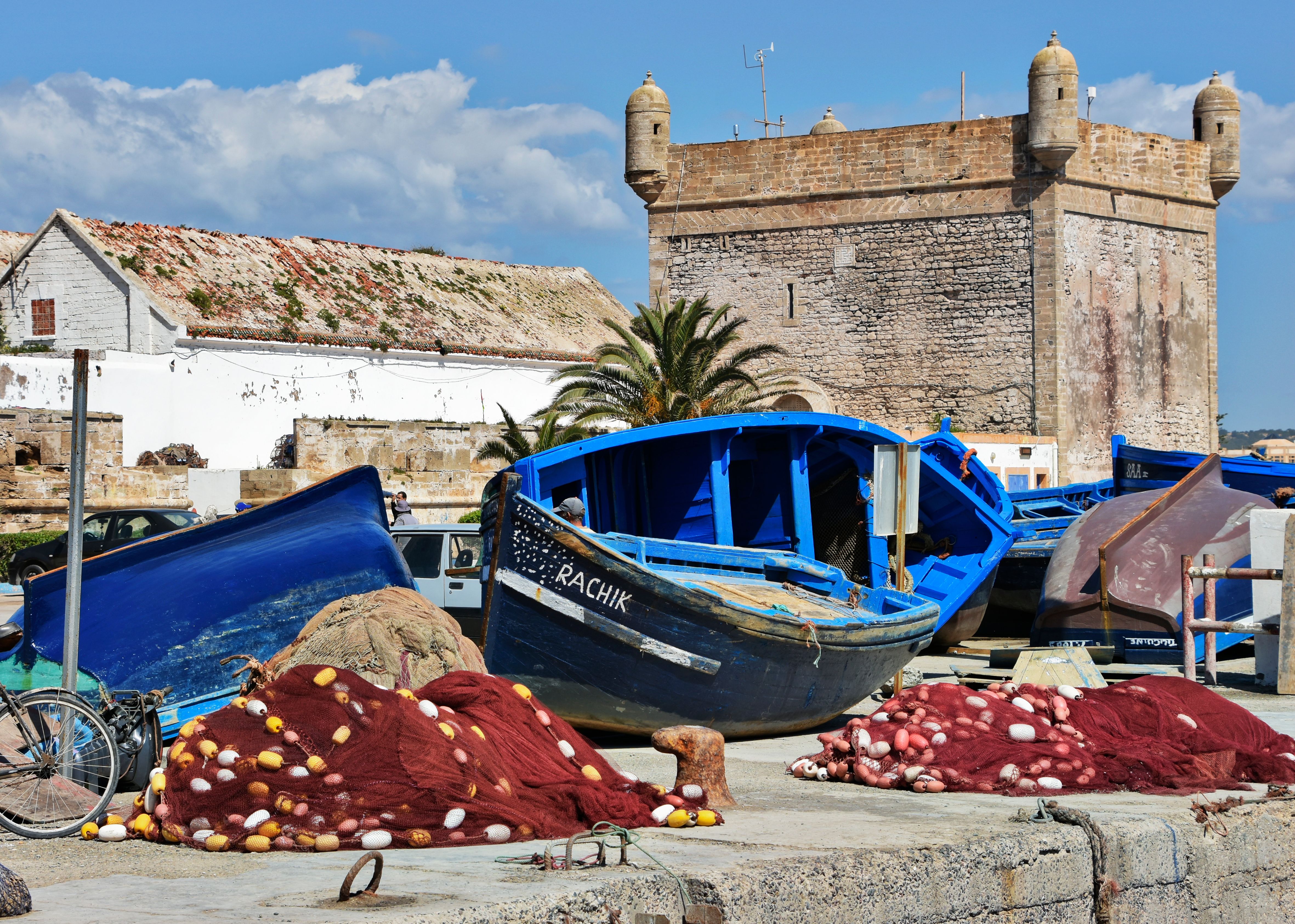
South of the medina, past the Skala du Port and through a blue gate, the working harbour begins. The painted blue boats crowded along the quay are not props for photographs. They are the fishing fleet, and they go out at night for sardines, sea bream, calamari and whatever else the Atlantic gives up. Come in the morning and you watch them unload, gutting and sorting on the wet stone while gulls wheel overhead and cats work the edges. The port smells exactly as a working port should.
The thing to do here is eat. Just inside the entrance, a row of grill stalls lays out the day's catch on beds of ice. You point at what you want, they weigh it, and it goes straight onto the coals in front of you. A few minutes later it arrives on a paper lined tray at a shared plastic table. Squeeze the lemon, eat with your fingers, keep half an eye on the gulls.
The sea ramparts and the grid of the medina
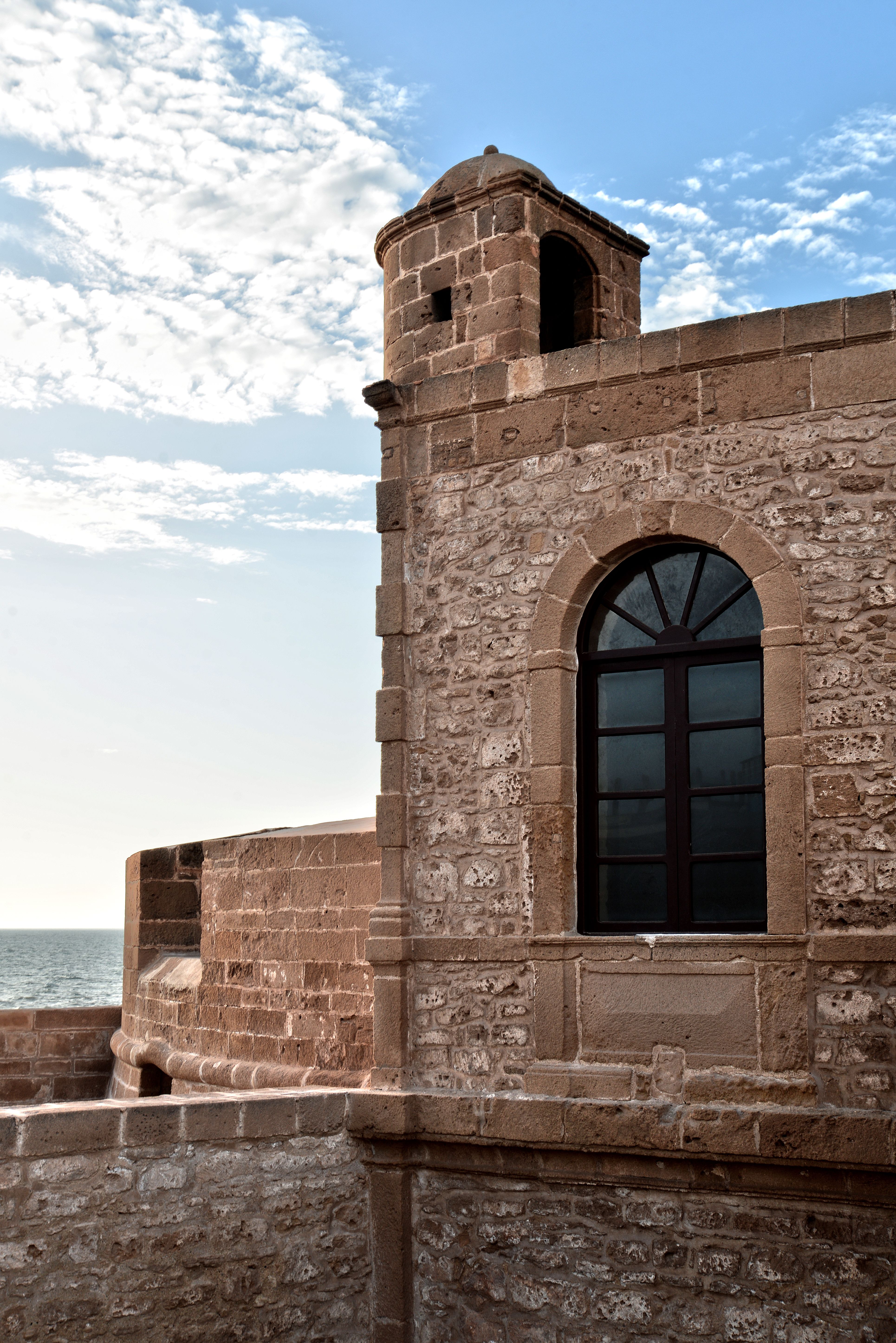
The sea wall along the north edge of the medina is called the Skala de la Ville, and it is where the town faces the ocean head on. A line of bronze cannons still points out to sea, cast in Spain, Portugal and the Netherlands in the eighteenth and nineteenth centuries and hauled here when this was a fortified trading post. Waves break against the stone below. Spray carries up on a rough day. The islands offshore, the Îles Purpuraires, sit low on the horizon with the ruin of an old fort on the largest of them.
Layers sit inside those walls. There is the old Jewish quarter, the mellah, and the whitewashed houses with blue shutters that the sea light turns almost silver in the late afternoon. Film crews have noticed. The ramparts and the port gate stood in for the slave city of Astapor in Game of Thrones, and Orson Welles shot part of his Othello here decades earlier.
The thuya wood workshops under the ramparts
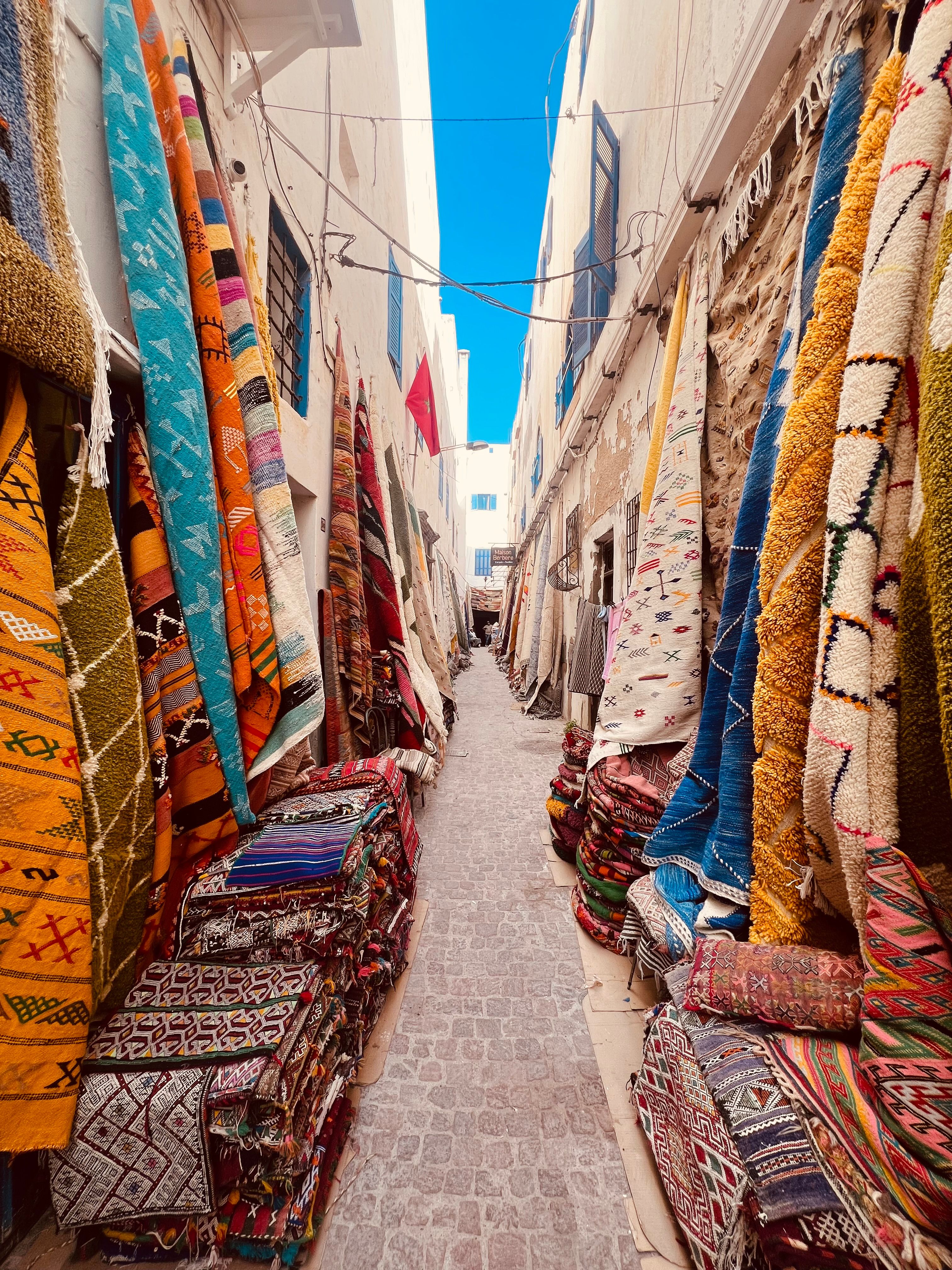
Tucked into the vaulted chambers beneath the northern bastion is the craft that gives the medina its scent. These cubbyholes in the wall once held ammunition, then goats and donkeys, and now house the marquetry workshops that Essaouira is known for across Morocco. The wood is thuya, a local conifer whose gnarled root burl is prized for its grain, worked here alongside cedar and lemonwood inlay.
Push through a low doorway and the smell reaches you first, resinous and warm, close to cedar but sweeter. Inside, someone is usually bent over a lathe or setting tiny pieces of pale wood into a dark box lid by hand. The good work rewards a close look. Patterns built from hundreds of hand cut fragments, no two boxes quite alike, finished with a wax that brings the grain up rather than hiding it under lacquer. It pays to look properly before you buy. The genuine article is heavy, the inlay sits flush under a fingertip, and the pattern lines up across the seams. The lighter, rougher pieces stacked near the entrance are the tourist grade. Ask to watch someone work and most will let you, because the making is half the point.
Frequently asked questions
Is Essaouira, Morocco worth visiting?
Yes, especially if you give it more than a rushed day trip from Marrakech. Essaouira rewards a night or two, with a walled medina, a working fishing port and one of the most reliable kitesurfing bays on the Atlantic coast. Arriving as a half day visitor means seeing the ramparts and leaving before the town settles into its own rhythm.
How far is Essaouira from Marrakech?
Essaouira sits about 175 kilometres west of Marrakech, roughly two and a half to three hours by road. There is no train, since Marrakech is the southern end of Morocco's rail network, so every route runs by car or bus.
When does the wind blow in Essaouira?
The Alizé trade winds blow across the bay most reliably from April to October, building through the late morning and holding into the evening. July and August are the strongest and busiest. Winter still brings rideable days, softer and better suited to a first lesson.
What is Essaouira known for?
Essaouira is known for its Atlantic wind, its blue fishing boats, its walled medina and its thuya wood marquetry. It is also the spiritual home of Gnaoua music and hosts the Gnaoua World Music Festival each June.
Can you eat fresh fish at Essaouira port?
Yes. A row of grill stalls just inside the port entrance lays out the morning's catch on ice. You choose your fish, they weigh it and grill it over coals, and you eat it at a shared table. Ask the price by weight before they cook it.