
On The Go Tours
Our agents are waiting to chat to you...
Are you a Travel Agent or Customer?
Do you have an booking reference?
A Night Under the Stars in the Moroccan Sahara
Reaching the great dunes, the silence after dark and sunrise over the sand
A Night Under the Stars in the Moroccan Sahara
Reaching the great dunes, the silence after dark and sunrise over the sand
When do you want to go?
2026
I'm flexible
Passengers
Adults (18+)
Children (0 - 17)
Reaching the great dunes of the deep south
A night under the stars in the Moroccan Sahara is the kind of thing that sounds like a cliché until you have done it, and then it is not. The great dune fields of the Moroccan Sahara lie in the far southeast of the country, a long day's drive beyond the Atlas mountains, and reaching them is part of the point. Out here the land finally runs out into an ocean of sand, the towns fall away, and once the sun is down there is nothing but the dark, the cold and an enormous sky. It is a simple thing, a fire, a tent, a night in the open, but it is one that stays with almost everyone who does it.
Reaching the Dunes
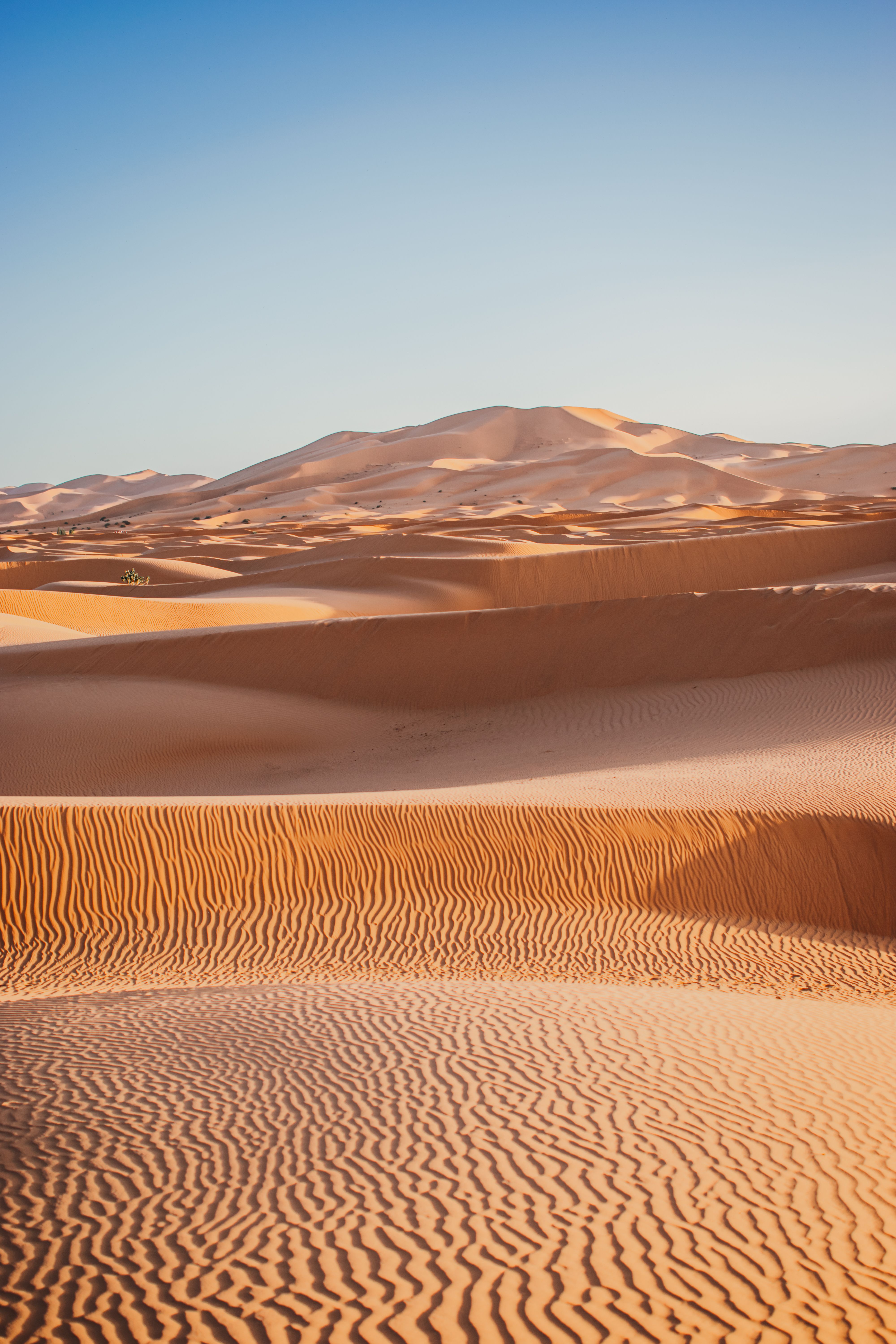
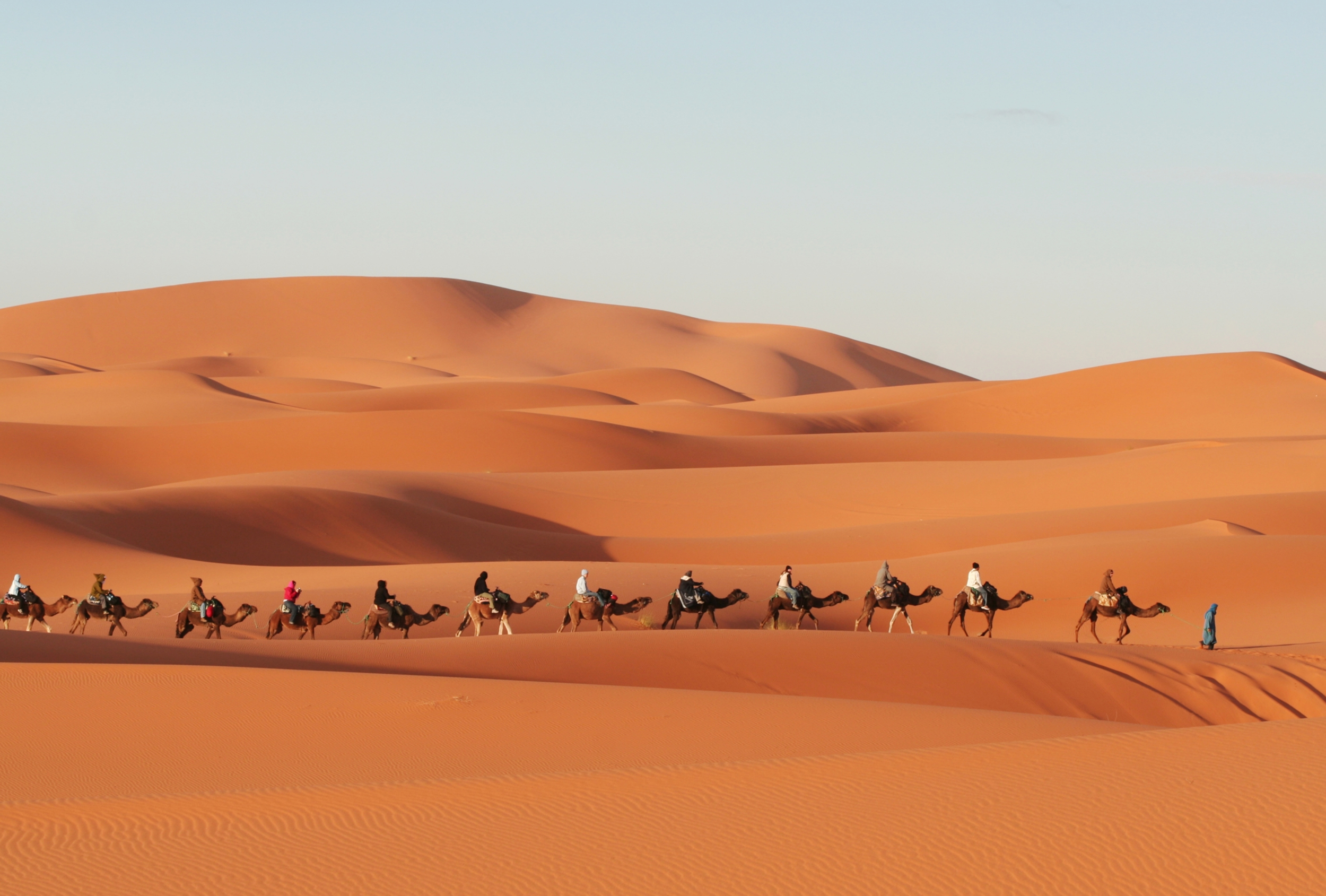
The desert does not begin gently. For hours you cross the stony, sunbaked country of the south, past palm oases and mud-walled towns, and then, quite suddenly, a wall of gold rises out of the flat ground ahead. These are the ergs, the true sand seas, and there are two main ones that travellers head for.
Erg Chebbi, near the town of Merzouga, is the more accessible. Its dunes rise to around 150 metres and run unbroken towards the Algerian border, close enough to reach without an expedition, which is why most desert nights happen here. Erg Chigaga, further west and reached through the frontier town of M'hamid, is larger, wilder and much harder to get to, a longer haul across rough track that rewards you with far fewer people and a deeper sense of remoteness.
Silence, cold and a sky full of stars
The first thing you notice at the camp is what you cannot hear. The desert has no hard surfaces to carry sound, no traffic, no wind in trees, often no wind at all, and the silence is total in a way that is genuinely disorienting at first. People drop their voices without meaning to. You become aware of your own footsteps in the sand.
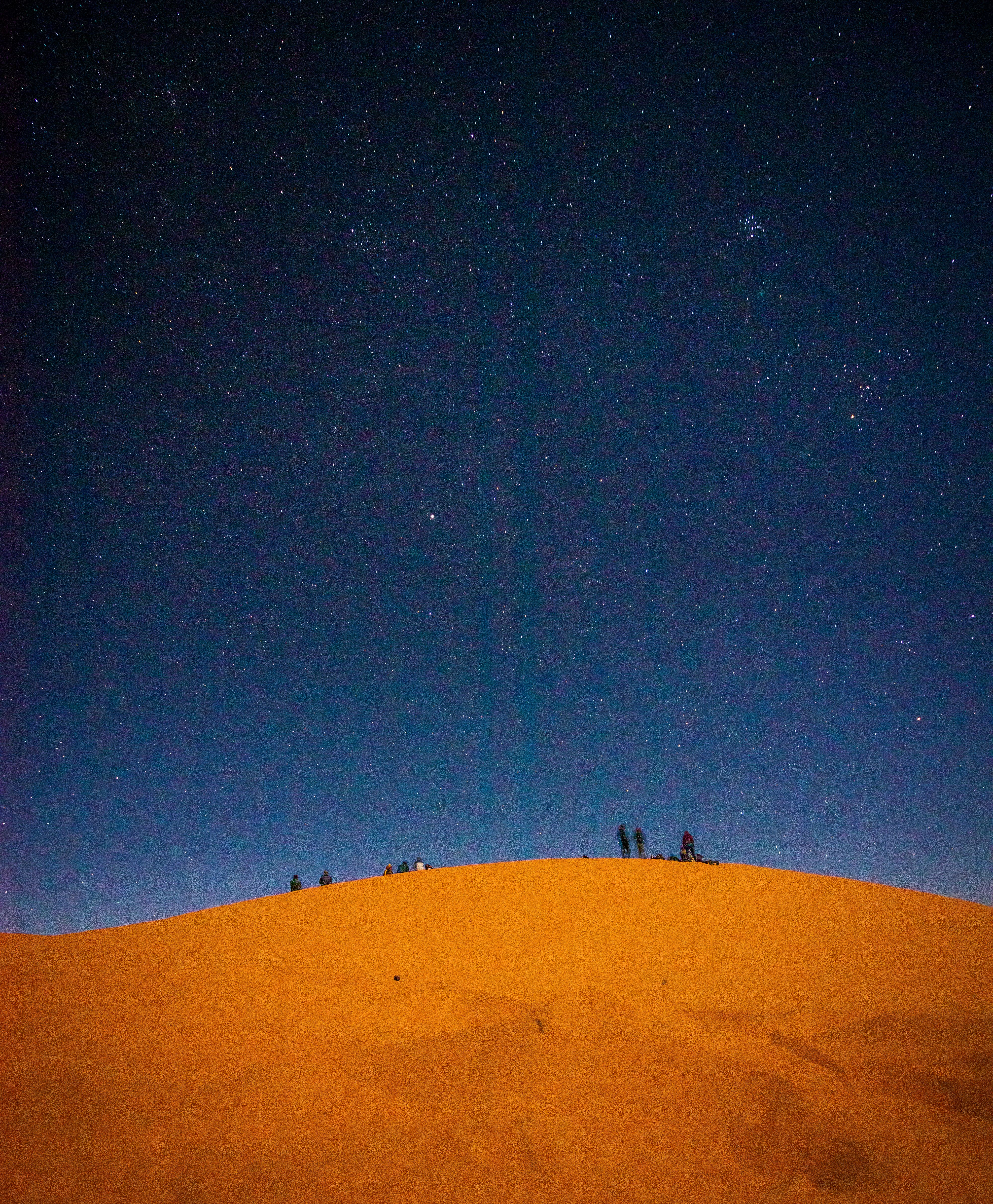
Then the temperature turns. The desert loses its heat fast once the sun is down, and the drop can be startling, twenty degrees or more between the warmth of the afternoon and the chill of the small hours. The layers you resented carrying all day earn their place after dark, and in winter a proper warm coat is not optional. This is the detail most people get wrong before they come, imagining heat and finding cold. And then the sky. With no town for miles and nothing to drown them out, the stars come in numbers most people have never seen, the whole arch of the Milky Way laid out overhead, bright enough to throw a faint light on the sand. You lie back on a still-warm dune and simply look up. Shooting stars are common. The longer your eyes adjust, the more there are, until the sky seems less like a ceiling than a depth you are looking down into. It is the reason the desert night is worth all the driving it takes to reach it.
The Camp and the Fire
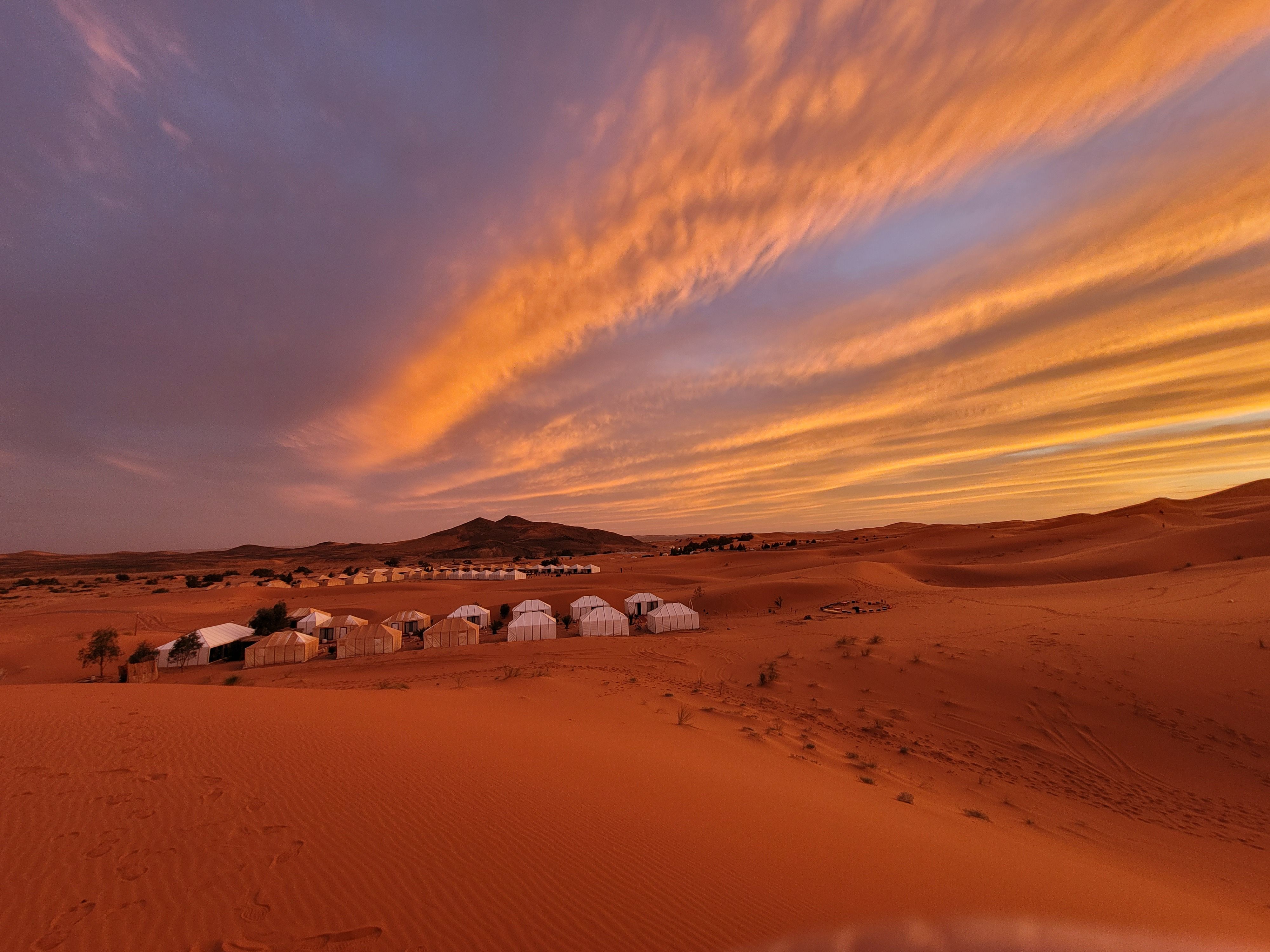
Desert camps range from the very simple to the surprisingly comfortable, but the shape of the evening is much the same wherever you stay. Tents are pitched in a rough circle, often in Berber style, with rugs and low seating, and at the centre there is a fire. Dinner is usually a tagine, the slow-cooked stew that arrives under its conical lid, eaten around the fire as the last light goes. The food is simple and good, cooked over gas or coals in the middle of nowhere, and it tastes the better for the setting. Afterwards, at many camps, someone brings out drums, and the crew and guests fall into the rhythm of Berber desert music, the beat carrying out into the dark.
Later the camp goes quiet. Some people turn in to their tents, others stay out on the sand with the fire burning down, reluctant to waste the sky. Sleeping in the desert is its own experience, in the deep hush, sometimes under canvas, sometimes with the tent open to the stars. It can be cold, and the ground is firmer than it looks, but waking in the night to that silence and stepping out under the stars is part of what you came for. Few people sleep straight through, and fewer regret being awake for it.
Sunrise over the sand
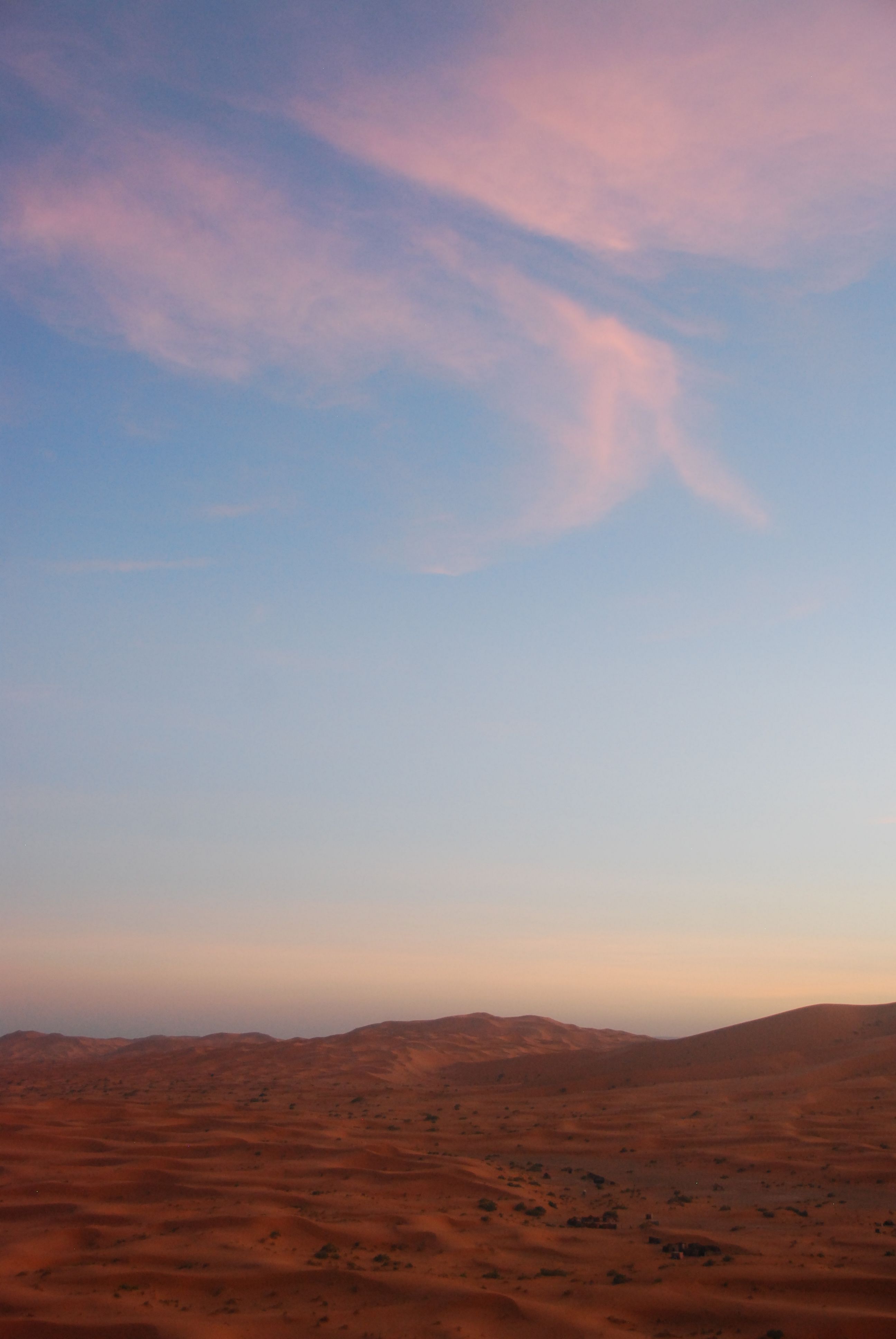
The desert asks to be seen at dawn, and it is worth the early start. Before the sun is up, climb a nearby dune. It is slow, hard work, two steps up and one sliding back in the soft sand, and you reach the crest with burning legs just as the light begins. Then the show. The low sun comes across the dunes almost horizontally, and for a few minutes it rakes the ridges, throwing one face into deep shadow and lighting the other a burning orange, so that the whole field stands out in sharp relief. The wind-carved patterns on the sand, the long clean lines of the crests, the ripples underfoot, all of it is at its most dramatic in that brief window before the sun climbs and flattens everything into glare.
Look closely and the desert is not as empty as it seemed in the dark. The night's tracks are written across the sand, the trails of beetles, lizards and small mammals that come out in the cool, and here and there a stubborn desert plant. From a high dune the scale finally registers, the sand running to the horizon in every direction, and you understand that the camp was only ever at the very edge of it. By mid-morning the heat is building and the first day visitors are arriving, and it is time to walk back down. But that first hour on the dune, cold, quiet and alone with the light, is the other half of the desert night, and the two together are the whole experience.
The Sahara across the four seasons
The desert is a place of extremes, and the season you choose shapes the whole experience. The temperatures below are average daytime highs out around the Erg Chebbi dunes near Merzouga, and the nights run far colder than the figures suggest.
Spring
March to May
The best season for a desert night, warm but not yet brutal by day, and cool rather than cold after dark, so the sky is comfortable to sit out under.
Summer
June to August
Fiercely hot, with the middle of the day effectively unusable, so nights are the only bearable time to be in the dunes and camps run at their quietest.
Autumn
September to November
Alongside spring, the kindest window, with warm days softening through the season and pleasant, clear nights ideal for the stars.
Winter
December to February
Days are bright and clear and comfortable for walking the dunes, but a proper warm coat and layers are essential once the sun goes down.
Ways to spend a night in the dunes
A night in the dunes takes some planning, since the desert sits a long way south of the cities and is usually reached as part of a longer journey across the country. The tours below include the Moroccan Sahara and a night at a desert camp, so you can see the sand, the silence and the sky for yourself.

Frequently asked questions
Where is the Sahara desert in Morocco?
The main dune fields are in the far southeast of Morocco. The most visited is Erg Chebbi, beside the town of Merzouga, while the larger and more remote Erg Chigaga is reached through M'hamid further west. Both lie a long drive beyond the Atlas mountains.
Is it cold in the Moroccan Sahara at night?
Yes, often much colder than people expect. The desert loses its heat quickly after sunset, and the temperature can drop twenty degrees or more overnight, falling below freezing in winter. Warm layers for the evening are essential whatever the season.
What is a night in the Moroccan Sahara like?
You reach a camp among the dunes in the late afternoon, eat a tagine around a fire as the light fades, and spend the evening under an enormous sky with almost total silence. Many camps have Berber drumming, and the night is best remembered for the stars and the quiet, followed by sunrise from a dune.
Is Erg Chebbi or Erg Chigaga better for a desert night?
Erg Chebbi, near Merzouga, is easier to reach and suits most visitors, with tall dunes and a range of camps. Erg Chigaga is larger, wilder and much harder to get to, which rewards those who want fewer people and a deeper sense of remoteness.