On The Go Tours
Our agents are waiting to chat to you...
Are you a Travel Agent or Customer?
Do you have an booking reference?
Walking the Camino de Santiago
One cathedral, many roads, and the long walk to reach it
Walking the Camino de Santiago
One cathedral, many roads, and the long walk to reach it
When do you want to go?
2026
I'm flexible
Passengers
Adults (18+)
Children (0 - 17)
Following the old road to Santiago
Walking the Camino de Santiago means joining a road older than most of the nations it crosses. Pilgrims have been making their way to the cathedral at Santiago de Compostela, in the green northwest corner of Spain, since the ninth century, following paths that were old before the tarmac was ever laid over them. In the Middle Ages this was one of the three great journeys of Christian Europe, ranked alongside Rome and Jerusalem, and at its height hundreds of thousands walked it each year. The routes fell quiet for centuries, then slowly came back to life, and today the Camino de Santiago is busier than it has been in living memory. What draws people now is far more varied than faith alone.
The main routes of the Camino de Santiago
The Camino Francés
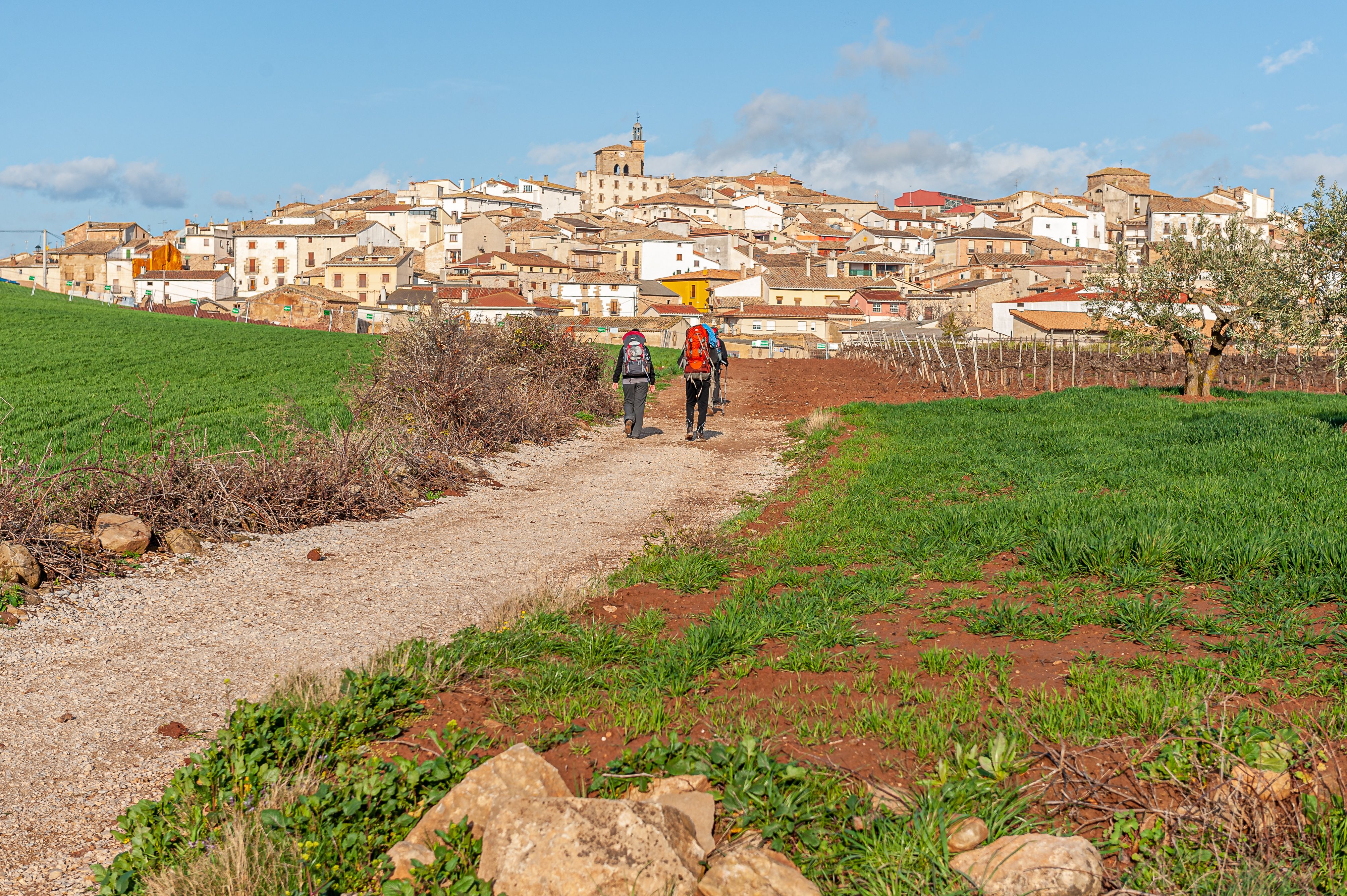
The Camino Francés is the one most people mean and the one most people walk. It begins at Saint-Jean-Pied-de-Port on the French side of the Pyrenees, and the first day is the hardest of the whole route, a long climb over the mountains that rewards the effort with the descent to the old monastery at Roncesvalles.
From there it runs west through the vineyards of La Rioja, across the wide meseta in the middle, and up over the pass at O Cebreiro into Galicia, some 780 kilometres in all. It threads real cities into the walk, Pamplona, Burgos with its Gothic cathedral, León, so street life and history break up the quiet stretches. Landmarks accumulate, among them the iron cross at Cruz de Ferro, where walkers leave a stone carried from home. Covered at around 25 kilometres a day it takes most people thirty to thirty-five days, and it is the best served of all the routes, with hostels, cafes and waymarking every few kilometres, which is why it suits a first long walk.
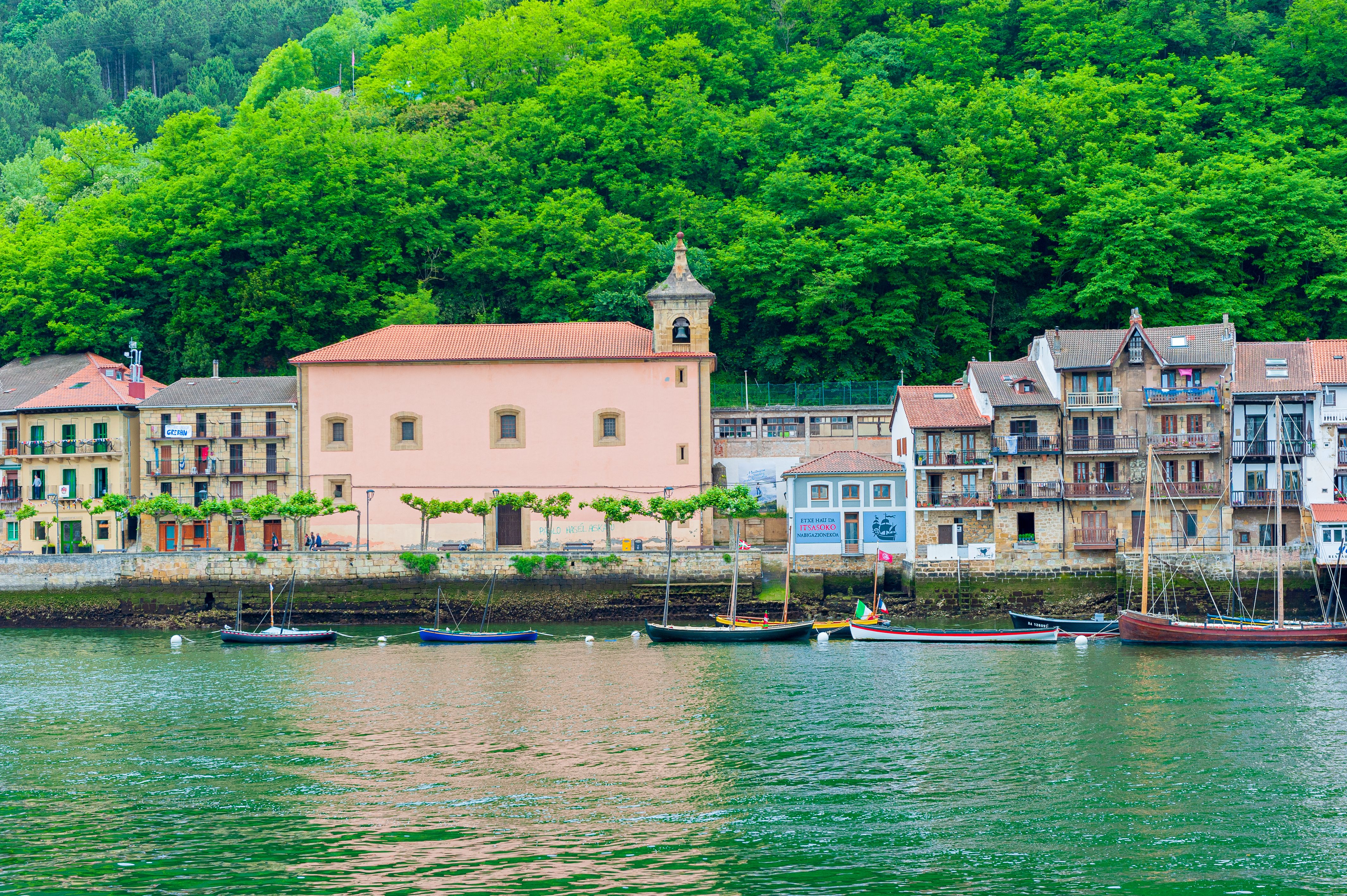
The Camino del Norte
The Camino del Norte traces the Cantabrian coast from Irún on the French border, and it is the route for those who want the sea. It passes through San Sebastián and Bilbao, within reach of the Guggenheim, and on along cliffs, beaches and green headlands.
That coast comes at a cost. The Norte is longer than the Francés and a good deal hillier, climbing and dropping constantly between coves, and its Atlantic weather is cooler and wetter. Fewer pilgrims walk it, so the company is thinner and the villages quieter, and it has the name of being the hard and beautiful one.
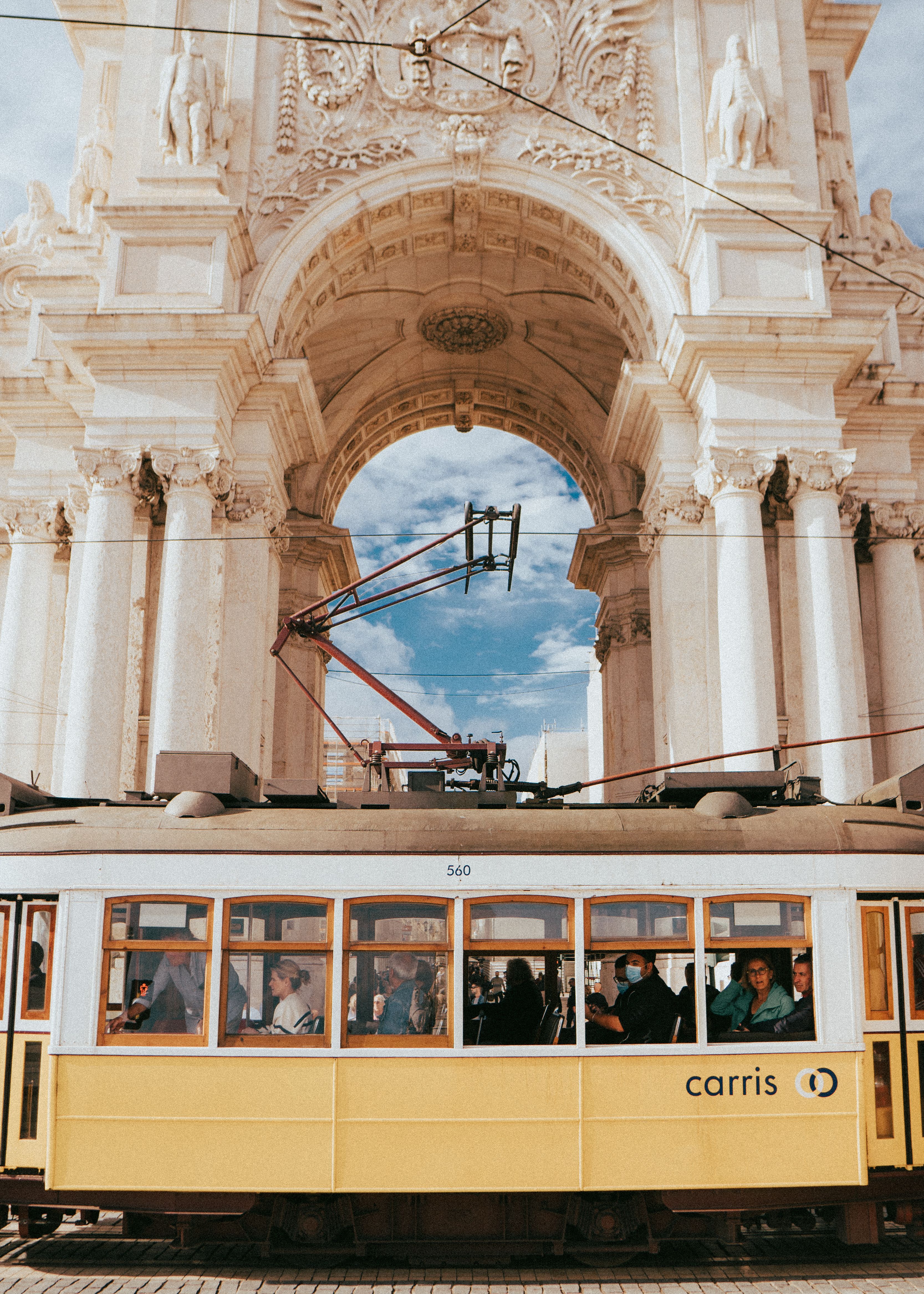
The Camino Portugués
The Camino Portugués comes up from the south, and it splits into two very different journeys. The central route from Lisbon or Porto runs inland, about 620 kilometres from the capital, following old Roman roads and crossing medieval bridges through towns like Ponte de Lima, one of the prettiest on any Camino.
The coastal route from Porto is nearer 280 kilometres and keeps close to the Atlantic, much of it on boardwalks above the dunes with the sea alongside and fishing villages to stop in. One stretch, the Spiritual Variant, even swaps a day of walking for a short boat journey up a river estuary. The Portuguese routes are milder in climate, gentler underfoot than the northern mountains, and quieter than the Francés in high season.
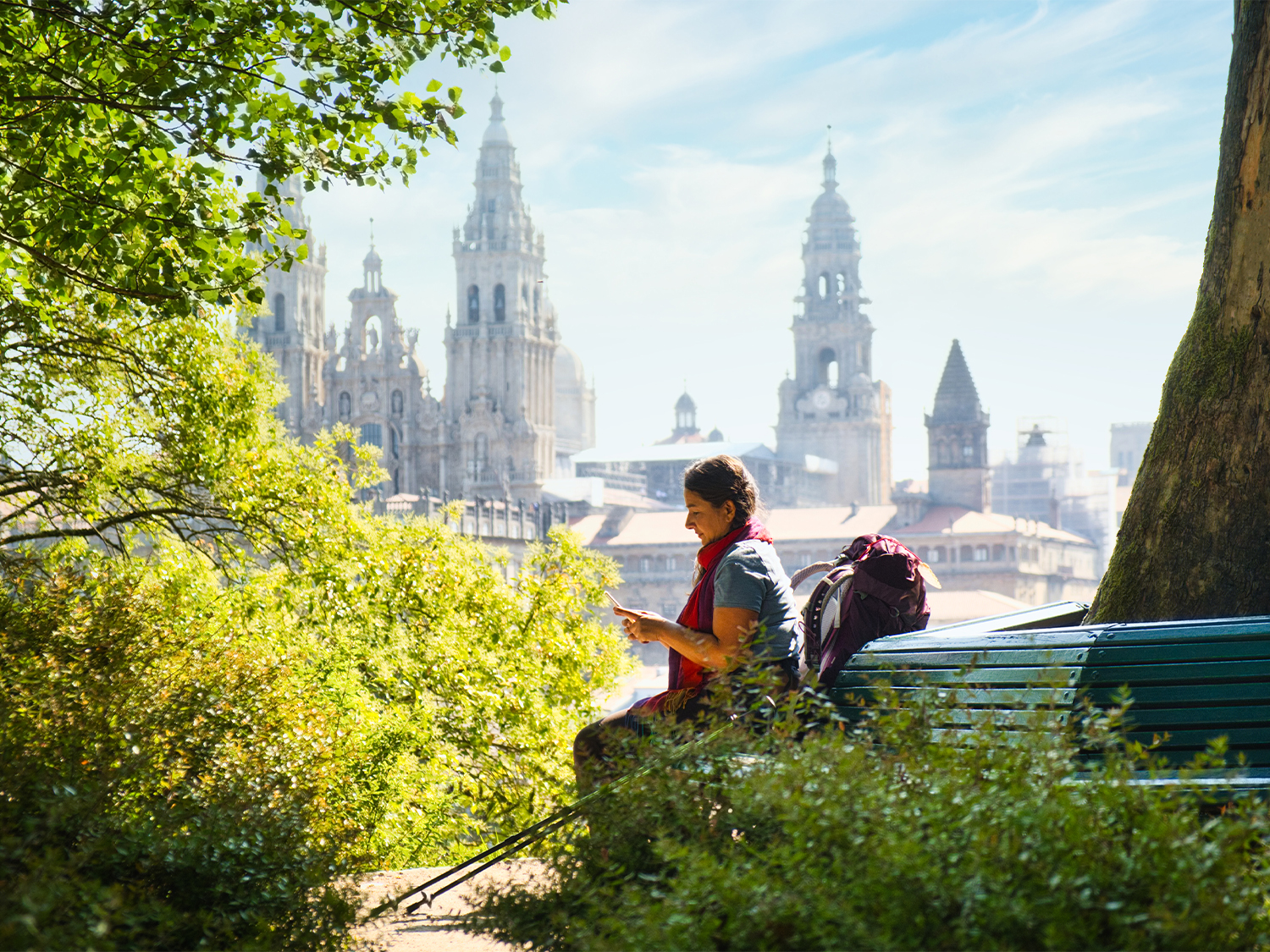
Collecting stamps along the way
The pilgrim credential is a humble thing, a folded strip of card you carry from the first day. Its purpose is to be filled. At churches, hostels, cafes and tourist offices along the way you collect a sello, an inked rubber stamp, and over the days the little grid of boxes fills with them, each one different, a record of where you slept and stopped and passed through.
The collecting becomes a small daily ritual. You learn to notice which bar or church has a stamp, to time a coffee around it, to compare designs with the people you are walking with. By the end the credential is a densely printed keepsake, and for many walkers it matters more than the certificate it earns.
That certificate is the Compostela, handed over at the Pilgrim Office in Santiago when you present a properly stamped credential. To qualify you must have walked at least the final hundred kilometres, or cycled the final two hundred, with two stamps a day over that closing stretch. The Compostela is written out in Latin, in your name, and records that you completed the pilgrimage for religious or spiritual reasons. If that framing is not yours, a separate certificate simply records the distance you covered, no belief required.
When to walk and which Camino to choose
Whichever you choose, the shape is the same. A road, a rhythm, the people you meet on it, and a city at the end that means more for having been reached on foot.
Spring
April to June
Spring brings green hills, wildflowers and mild days, the sweetest walking of the year.
Summer
June to Aug
Summer is hot and crowded, the meseta shadeless and punishing by noon
Autumn
Sept to Nov
Autumn cools the crowds and turns the vineyards gold.
Winter
Dec-Mar
Winter empties the road to a cold, wet, beautiful quiet, with many hostels closed.
Ways to walk the Camino
If the road is calling, walking the Camino need not mean arranging every stage yourself. The trips below cover the most rewarding parts of the route, from the full Camino Francés across northern Spain to the shorter Galician stretch into Santiago, with the beds booked and the bags carried on ahead so your attention stays on the walking. Find the one that fits the time you have.
Frequently asked questions
How long does it take to walk the Camino de Santiago?
The full Camino Francés from Saint-Jean-Pied-de-Port to Santiago covers 780 kilometres and takes most walkers thirty to thirty-five days, at around 25 kilometres a day. The shortest option that still earns the Compostela certificate is the final 100 kilometres from Sarria, which takes five to seven days. Many people join for shorter sections of several days.
Which Camino de Santiago route is best for a first walk?
The Camino Francés is the most walked and the best served, with hostels, cafes and waymarking every few kilometres, which makes it the natural choice for a first walk. The Galician section from Sarria, at 115 kilometres over five to seven days, gives a complete experience without needing a month away. The Camino Portugués from Porto is a quieter alternative.
Where do you sleep on the Camino de Santiago?
Most walkers stay in albergues, the pilgrim hostels that line the main routes, which offer simple dormitory beds at low cost. Municipal albergues are the cheapest and usually work on a first-come basis, while private albergues, guesthouses and small hotels can be booked ahead and offer more comfort. Many walkers mix the two depending on the day and the season.
Do you have to be religious to walk the Camino de Santiago?
No. The Camino has deep Catholic roots, and the Compostela certificate is formally awarded for completing the pilgrimage for religious or spiritual reasons, but the route is open to everyone. Many who walk it today give personal, cultural or sporting reasons rather than religious ones, and a separate certificate records the distance walked without the religious framing.