
On The Go Tours
Our agents are waiting to chat to you...
Are you a Travel Agent or Customer?
Do you have an booking reference?
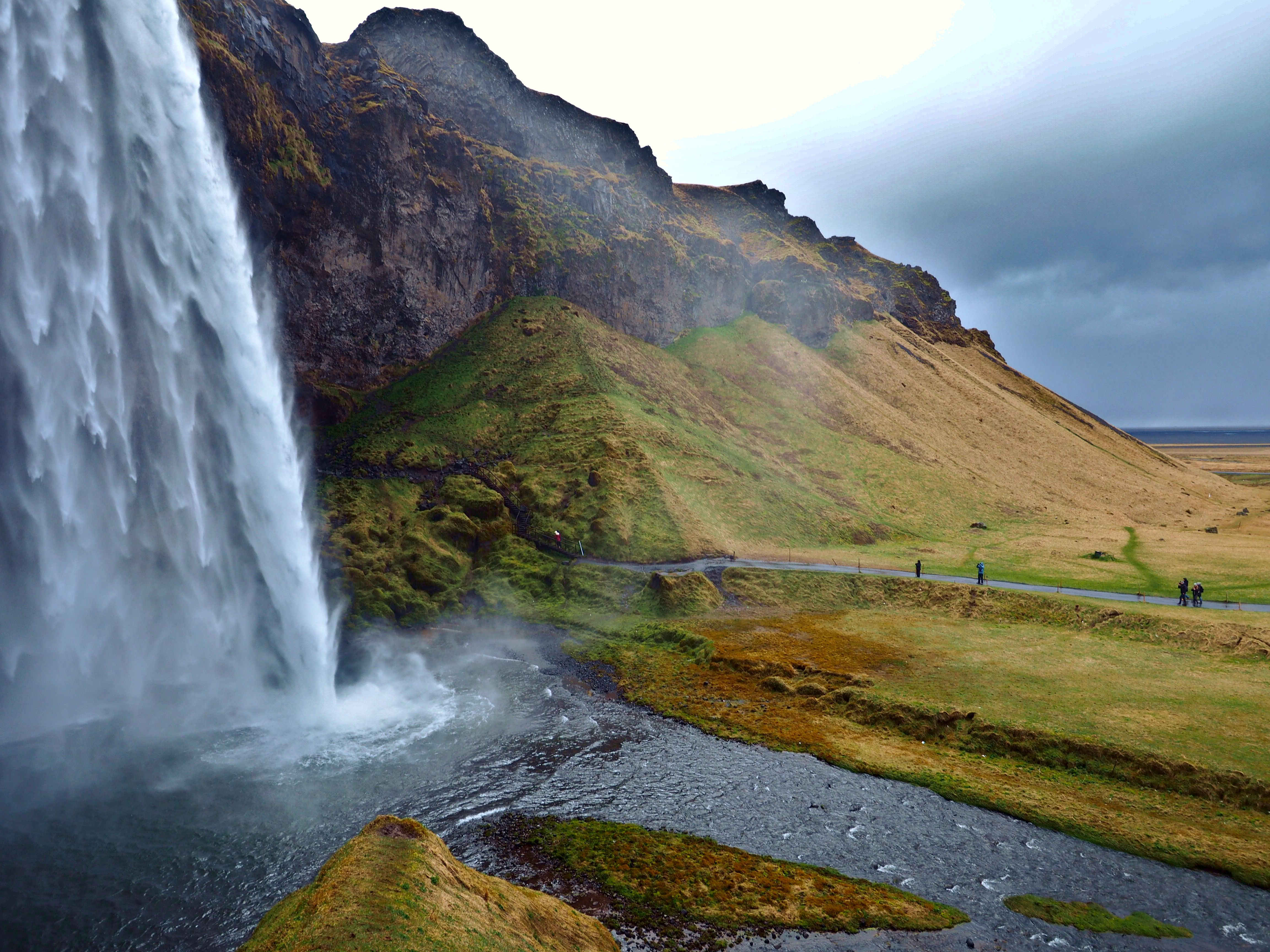
Chasing Waterfalls Along Iceland's South Coast
Walking behind Seljalandsfoss, finding hidden Gljufrabui and standing under Skogafoss
Chasing Waterfalls Along Iceland's South Coast
Walking behind Seljalandsfoss, finding hidden Gljufrabui and standing under Skogafoss
When do you want to go?
2026
I'm flexible
Passengers
Adults (18+)
Children (0 - 17)
Why the South Coast is one long waterfall drive
Iceland's South Coast is one of the great waterfall drives anywhere. In the space of a few hours from Reykjavik the road runs beneath a line of cliffs where meltwater from the glaciers above pours off the edge in falls of every size, some famous, some barely marked. Chasing waterfalls along Iceland's South Coast is less a tick list than a way of reading the landscape, because the falls are the visible edge of the ice and the volcanoes behind them. This guide follows a handful of the best, not to round them all up, but to show what makes each one worth stopping for, and how to see them well rather than through a car window.
Walking behind Seljalandsfoss
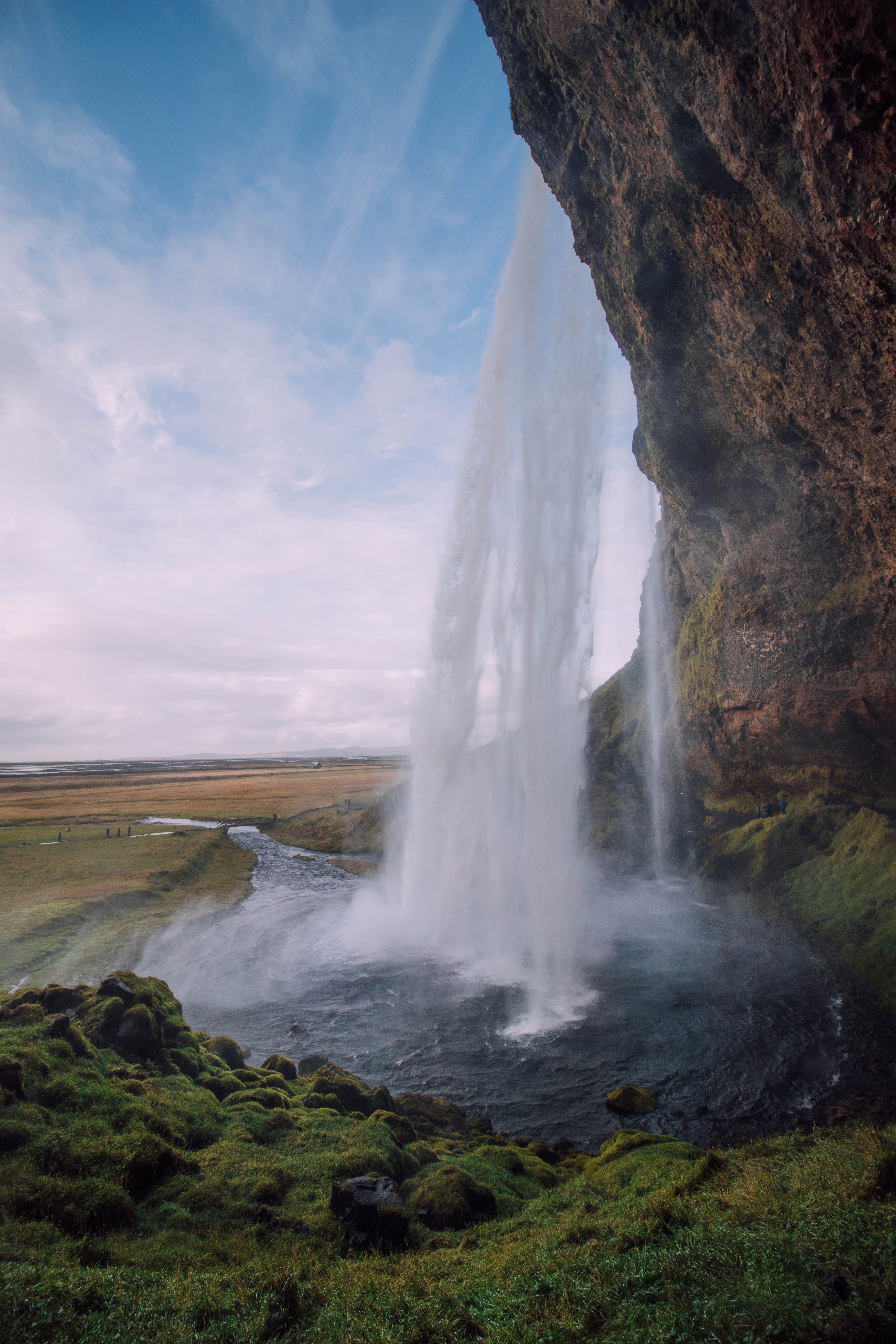
The first great stop out of Reykjavik is Seljalandsfoss, and it does something almost no other waterfall does. A narrow ribbon of water drops around sixty metres off the cliff, and behind it, where the rock is undercut, there is a path. You can walk right round the back of the falling water and stand in the hollow behind it, looking out through the curtain.
It is worth doing and worth bracing for. The path is wet, rocky and slippery, the spray comes at you sideways, and you will get damp whatever you wear, so waterproofs and boots with grip are the difference between enjoying it and picking your way nervously. From behind, the water is a shifting screen of white against the daylight, roaring in the enclosed space, and the view out through it, with the flat green plain beyond, is unlike anything you see from the front.
Finding hidden Gljufrabui
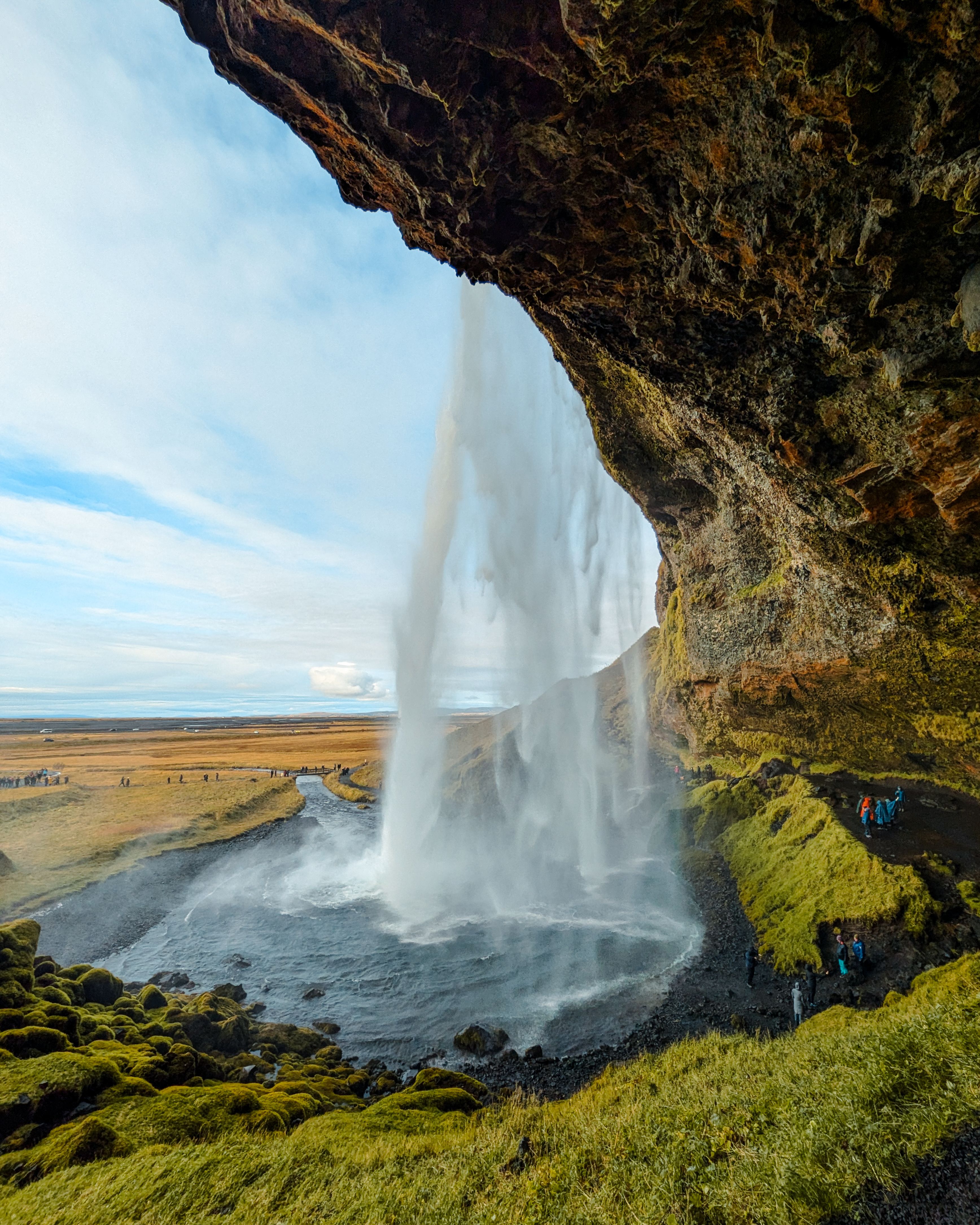
A short way along the road is Gljufrabui, and most people drive straight past it, which is exactly why it is worth finding. It hides a few hundred metres from Seljalandsfoss, tucked out of sight inside a cleft in the cliff, and from the road you would never know it was there.
To reach it you follow a stream to a narrow gap in the rock and pick your way in, stepping from stone to stone through the slot in the cliff, the walls closing overhead. Then the canyon opens into a roofless chamber, and the waterfall thunders down into it from far above, filling the small space with noise and spray and a strange green light coming off the mossy walls. You will get wet. There is no way to stand in that chamber and stay dry, and a big rock in the middle that everyone climbs for the view is greasy with spray. But standing inside the cliff with the water pounding down and the sky a bright slot far overhead is one of the most memorable few minutes on the whole coast, and because the walk in puts most people off, you may well have it nearly to yourself. It is the reward for going ten minutes further than the crowd.
Standing under Skogafoss
Further east, Skogafoss is the opposite kind of waterfall, and it hits you with pure scale. There is no subtlety and no hidden trick here. A wall of water some sixty metres high and twenty-five wide comes straight over a sheer cliff and lands with a force you feel in your chest from the car park.
You can walk right up to the base, as close as the spray lets you, and on a bright day the sheer volume of mist thrown up means there is almost always a rainbow standing in it, sometimes a full circle if the light is right. Getting close means getting soaked, and the wind off the plunge pool drives the spray a surprising distance, but standing at the foot of it, craning up at the water coming over the top, is the point of the visit.
The ice and the cliffs behind it all
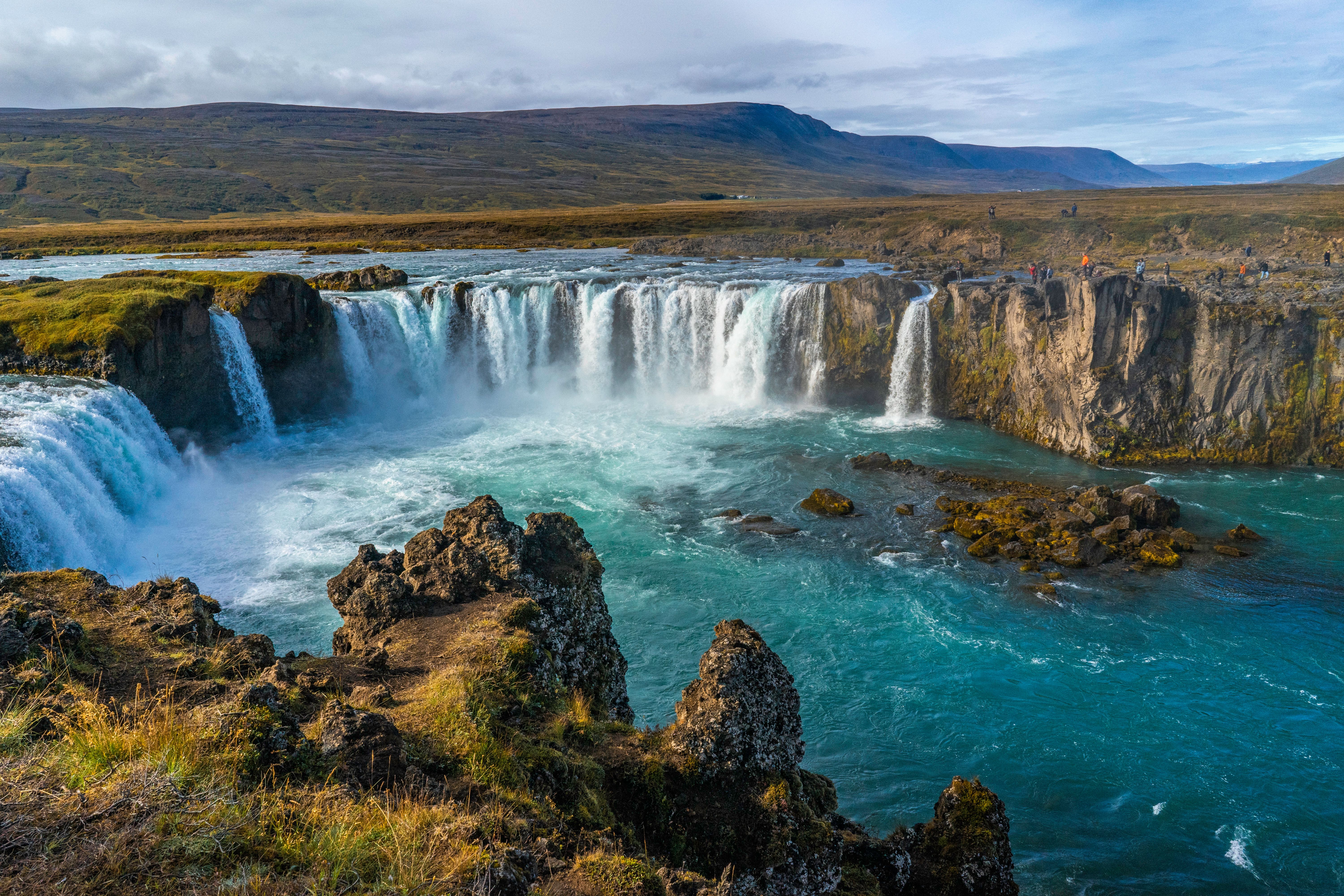
What makes the South Coast falls so relentless is what lies behind them, and it is worth understanding to see the place properly. That long line of cliffs the waterfalls pour over is an old coastline. The sea once broke here, then retreated, leaving a wall of rock with a flat plain in front of it, and the rivers running off the high ground behind simply drop over the edge.
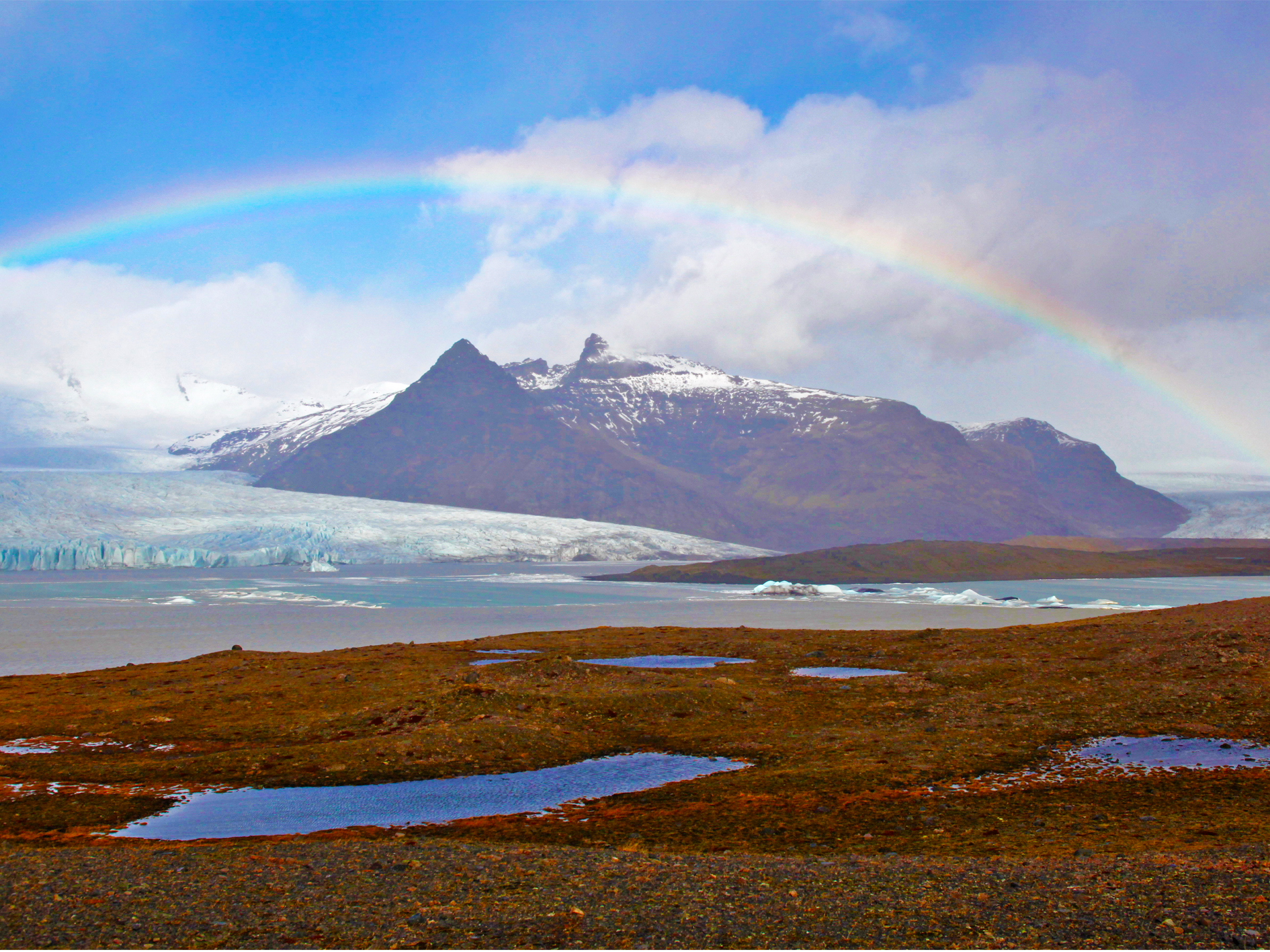
Above the cliffs sit the ice caps and glaciers, and it is their meltwater, endlessly renewed, that feeds the falls. In warm weather they swell and roar; the volume is never quite the same twice. Between the ice and the sea the plain is green and treeless, grazed by sheep and Icelandic horses, with the occasional farm and the odd volcano brooding on the skyline, including the one whose eruption grounded flights across Europe some years ago.
The falls through the year
No two visits to the South Coast are quite the same, because the season you come in changes everything, the volume of the falls, the quality of the light, the colour of the land and the number of people beside you. A waterfall in full summer spate under a sun that barely sets is a different thing entirely from the same fall half frozen in the January dark. It is worth choosing your season deliberately rather than leaving it to chance.
Spring
April to May
The rising meltwater keeps the falls running full, the plain greens up after the winter, and the crowds are still thin, though the weather is changeable and showers blow through with little warning.
Summer
June to August
This is when the falls run hardest, the daylight barely ends, and the late western sun swings round to light Seljalandsfoss in the evening, though it is also when the paths and car parks are at their fullest.
Autumn
September to October
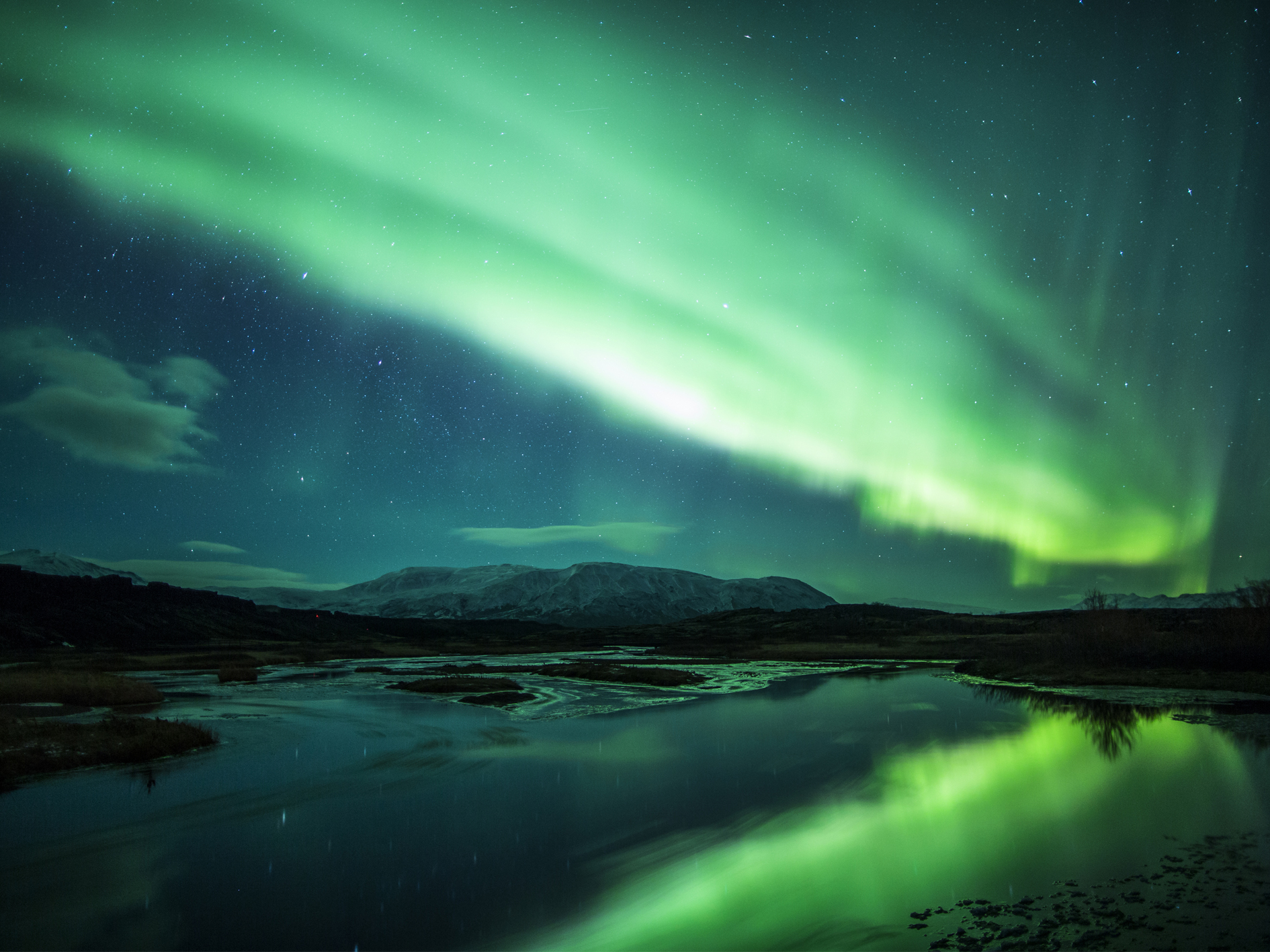
The flow is still strong, the plain takes on autumn colour, the visitors thin out, and the returning dark brings the first real chance of the northern lights on a clear night.
Winter
November to March
The falls freeze at their edges and the plain lies under snow, but the paths become treacherous, the daylight is short, and the walk-behind path at Seljalandsfoss is often closed for safety.
Follow the South Coast waterfall route
The falls along this stretch sit close together, which is why South Coast routes take them in as one run. At Seljalandsfoss the path leads behind the water, and the hidden Gljúfrabúi is tucked into a canyon just along the same cliff. Skógafoss, a broad curtain of water, lies a short drive east. The tours below follow that route for you.

Frequently asked questions
What are the best waterfalls on Iceland's South Coast?
The standout waterfalls on Iceland's South Coast are Seljalandsfoss, which you can walk behind, the hidden Gljufrabui tucked inside a cliff nearby, and the massive Skogafoss a little further east. They line up along the ring road within a few hours of Reykjavik, close enough to see in a single day.
Can you walk behind Seljalandsfoss?
Yes. A path runs round the back of Seljalandsfoss, letting you stand in the hollow behind the falling water and look out through it. The path is wet and slippery, so waterproofs and boots with grip are essential, and it is often closed in winter for safety.
Can you climb Skogafoss?
Yes. A staircase of a few hundred steps runs up the cliff beside Skogafoss to a viewing platform at the top, with views over the falls and the flat coast to the sea. From there a trail carries on upriver past a string of quieter, almost unvisited waterfalls.
Why does Iceland's South Coast have so many waterfalls?
The coast runs beneath a long line of cliffs that mark an old shoreline, where the sea once reached before retreating. Rivers fed by the glaciers and ice caps on the high ground behind pour over that edge, which is why waterfalls line the route one after another.