Imperial Cities of India
New
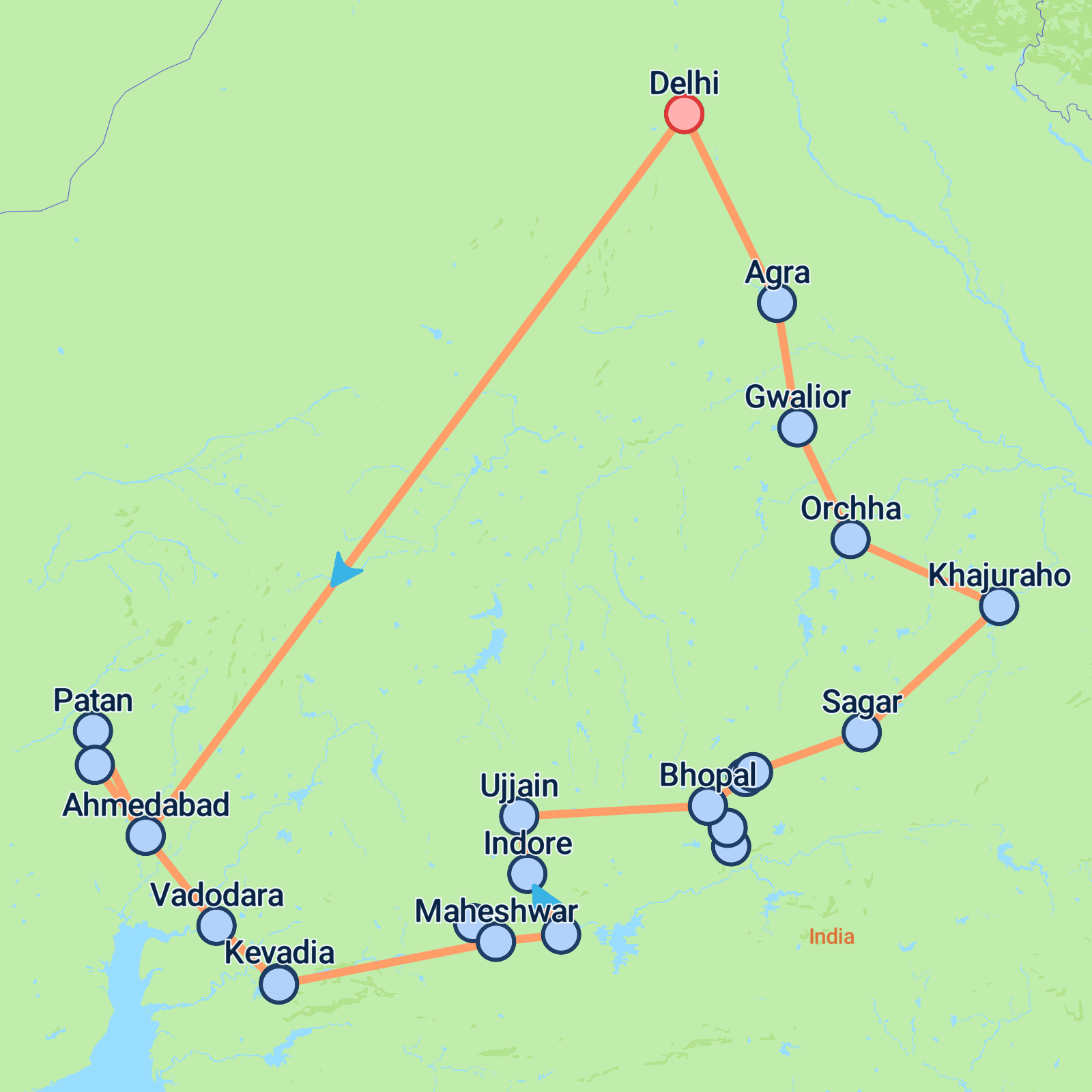
Begin in Delhi and end back in Delhi on this 13–day journey that blends big sights with offbeat gems. You’ll dive into Old and New Delhi’s Mughal icons, then fly to Ahmedabad to explore stepwells, the Modhera Sun Temple and Gandhi’s Sabarmati Ashram. Continue through Vadodara and UNESCO–listed Champaner–Pavagadh to the Statue of Unity, before following the Narmada to Maheshwar and atmospheric Mandu. Spiritual stops include Omkareshwar and Ujjain’s Mahakaleshwar. Around Bhopal, expect to see the cave art of Bhimbetka and serene Sanchi. Wrap up with Khajuraho’s carvings, Orchha and Gwalior Fort, and a sunrise visit to the Taj Mahal.
For a detailed itinerary and information about visas, money, weather and more.
Accommodation Standard
Prices
Tour Overview
Duration
13 daysHotel Rating
3, 4 or 5 star hotelsStarts
DelhiEnds
DelhiMinimum Age
No minimum ageMaximum Age
Tours have upper age limits for several reasons, such as but not limited to: tour pace, activity level, and accommodation standards. If you fall outside of this age limit, we do have lots of other tours in India that are suitable for all ages!
Arrival Transfer
YesDeparture Transfer
YesTour Guide
Yes - for included sightseeing.Country
IndiaPassengers
R 54 780,00
R 9 999,00
Accommodation Standard
Prices
Tour Style
Group Size
Min 1 / Max Private Tour
Trip Type
Private Tours
Range
On this tour, you won't be joined by other travellers, and will just be travelling with your booking party. Some transportation & sightseeing may be shared, check the Inclusions for more information.
Guiding Style
This tour includes scheduled sightseeing with expert guides in key destinations as per the Inclusions, as well as transportation (either with a driver or public transport), plus of course your accommodation. There is no single tour guide or tour leader throughout the trip. You’ll have support where it counts, and more freedom in between. Our cruise tours also fall into this category where you will be looked after by a crew. For more information, check the Inclusions of this tour.
Tour Pace
A balanced pace, with a mix of free time and visits to multiple locations, allowing for both relaxation and exploration. Generally doesn't visit more than one or two destinations per day.
Physical Rating
A moderate amount of walking is required during sightseeing, with some free time, offering a balance between activity and relaxation. As a general rule, you should be able to walk 2-kilometres without stopping.
Tour Guide
Yes - for included sightseeing.Group Size
Min 1 / Max Private TourRange
On this tour, you won't be joined by other travellers, and will just be travelling with your booking party. Some transportation & sightseeing may be shared, check the Inclusions for more information.
Guiding Style
This tour includes scheduled sightseeing with expert guides in key destinations as per the Inclusions, as well as transportation (either with a driver or public transport), plus of course your accommodation. There is no single tour guide or tour leader throughout the trip. You’ll have support where it counts, and more freedom in between. Our cruise tours also fall into this category where you will be looked after by a crew. For more information, check the Inclusions of this tour.
Tour Pace
A balanced pace, with a mix of free time and visits to multiple locations, allowing for both relaxation and exploration. Generally doesn't visit more than one or two destinations per day.
Physical Rating
A moderate amount of walking is required during sightseeing, with some free time, offering a balance between activity and relaxation. As a general rule, you should be able to walk 2-kilometres without stopping.
Trip Type
Private ToursPlaces You'll See
New Delhi
Delhi
Ahmedabad
Patan
Modhera
Vadodara
Pavagadh
Kevadia
Maheshwar
Omkareshwar
Indore
Bhopal
Mahabaleshwar
Bhojpur
Sanchi
Udayagiri
Sagar
Khajuraho
Bhopal Division
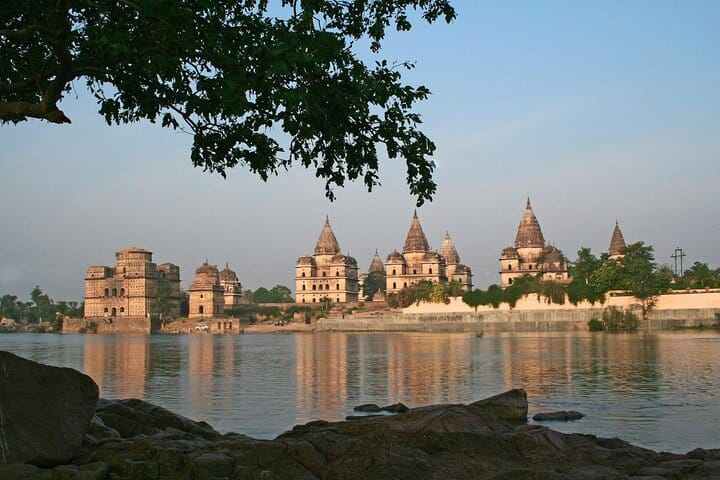
Orchha
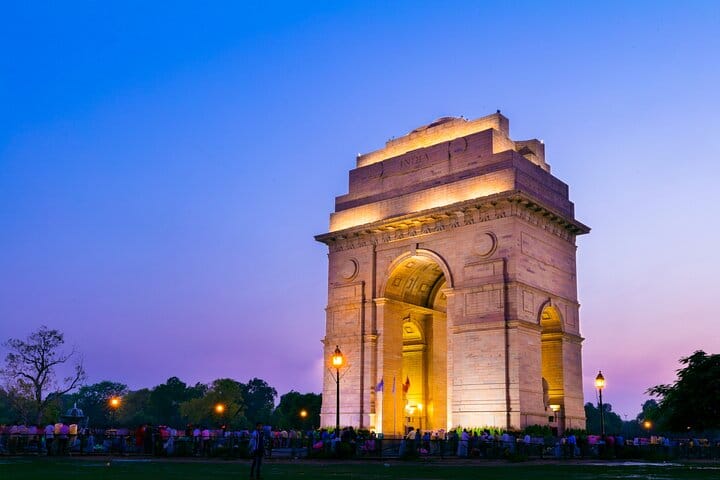
Gwalior
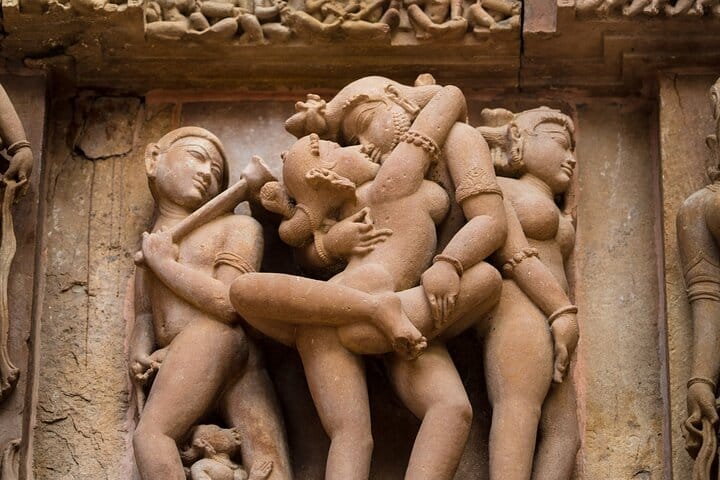
Agra
Accommodation Standard
Prices
Included
Not Included
Accommodation Standard
Prices
Itinerary
Day 1 - Exploring Delhi
Arrive in Delhi by flight, where our representative will meet you at the airport for a assisted transfer to your hotel. Check in from 12:00 – early check in is subject to availability.
Later, we set out on a Delhi city tour. In Old Delhi, we visit the Red Fort, the main residence of the Mughal emperors until 1857, and Jama Masjid, one of the largest mosques in the world built by Shah Jahan. We take a cycle rickshaw through Chandni Chowk and the Khari Baoli spice market, a bustling maze of stalls selling spices, dried fruits, oils and traditional sweets. We also pay respects at Raj Ghat, the memorial to Mahatma Gandhi.
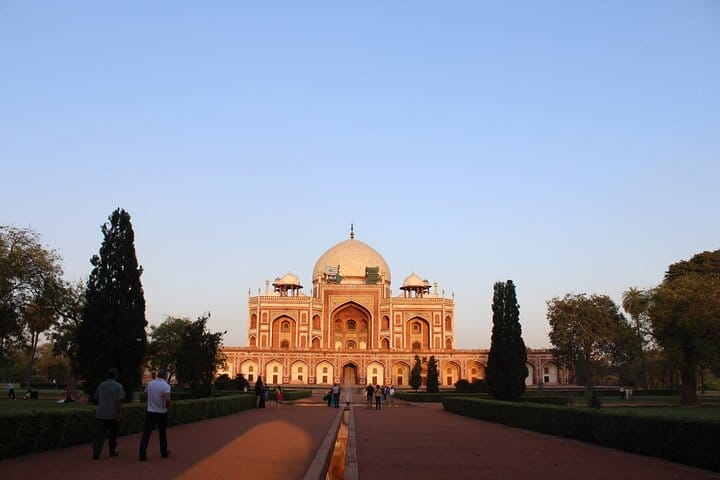
In New Delhi, we visit Humayun’s Tomb – the first garden-tomb in the Indian subcontinent and a key example of early Mughal architecture – and Qutab Minar, a 73 metre minaret that forms part of the Qutb complex. We continue to the Lotus Temple, a Bahá’í House of Worship open to all. We then drive along the capital’s ceremonial avenues, passing the President’s House, Parliament and India Gate. Overnight at the hotel.
Day 2 - Fly to Ahmedabad
After breakfast in Delhi, we transfer to the airport for your flight to Ahmedabad (flight not included). On arrival, we provide assistance and a transfer to your hotel for check in.
Later, we set out on a city tour, beginning at Bhadra Fort – known for its carved gateways, patterned stonework and frescoes. We continue to the Jami Masjid, with multiple entrances; near the eastern gate stands the tomb of Sultan Ahmad Shah, the resting place of Ahmad Shah I, his son Muhammad Shah and his grandson Qutb ud Din Ahmad Shah. We visit the Shaking Minarets at Sidi Bashir’s Mosque near Sarangpur Gate. At Sabarmati Ashram – founded by Mahatma Gandhi in 1917 on the banks of the Sabarmati River after his return from South Africa – we learn about his work in khadi, farming and other constructive activities. We also visit Hatheesing Jain Temple, established in 1850 by the merchant Seth Hatheesing and dedicated to the 15th Jain Tirthankar, Dharamnath. Later, we explore a couple of the city’s museums – including the Kite Museum and the Vishala Vichar Museum – and note Ahmedabad’s modernist landmarks associated with architects such as Le Corbusier, Louis Kahn, B. V. Doshi and Charles Correa. Overnight at the hotel.
Day 3 - Adalaj Stepwell, Patan & Modhera
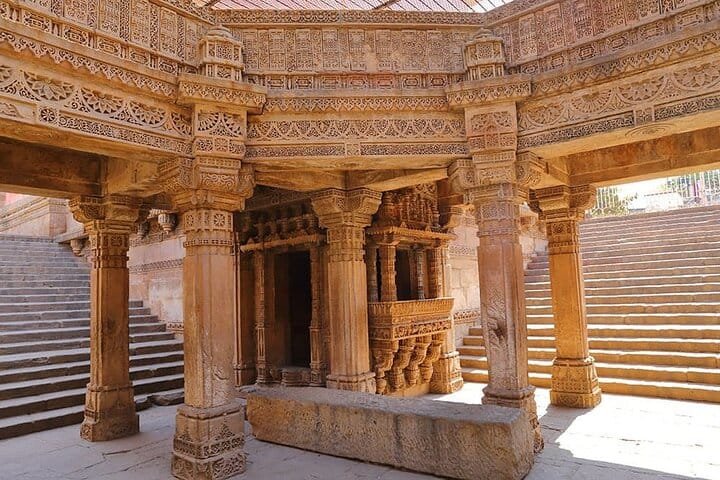
After breakfast at the hotel, we set out on a full‑day excursion from Ahmedabad to explore three remarkable heritage sites. We begin at Adalaj Stepwell, 18 km north of the city in Gandhinagar district. Attributed to Queen Rudabai, this four‑level stepwell was once a vital stop for travellers, dug into the water table so its levels rose and fell with the seasons, and offering cool respite from the heat.
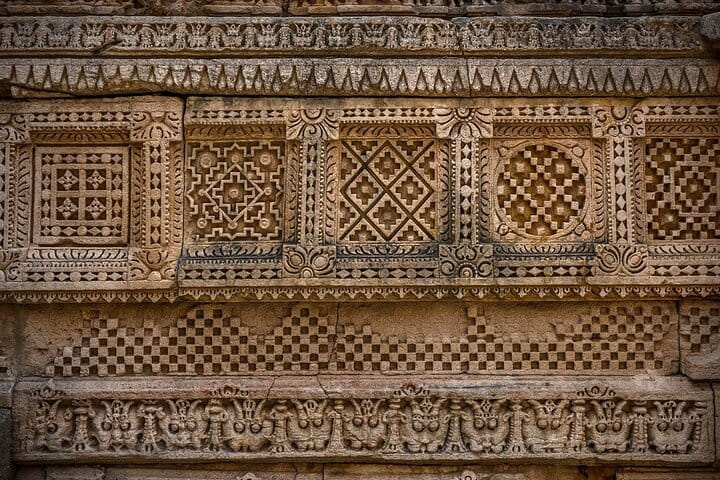
We continue to Patan to visit Rani ki Vav on the banks of the Saraswati River. Commissioned by Udayamati, queen of the 11th‑century Chaulukya ruler Bhima I, it was silted over, rediscovered in the 1940s and restored in the 1980s by the Archaeological Survey of India. It has been a UNESCO World Heritage Site since 2014.
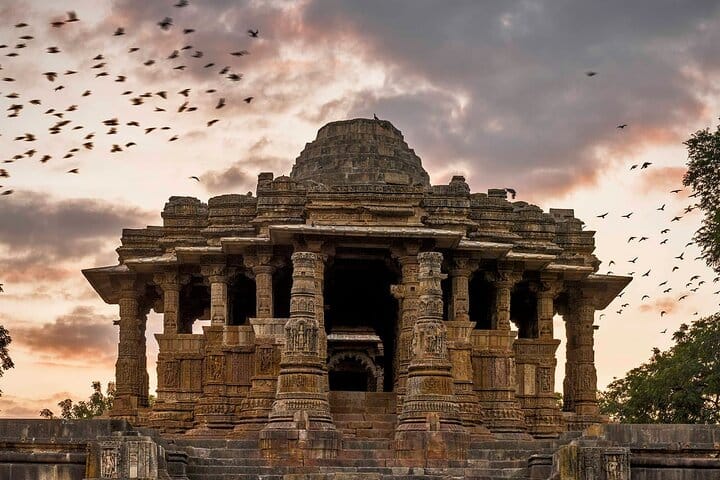
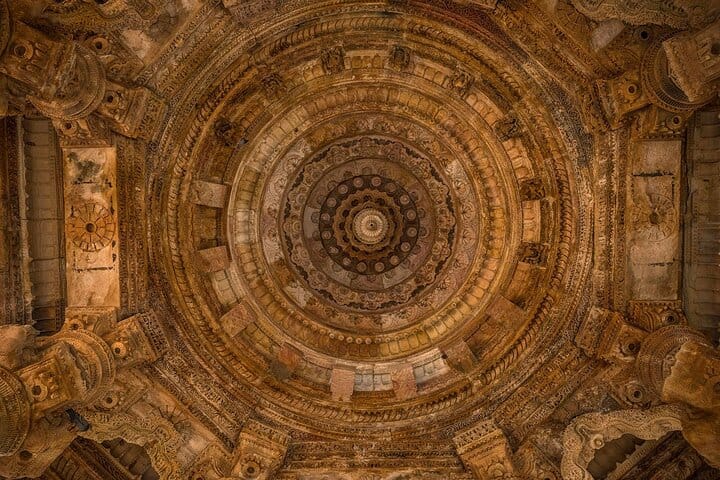
We then visit the Modhera Sun Temple, dedicated to Surya and built after 1026–27 CE during the reign of Bhima I. No worship is offered today – the monument is protected by the Archaeological Survey of India. The complex comprises the Gudhamandapa (shrine hall), Sabhamandapa (assembly hall) and the step‑lined Kunda (reservoir), with intricately carved exteriors, pillars and numerous small shrines. After sightseeing, we return to Ahmedabad.
Day 4 - Vadodara, Champaner–Pavagadh Archaeological Park & Kevadia
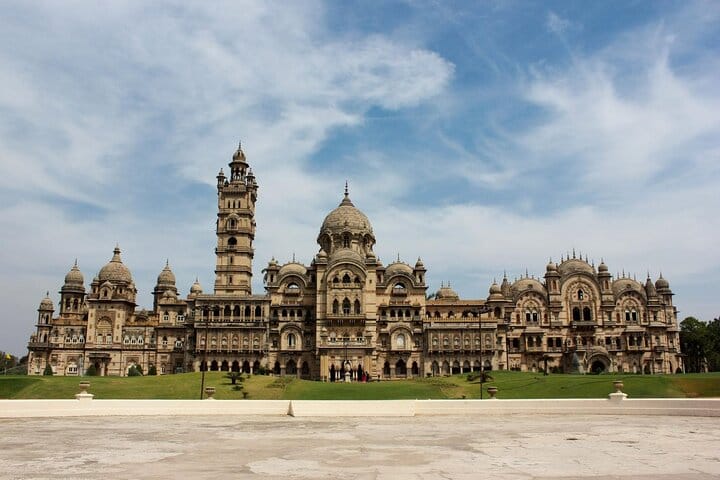
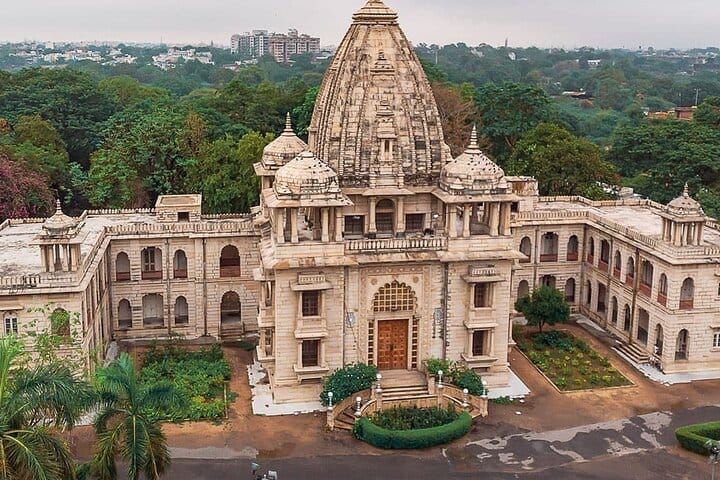
After breakfast in Ahmedabad, we drive 200 km – around 4 hours – towards Kevadia for the Statue of Unity, stopping first in Vadodara to explore Lakshmi Vilas Palace. Reputed to be the largest private residence built to date – about four times the size of Buckingham Palace – it was equipped with then modern amenities such as lifts and has interiors reminiscent of a grand European country house. It remains the home of the Baroda royal family, and the expansive compound includes Moti Bagh Palace and the Maharaja Fateh Singh Museum building.
We continue to Champaner–Pavagadh Archaeological Park – a UNESCO World Heritage Site in Panchmahal – centred on the historic city of Champaner (Muhammadabad) built by Sultan Mahmud Begada. Preserving the only complete, unchanged Islamic city from before the Mughal era, the park features monuments from the 16th century including mosques, temples, tombs, gateways, fortifications, palaces and pavilions, helical wells and a custom house, and also contains earlier Chalcolithic sites. Much of the area remains unexcavated.
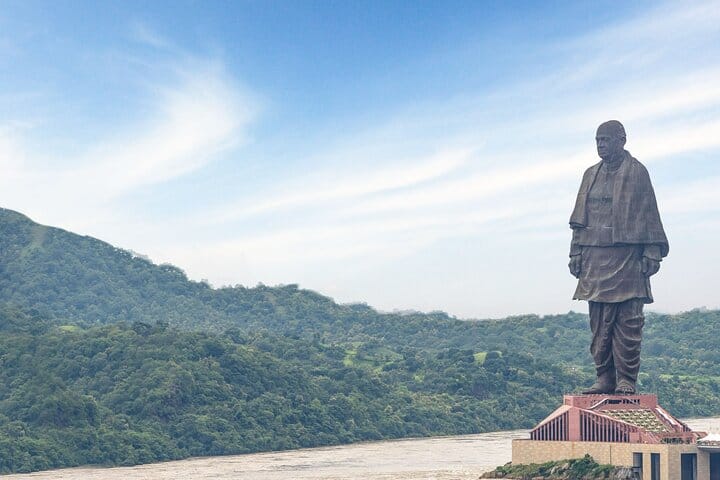
We then proceed to the Sardar Sarovar Dam at Kevadia and check in at Tent City or a hotel near the Statue of Unity. In the evening, we attend the laser light and sound show projected onto the statue – held every evening except Monday – which narrates the life of Sardar Patel, his contribution to the Independence movement and the unification of India. We round off the day with dinner in the dining area accompanied by live music. Overnight in a tent or hotel.
Day 5 - Statue of Unity & Maheshwar
After breakfast at the hotel, we visit the Statue of Unity – the world’s tallest statue at 182 metres. Its 4,647 square metre exhibition hall in the pedestal traces the life of Sardar Patel, his contributions to the freedom movement against British rule and his role in the merger of princely states. High speed lifts take us up through the core of the statue to an observation area about 400 feet high for panoramic views of the surroundings. Later, we visit Sardar Sarovar Dam, the Selfie Point and the Valley of Flowers.
In the afternoon, we drive to Maheshwar – 265 km – approximately 6 hours – and check in at the hotel. Overnight in Maheshwar.
Day 6 - Exploring Mandu & Maheshwar
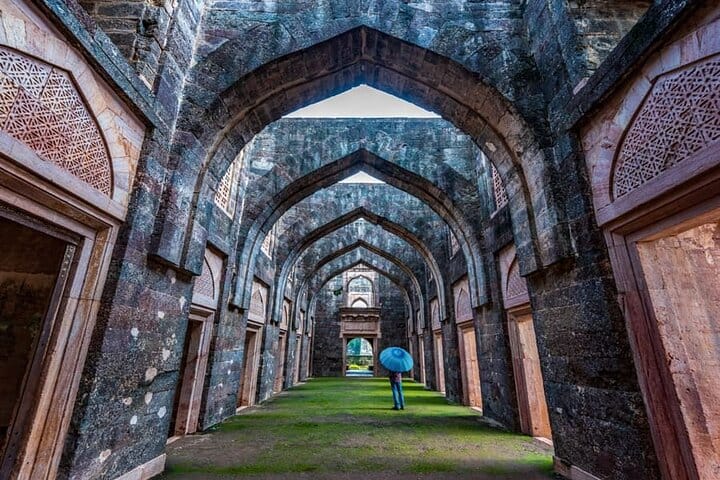
After breakfast at the hotel, we set out on an excursion to Mandu – about 40 km, approximately 1 hour each way. This ancient fort city is encircled by stone walls and gateways and is noted for Afghan-influenced architecture amid baobab trees. We visit Hoshang Shah’s Tomb, the vast Jami Masjid with its colonnaded courtyards, and the Jahaz Mahal – a palace that appears to float between twin lakes.
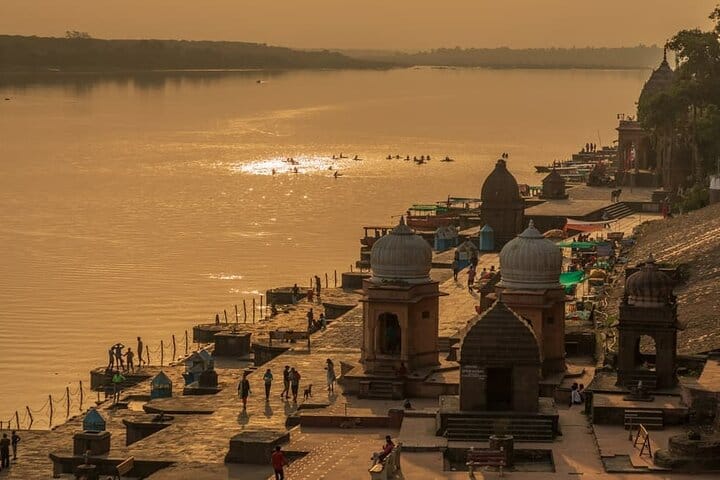
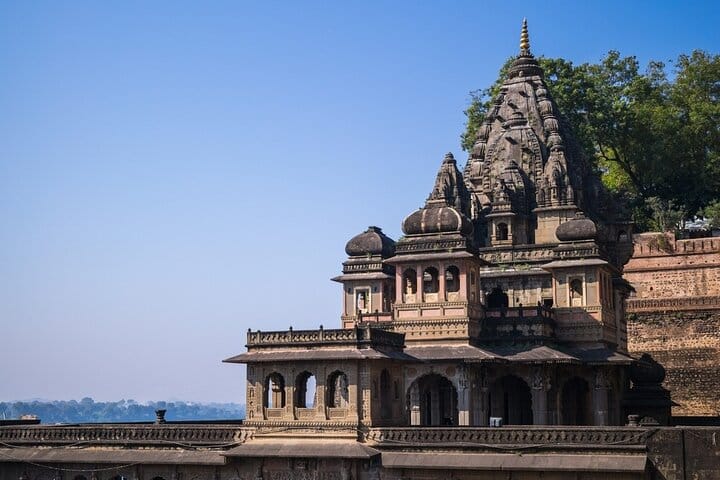
We return to Maheshwar by the afternoon. Later, we visit Maheshwar Fort – a notable example of historic Indian defensive design protecting around 2 sq km, with early foundations from the 4th–5th centuries and much of the present structure dating to the 17th–18th centuries. Features include five main gateways, sentry rooms and a broad parapet walk. Within the complex are the Rajbada palace, Ahilyabai’s place of worship with a golden jhula and the Rajrajeshwar Temple. Overnight at the hotel.
Day 7 - Omkareshwar & Indore
After breakfast in Maheshwar, we drive to Omkareshwar – Maheshwar to Omkareshwar to Indore is approximately 145 km and around 3 hours in total – to visit one of the 12 jyotirlinga temples dedicated to Lord Shiva. Set on Omkar Parvat, an island in the River Narmada, the temple has a large sabha mandap supported by 60 stone pillars and rises five storeys, each with different deities. Three daily prayer services are conducted – the morning by the temple trust, with the other two led by priests of the Holkar and Scindia states. The ancient shivling is protected by a glass enclosure, and many pilgrims take a ritual dip in the Narmada before entering.
After our visit, we continue to Indore and check in at the hotel for the night.
Day 8 - Indore to Ujjain & Bhopal
After breakfast in Indore, we drive to Ujjain to visit the Mahakaleshwar Temple – one of the 12 jyotirlingas dedicated to Lord Shiva. Its lingam sits in a subterranean chamber and is regarded as swayambhu, or self–manifested. The present five–storey temple dates to the mid–18th century and blends Bhumija, Chalukya and Maratha styles, with marble walkways restored by the Scindias in the late 19th century. Three floors house the lingams of Mahakalesvara, Omkaresvara and Nagachandresvara – the last is accessible to devotees only on Naga Panchami. Within the complex, the Koti Tirtha kunda is built in the sarvatobhadra style, and along the route from its steps to the temple we see images of the original structure, reflecting Paramara craftsmanship between the 9th and 14th centuries. Set near Rudra Sagar, the temple also holds a Bhasma Arti at dawn, when devotees gather from around 4 am.
After the visit, we continue to Bhopal – approximately 255 km, around 5 hours – and check in at the hotel. Overnight in Bhopal.
Day 9 - Bhimbetka, Bhojpur & Bhopal
Bhopal – Bhimbetka and Bhojpur (45 km – about 1 hour each way). After breakfast at the hotel we drive to the UNESCO-listed Bhimbetka rock shelters, an archaeological site dating back to the Palaeolithic age. The shelters show some of the earliest traces of human life on the Indian subcontinent – some were inhabited by Homo erectus more than 100,000 years ago – and include Stone Age rock paintings roughly 30,000 years old. We then continue to Bhojpur to see its Shiva temple, which houses one of the largest lingas in India, carved from a single rock.
Returning to Bhopal, we take a city tour visiting Jama Masjid, Moti Masjid, Taj ul Masajid and the Bharat Bhavan arts centre. We also view the Bhoj Wetland – comprising the manmade Bhojtal (Upper Lake) and Lower Lake – a Ramsar site since 2002 that supports more than 20,000 birds annually. The Upper Lake supplies about 40% of the city’s potable water, and sightings here include white storks, black‑necked storks, bar‑headed geese, spoonbills and gatherings of around 100–120 sarus cranes. Overnight at the hotel.
Day 10 - Journey to Khajuraho
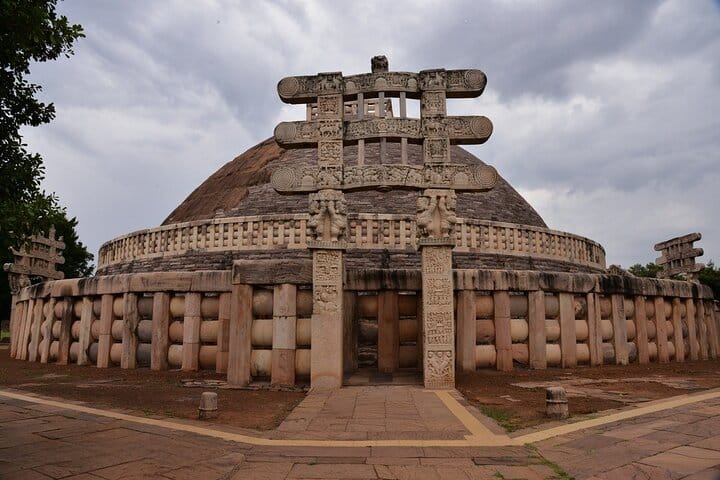
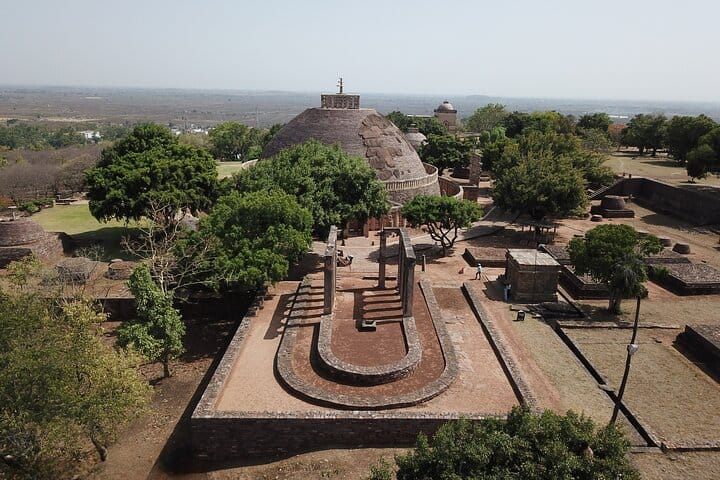
After breakfast at the hotel, we drive from Bhopal to Khajuraho via Sanchi, Udayagiri and Sagar – a full day covering roughly 380 km and about 8 hours on the road with sightseeing stops. At Sanchi – a UNESCO World Heritage Site – we explore a hilltop ensemble of stupas, monasteries, temples and pillars dating from the 3rd century BC to the 12th century AD, where the Buddha is represented through symbols rather than images. We continue to the Udayagiri Caves, an early Hindu ritual site extensively carved and reworked under Gupta emperor Chandragupta II in the late 4th–5th centuries, with rock-shelters, inscriptions and other remains. We then travel on to Sagar to visit one of its Jain temples; the city is also home to Lakha Banjara Lake. We arrive in Khajuraho and check in at the hotel. Overnight at hotel.
Day 11 - Khajuraho & Orchha
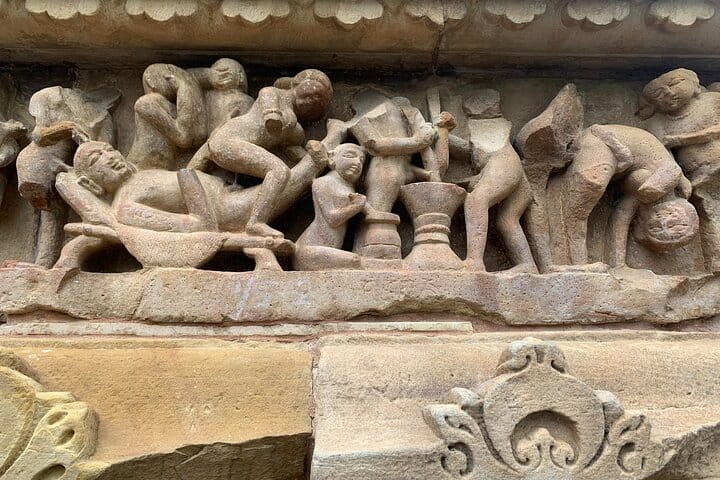
Khajuraho to Orchha – 180 km – about 4 hours by road. After breakfast at the hotel, we explore Khajuraho’s exceptionally well maintained UNESCO World Heritage–listed temples, created by the Chandela dynasty in the 11th–12th centuries and renowned for their remarkable erotic sculptures.
Later we drive to Orchha and check in at the hotel. The rest of the day is free for you to relax. Overnight at the hotel.
Day 12 - Orchha to Agra
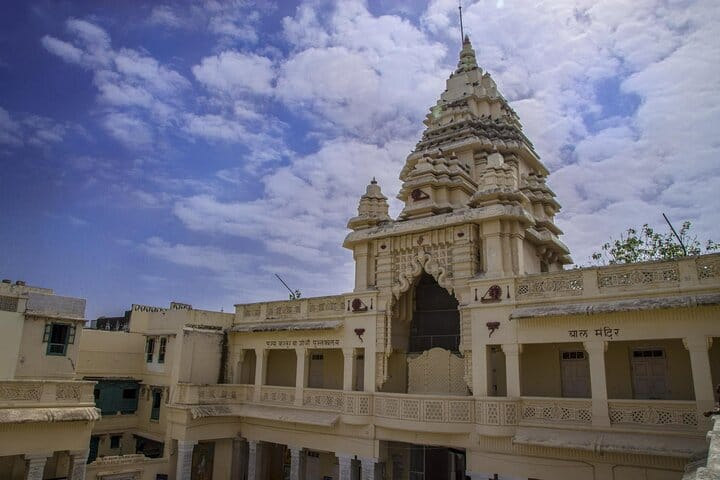
Orchha – Gwalior – Agra (220 km – approx. 5 hours). After breakfast at the hotel, we explore the Orchha Fort complex, an early 16th‑century ensemble of palaces, temples and pavilions reached via an arched causeway and grand gateway. Inside, a spacious quadrangle is framed by Raja Mahal, Sheesh Mahal and Jahangir Mahal, along with gardens and pavilions. Look for projecting balconies, open terraces and decorated latticed windows along the battlements. We also visit Chaturbhuj Temple, a multi‑storeyed structure blending temple, fort and palace features. Originally built to enshrine an image of Rama now housed in the Rama Raja Temple within the fort complex, it is noted for having one of the tallest vimanas among Hindu temples.
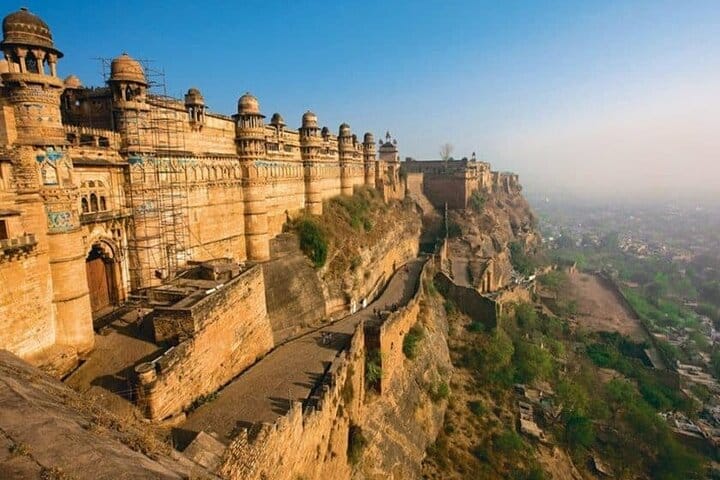
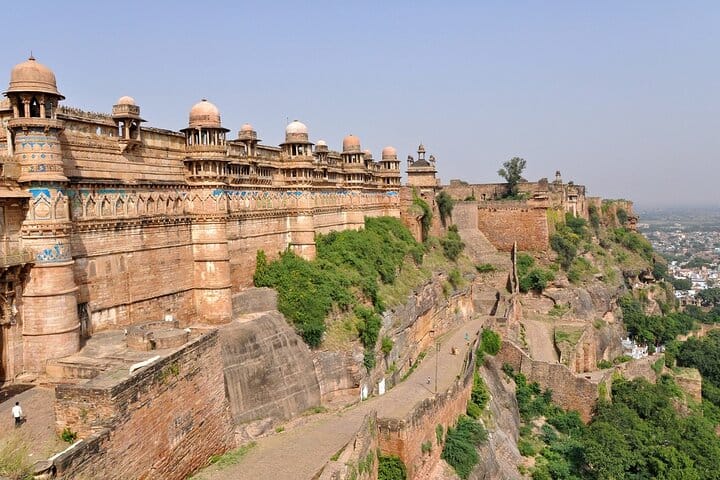
We then drive towards Agra, stopping at Gwalior Fort, a hilltop stronghold that has seen many rulers. The present complex includes formidable defences and two principal palaces, Gujari Mahal and Man Mandir, both built by Man Singh Tomar. Gujari Mahal, constructed for Queen Mrignayani, now serves as an archaeological museum. On the ascent, a small temple preserves what is considered the second‑oldest recorded use of the numeral zero, dating back around 1,500 years.
Continue to Agra and check in at your hotel. You have the rest of the day free to relax. Overnight at the hotel.
Day 13 - Sunrise at Taj Mahal & Return to Delhi
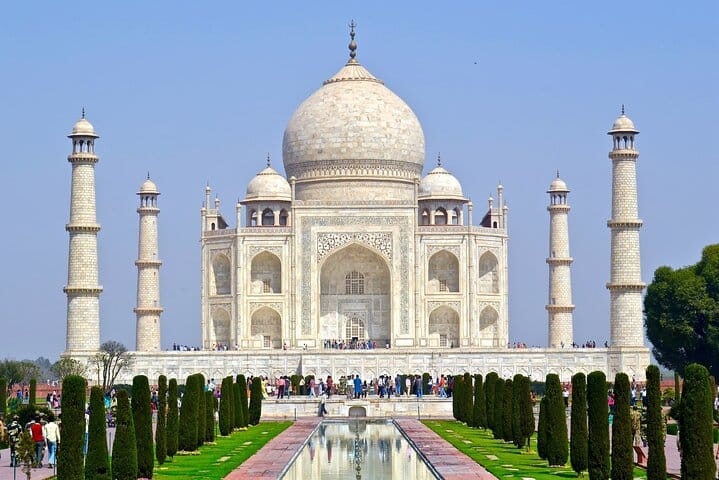
Agra – Delhi (210 km – approximately 5 hours by road). We start at sunrise with a visit to the Taj Mahal – the iconic ivory white marble mausoleum on the Yamuna, commissioned in 1632 by Emperor Shah Jahan for Mumtaz Mahal and later his own resting place. After breakfast we explore Agra Fort, the main residence of the Mughal emperors until 1638, and the Tomb of Itmad–ud–Daula, commissioned by Nur Jahan for her father Mirza Ghiyas Beg.
After sightseeing we drive to Delhi for a direct airport drop off for your onward flight. If your schedule allows, you may use the vehicle for additional activities until late at night.
Accommodation Standard
Prices
Tour Reviews
Accommodation Standard
Prices
Extras and add-ons
If you'd like to add extras or add-ons to your booking, you can do this easily during checkout. Just review the available options and select any additional services or upgrades you'd like before completing your purchase.
Accommodation Standard
Prices
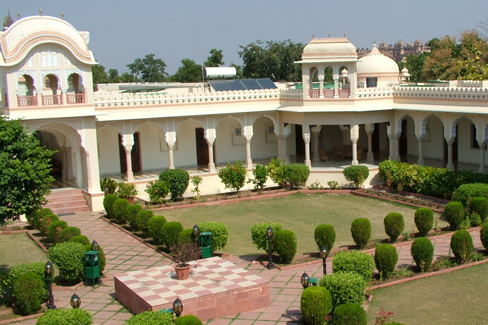
Hotels
The hotels listed below are examples which we frequently use on this tour. Alternative hotels of a similar standard may be used instead.
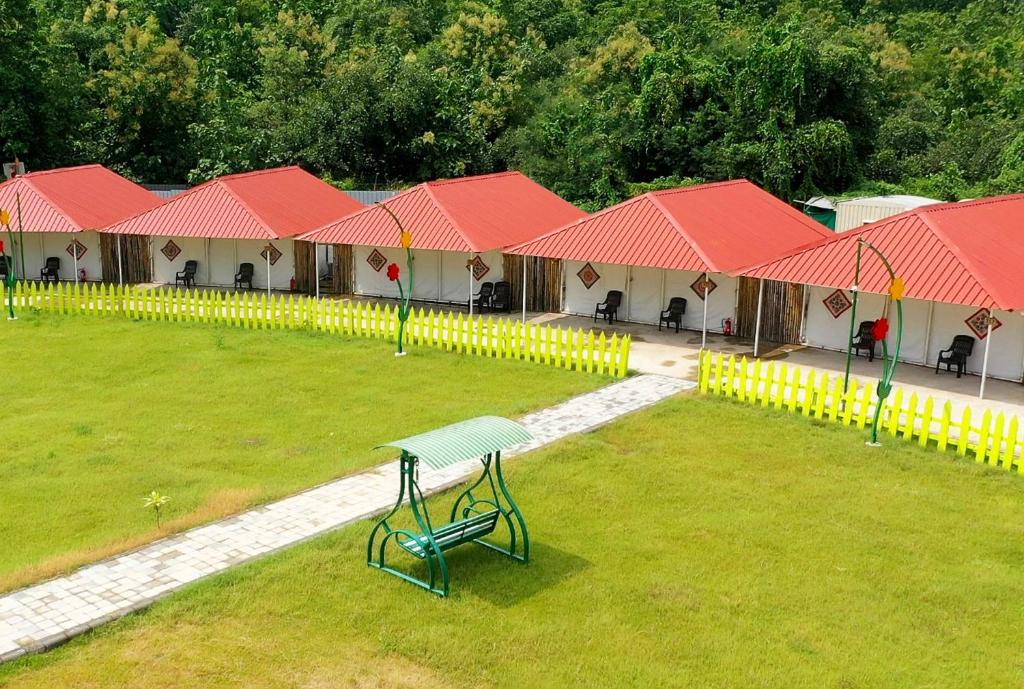
Accommodation Standard
Prices
Prices & Dates
The prices you see below are a guide, with final prices per person being determined by the number of travellers in your booking party, desired hotel standard and the rooming arrangements required. To see an accurate price, please click "Book Dates" and enter the details for your booking party.
Can't find a date that works for you?
Looking for a date not yet released?
Similar Tours
Explore more exciting tours in India to discover even more unforgettable adventures!

On The Go Tours
Our agents are waiting to chat to you...
Are you a Travel Agent or Customer?
Do you have an booking reference?