
On The Go Tours
Our agents are waiting to chat to you...
Are you a Travel Agent or Customer?
Do you have an booking reference?
Wandering the Blue Streets of Chefchaouen
Morocco's blue-washed town in the Rif Mountains, and why it is painted that way
Wandering the Blue Streets of Chefchaouen
Morocco's blue-washed town in the Rif Mountains, and why it is painted that way
When do you want to go?
2026
I'm flexible
Passengers
Adults (18+)
Children (0 - 17)
The blue town of the Rif

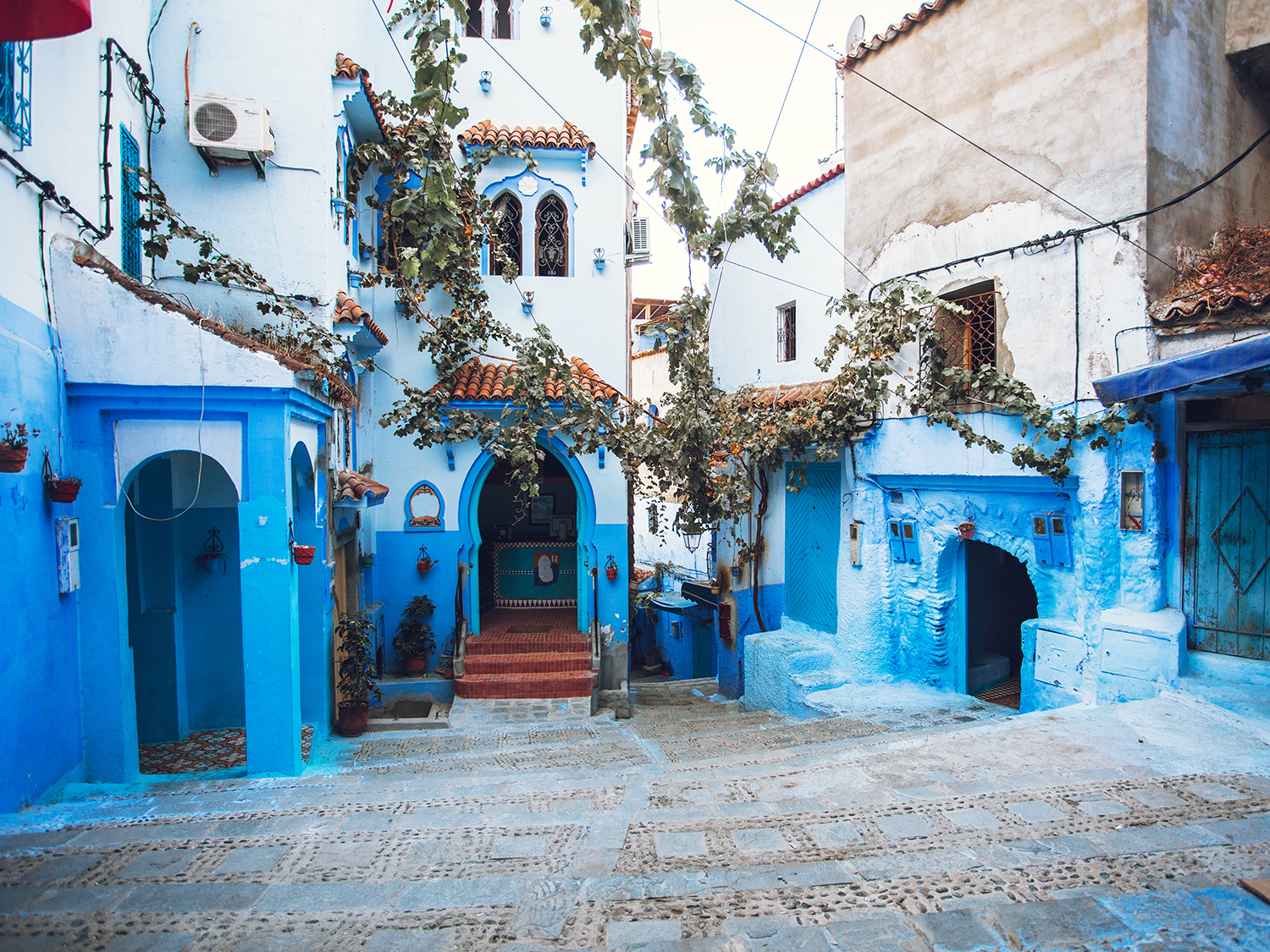
Chefchaouen is a small town in the Rif mountains of northern Morocco, and almost every wall, step and doorway in its old quarter is painted blue. It is one of the most photographed places in the country, and the pictures rarely do justice to how strange it is to stand in it, surrounded on every side by shades of blue from powder to deep indigo. But there is more to Chefchaouen than the colour. It has a history as a mountain refuge, a setting among green hills that feels a world away from the rest of Morocco, and a quieter life that carries on once the day visitors have gone. The blue is the reason people come. It is not the only reason to stay.
Why is the town blue
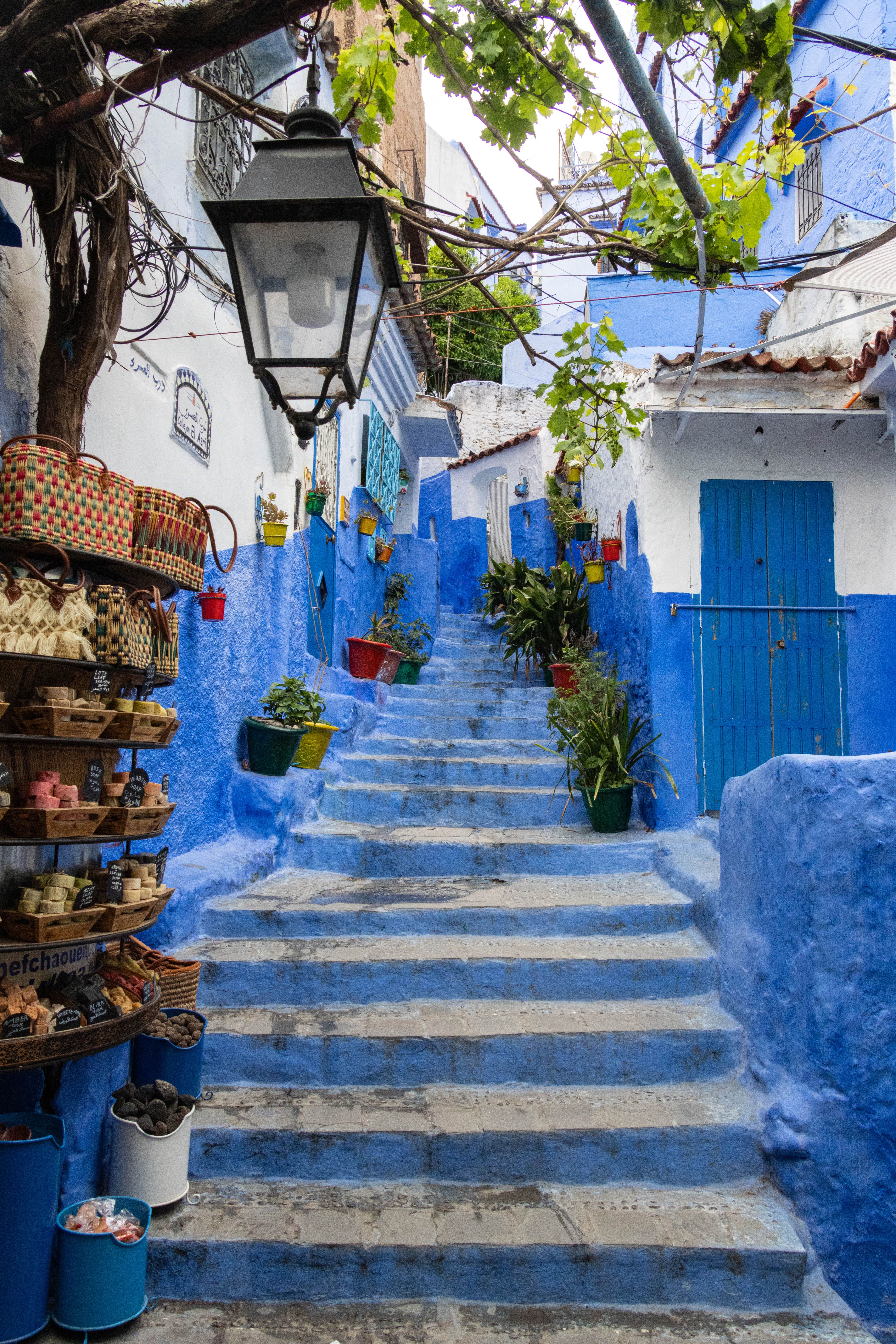
The first question everyone asks is why, and nobody entirely agrees. The most repeated answer is that the blue came from Jewish refugees, who settled here after fleeing Spain and are often credited with painting the town in the 1930s, the colour carrying a spiritual meaning as a reminder of the sky. Others offer practical reasons, that blue repels mosquitoes, keeps houses cool, or simply echoes the sky and the town's spring. None has ever been proven, and locals will give you whichever version they prefer.
What is certain is that the blue is maintained with care. The wash is refreshed regularly, and different streets favour slightly different shades, so the town is not one flat blue but a whole range, deepening in shadow and lightening in the sun. Whatever began it, keeping it up is now a deliberate act, repeated year after year.
Wandering the medina
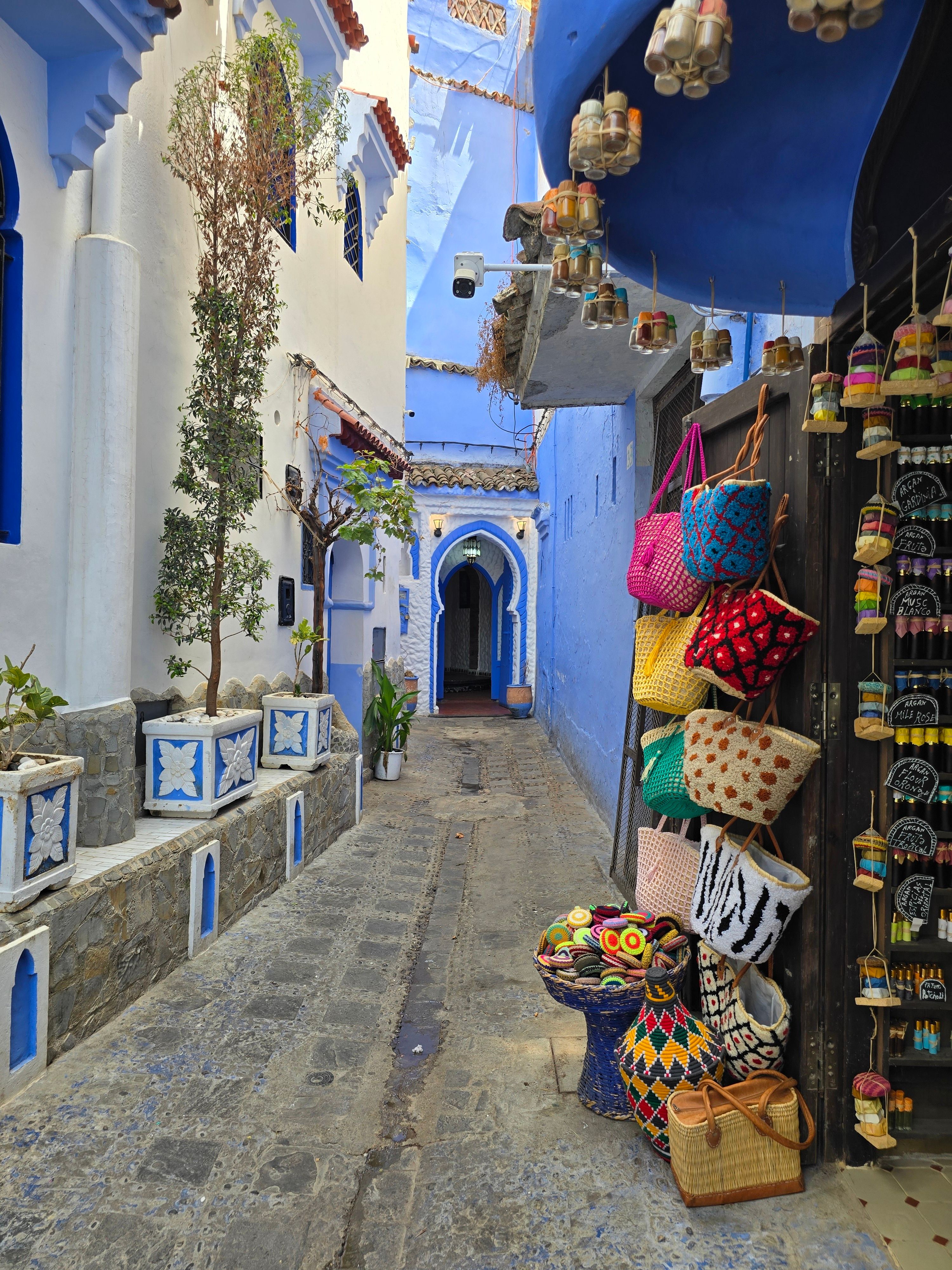
The old town has no real plan, which is the point. You wander, you get lost, and getting lost is the way to see it. The lanes climb and twist between the blue walls into little squares and dead ends, with cats on the steps, pots of geraniums bright against the colour, and at every turn something arranged to be looked at, an iron-studded door, a two-toned stairway, a wall hung with woven blankets. The whole place has a tended, swept quality unusual for a Moroccan medina.
Timing is everything. By midday the lanes fill with visitors arriving for a few hours to take photographs. Early morning is another place entirely, and if you stay overnight and step out at first light you can have the blue streets almost to yourself. That hour is when Chefchaouen is at its best. Its centre is the Plaza Uta el-Hammam, where cafes set out tables below the old kasbah and the square stays busy into the evening, long after the day visitors have gone.
The Mountains Around Chefchaouen
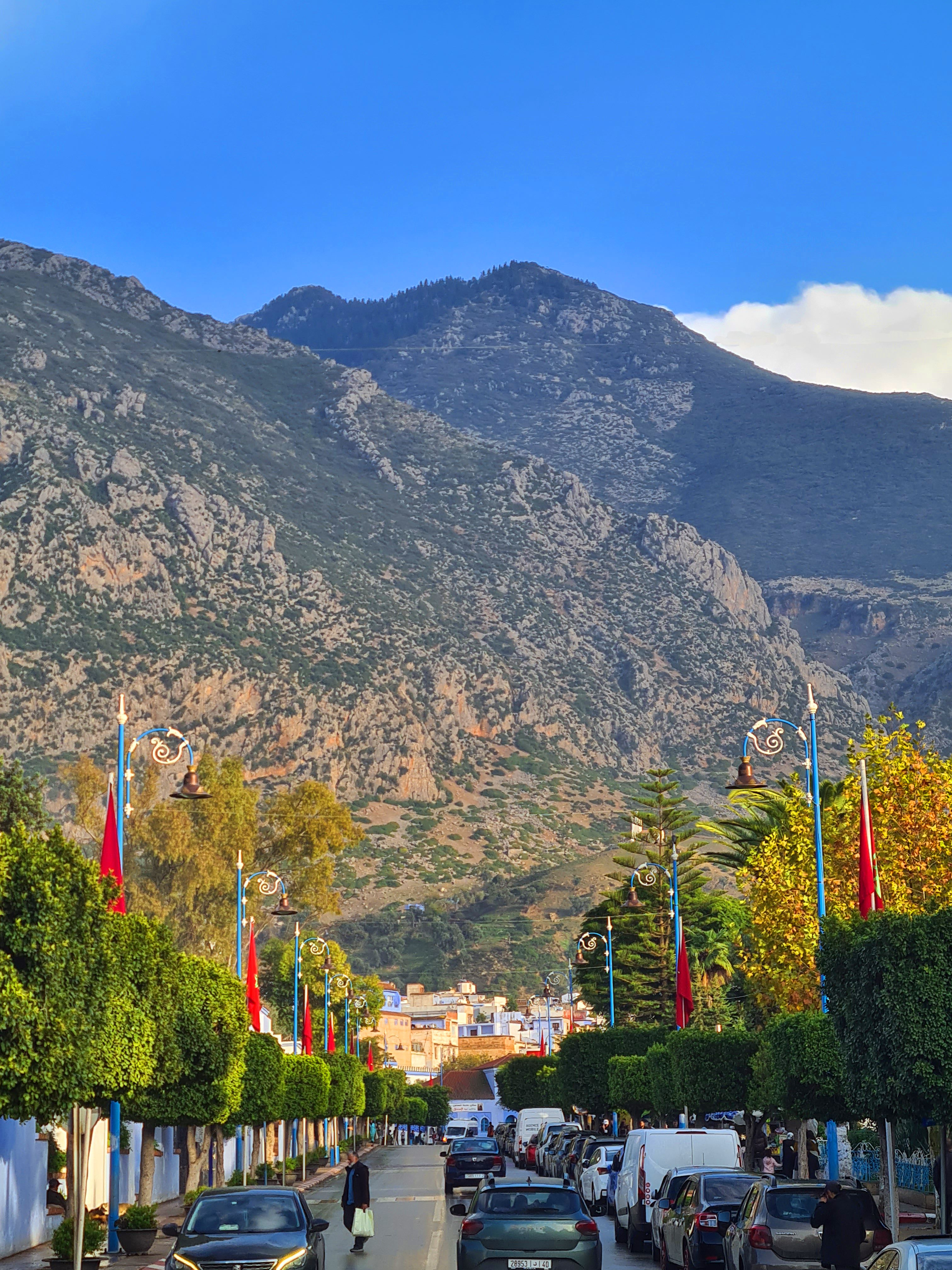
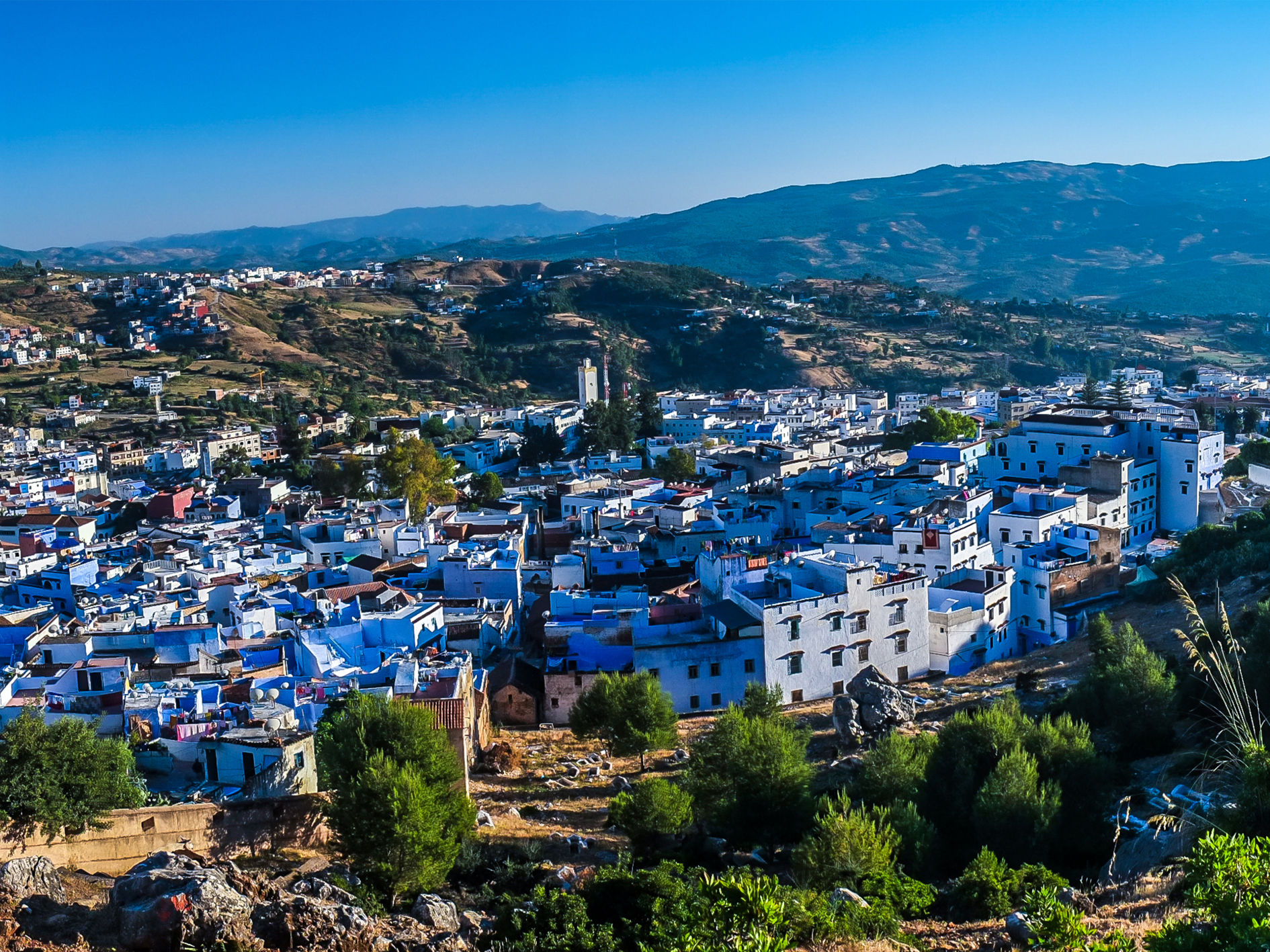
It is easy to forget, among the lanes, that Chefchaouen is a mountain town, built up a steep valley in the Rif. Step to the edge of the old quarter and the setting reveals itself. Where the houses run out, a spring called Ras el-Maa tumbles from the hillside as a small waterfall, where local women still wash clothes and rugs and cafes have grown up along the stream.
For the best view, climb to the Spanish Mosque, an abandoned building on a bare hill east of town, half an hour uphill on foot. From the top the whole of Chefchaouen spills down the green valley in blue and white, the mountains behind, and at sunset it glows in the last of the light. You will not be alone, but the view earns the climb. Beyond it the Rif opens into walking country, greener and cooler than most expect of Morocco, and few day visitors go past the waterfall, so the hills are where you leave the crowds.
Chefchaouen by season
Spring
March to May
The best season, with mild air, green hillsides and wildflowers in the surrounding mountains, and comfortable weather for the climb to the Spanish Mosque.
Summer
June to August
Hot at midday, though the altitude keeps evenings cooler than the baking lowlands, so early mornings in the medina and late afternoons are the times to be out.
Autumn
September to November
Warm, clear and quieter after the summer, with the light at its best on the blue walls.
Winter
December to February
Wet and often cloudy, with rain settling over the town and snow on the higher Rif peaks, so pack for damp mountain weather.
Experiencing Chefchaouen
The blue streets are what draw people to Chefchaouen, but the town gives most to those who stay past the photographs, into the early mornings, the mountain walks and the slow evenings in the main square. Building it into a longer trip is what makes that possible. The journeys below place Chefchaouen within a wider route through northern Morocco, with room to see it properly.
Frequently asked questions
Where is Chefchaouen in Morocco?
Chefchaouen lies in the Rif mountains of northern Morocco, in the hills between Tangier on the coast and Fes to the south. Its mountain setting makes it a natural stop on the route between the two.
How long do you need in Chefchaouen?
A night is ideal. It lets you see the blue streets early in the morning before the day visitors arrive, climb to the Spanish Mosque for sunset, and walk out to the Ras el-Maa spring, none of which a short daytime visit really allows.
What is there to do in Chefchaouen?
Beyond wandering the blue medina, you can sit in the Plaza Uta el-Hammam by the old kasbah, walk up to the Ras el-Maa waterfall at the edge of town, climb to the Spanish Mosque for the view, and hike into the surrounding Rif Mountains. The town is also known for its woven wool and local goat cheese.