
On The Go Tours
Our agents are waiting to chat to you...
Are you a Travel Agent or Customer?
Do you have an booking reference?
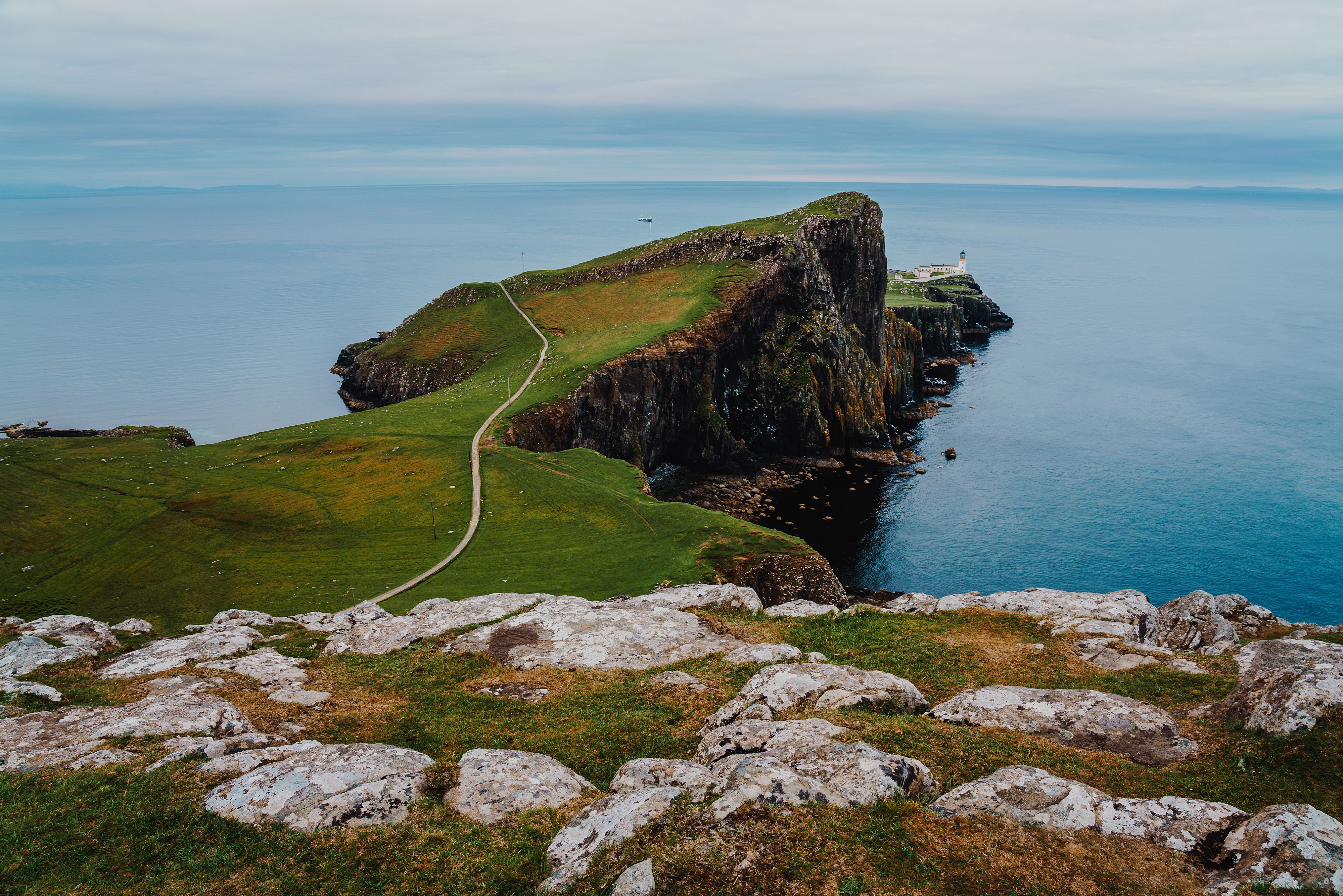
Walking the Ridges and Sea Cliffs of Skye
From the dark rock of the Black Cuillin to the cliffs of the far west and the northern tip
Walking the Ridges and Sea Cliffs of Skye
From the dark rock of the Black Cuillin to the cliffs of the far west and the northern tip
When do you want to go?
2026
I'm flexible
Passengers
Adults (18+)
Children (0 - 17)
Walking the ridges and sea cliffs of Skye means moving between two landscapes that rarely sit this close together. Inland, the Black Cuillin rise in bare rock and cloud. Along the coast, basalt cliffs drop straight into the Atlantic. The island holds a serious mountain traverse, a landslip that is still slipping, a lighthouse out at the far west and a headland at the northern tip, all within a space you can cross in under an hour by car. What follows is four walks that show how much the ground changes from one to the next, and how the weather and the light change what you take away.
The Black Cuillin and the Inaccessible Pinnacle
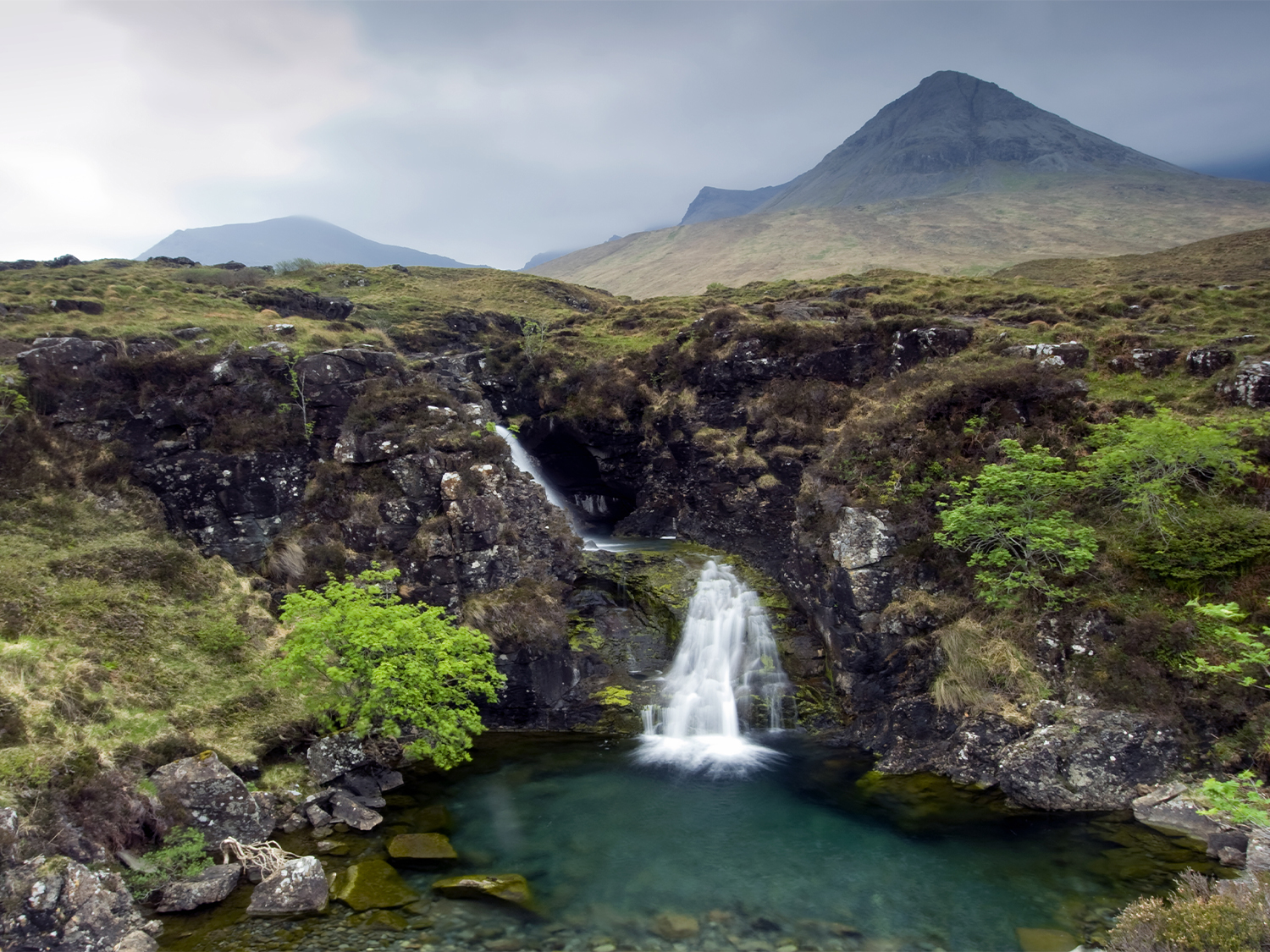
The Black Cuillin do not ease you in. From Glen Brittle the ridge shows itself as a wall of dark rock, more than eleven kilometres of it, holding eleven Munros above three thousand feet. This is exceptionally rough mountain ground, all bare gabbro and basalt, the eroded remains of a magma chamber that cooled around sixty million years ago. Gabbro grips the sole of a boot like sandpaper, which is part of why climbers keep coming back. It also carries enough iron to pull a compass needle off true, so on a misty day route finding falls to the map, the guidebook and the shape of the rock itself.
Sgurr Alasdair is the high point at 992 metres, reached up the Great Stone Chute, a long run of scree that lifts out of Coire Lagan. The peak that stops most people is smaller. The Inaccessible Pinnacle is a fin of rock perched on the summit of Sgurr Dearg, and it is the only Munro you cannot walk up. Reaching the top means a roped climb along a blade of rock with a long drop on either side, graded Moderate on the east ridge but exposed enough that the grade stops feeling reassuring. You come off it by abseil. The Pilkington brothers first climbed it in 1880, and it has been the final obstacle in many a round of the Munros ever since.
None of this is a walk in the ordinary sense. The scrambling is sustained, the weather turns fast, and a clear morning can close in by lunch. Late spring to early autumn gives the longest settled spells, though nothing on the Cuillin stays settled for long. Come for the ridge itself, and treat a full traverse as a mountaineering objective rather than a hillwalk.
The Trotternish Landslip and the Quiraing
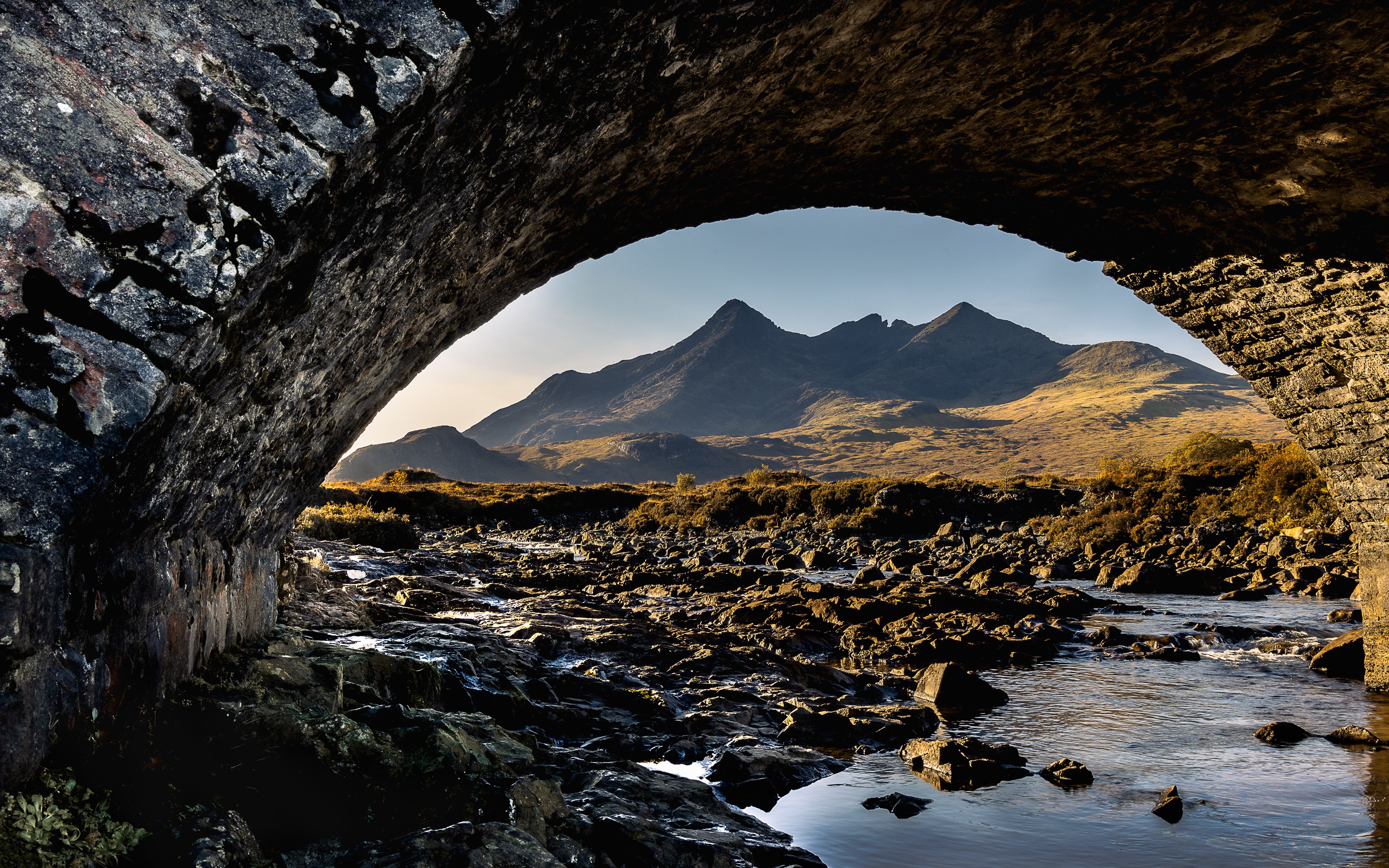
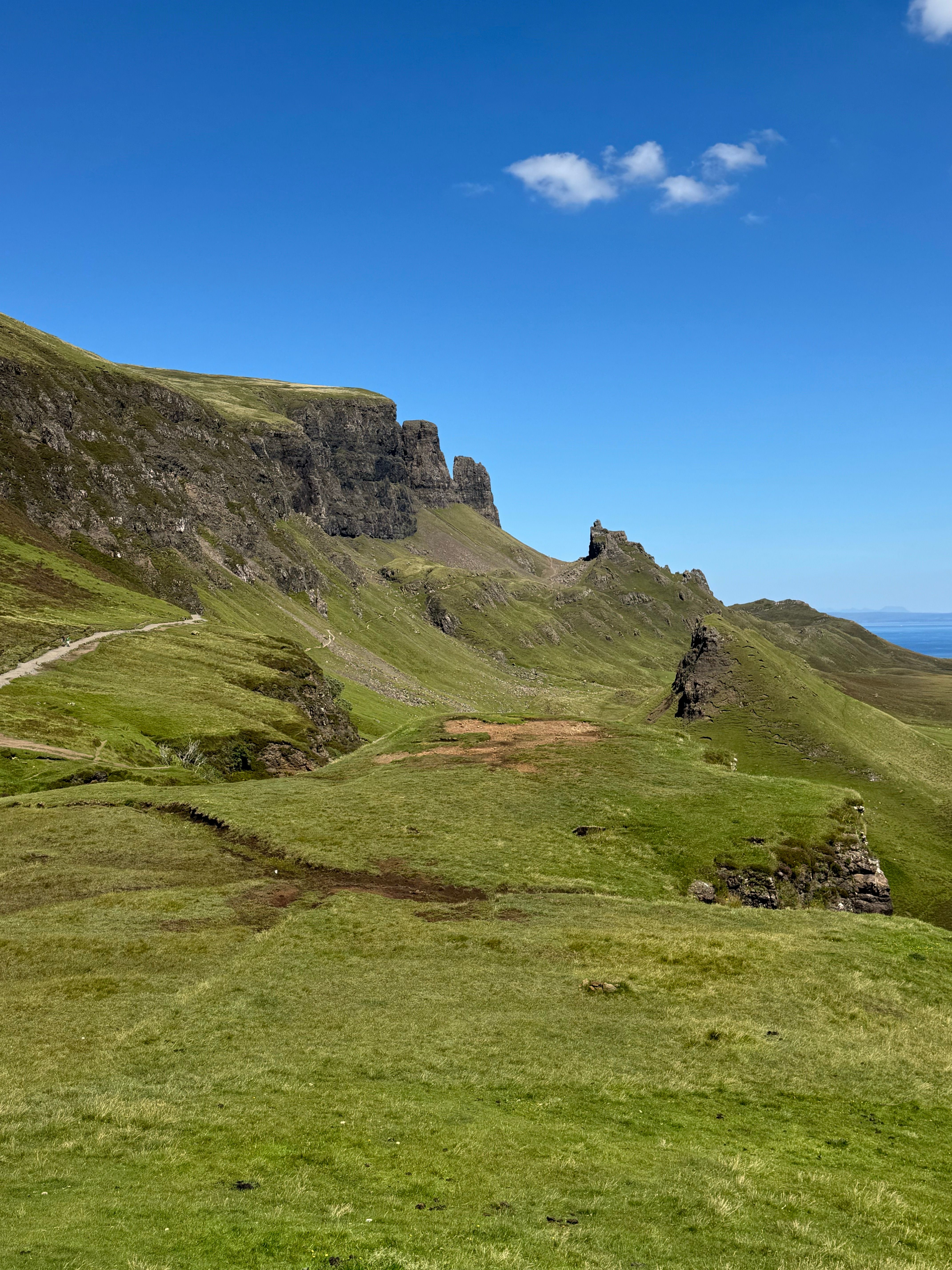
North of the Cuillin the ground turns strange. The Trotternish peninsula runs as a long escarpment of ancient lava, and the whole of it slipped at some point, basalt up to three hundred metres thick sitting on soft Jurassic rock that gave way beneath the weight. The Quiraing is the one stretch still moving. Each year the single track road at its foot cracks and bulges and needs patching, which tells you the hill has not finished.
The circuit is about six and a half kilometres and takes a couple of hours, though the pull of it is not distance but shape. You walk in beneath cliffs to a set of formations that have earned their own names. The Prison is a blunt tower of rock that reads like a ruined keep from the path. The Needle is a spike some thirty seven metres tall, standing clear of the scree. Behind them, hidden until you climb up through a gap, sits the Table, a flat green plateau that slipped down whole from the summit and now lies ringed by rock, invisible from below.
Neist Point and the Cliffs of Waterstein
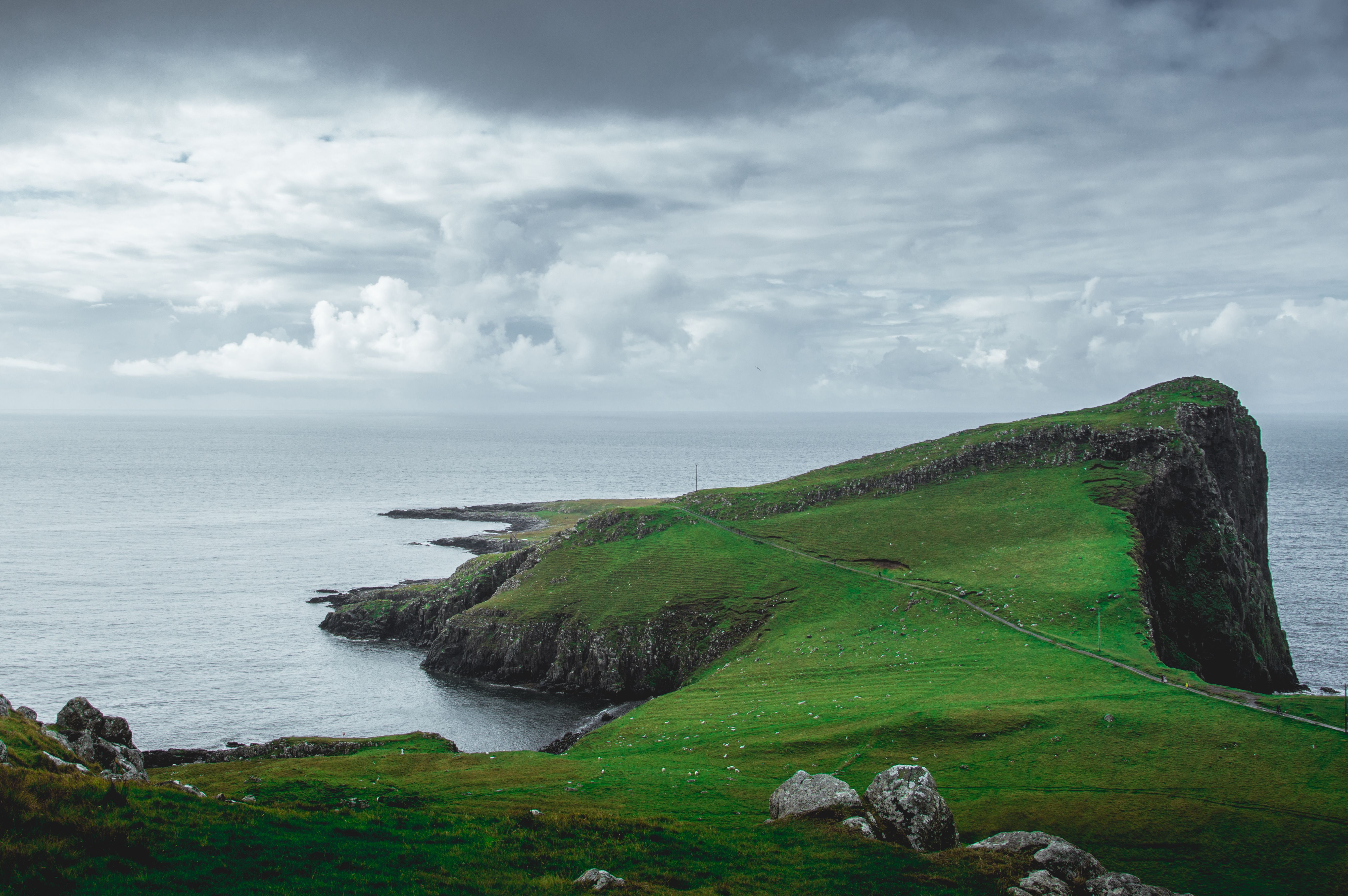
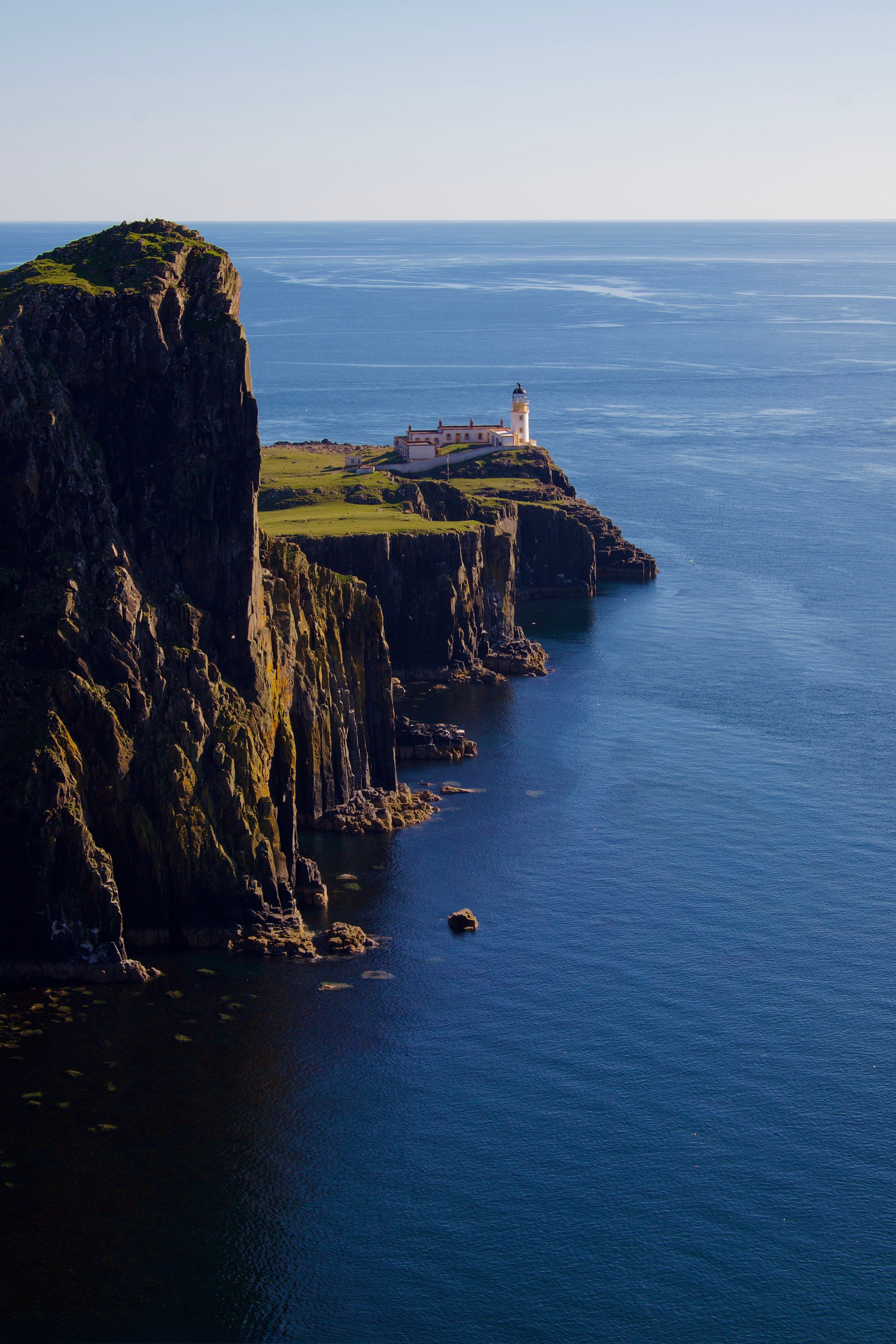
The far west of Skye ends in a finger of rock at Neist Point. The road runs out near Waterstein, and from the car park a concrete path drops steeply to the headland, steep enough that a metal handrail runs alongside the worst of it. Near the top an old crane still stands, once used to winch supplies down to the lighthouse before the road reached this far. The lighthouse itself sits at the very tip, white against the sea, and has kept watch here since the early twentieth century.
The rock underfoot is basalt, broken into the same columns you find at the Giant's Causeway, and geologists reckon the two belong to the same ancient flow. Across Moonen Bay to the south rises Waterstein Head, a wall of cliff around 296 metres high and the second highest sea cliff on the island. West, on a clear evening, the Outer Hebrides sit low on the horizon across the Minch. One warning is worth taking seriously. There are no fences at Neist Point and the cliffs fall sheer, so keep well back from the edge, especially in wind. In summer, arrive an hour or so before sunset if you want room to park.
Frequently asked questions
Can you climb the Inaccessible Pinnacle without a guide?
You can, but only with rock climbing experience and the right equipment, as the In Pinn is the only Munro that needs a graded rock climb to reach its summit. The easiest line, the east ridge, is graded Moderate but very exposed, and you descend by abseil. Most walkers without climbing skills hire a guide for the day. It stands on the summit of Sgurr Dearg above Glen Brittle.
How long is the Quiraing walk on Skye
The main Quiraing circuit is about six and a half kilometres and takes roughly two hours at a steady pace. The path is rough and muddy in places but needs no scrambling unless you choose to climb up to the Needle or the Table. The car park is small and fills early in summer. It sits on a single track road between Staffin and Uig.
When should you visit Neist Point?
Late afternoon into sunset is the most rewarding time to visit Neist Point, when the light runs along the cliffs and the lighthouse. Summer evenings are popular, so arrive an hour or so ahead to find parking. Summer is also the season for spotting minke whales and dolphins offshore. Keep well back from the unfenced cliff edges in any weather.
Where can you watch whales on Skye?
Two of the sea cliffs of Skye stand out for whale watching, Neist Point in the west and Rubha Hunish at the northern tip. Minke whales pass through in summer, along with dolphins, porpoises and basking sharks, while orcas appear occasionally. Rubha Hunish has an old coastguard lookout, now a bothy, with wide windows over the sea. Bring binoculars and patience, as sightings are never guaranteed.
Is walking the ridges and sea cliffs of Skye suitable for beginners?
Some of it is and some of it is not. The coastal walk to Neist Point and the Quiraing circuit suit most reasonably fit walkers, though the ground can be rough and exposed. The Black Cuillin ridge is a different matter, with sustained scrambling and route finding that call for mountain experience. Choose the walk to match your comfort with heights and rough terrain.