On The Go Tours
Our agents are waiting to chat to you...
Are you a Travel Agent or Customer?
Do you have an booking reference?

Visiting India's Golden TriangleVisit India's golden triangle and take in some of India's most famous sights
Visiting India's Golden TriangleVisit India's golden triangle and take in some of India's most famous sights
When do you want to go?
2026
I'm flexible
Passengers
Adults (18+)
Children (0 - 17)
What is India's Golden Triangle?
The Golden Triangle is one of India's most popular travel routes. This circuit visits some India's top landmarks taking you to Delhi, Agra and Jaipur. India's Golden Triangle is a great way to experience the countries different landscapes as well as immerse yourself in the country’s rich history and culture.
Golden Triangle main attractions
Delhi

The Red Fort
The Red Fort
Construction of this UNESCO World Heritage began in 1639 and finished in 1648. With towering red sandstone walls, pavilions, and gardens the fort was originally built as the residence for Mughal emperors. The Red Fort Complex is now home to museums as well as the fort itself where visitors can discover more about the history of the site.

Humyaun's Tomb
Humayun’s Tomb
Built in the 1560’s this tomb is the first of the grand mausoleums that would become synonymous with Mughal architecture, setting the template for future mausoleums, most notably the Taj Mahal. The tomb is made of red sandstone and white marble with a grand double dome and stunning symmetrical gardens.

Jama Masjid
Jama Masjid
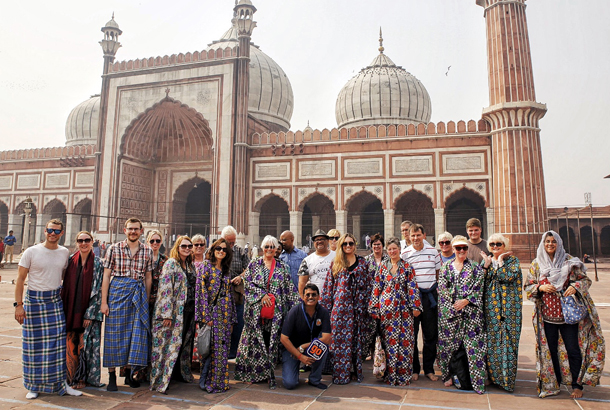
One of the largest mosques in India the Jama Masjid was commissioned by emperor Shah Jahan, who also commissioned the Red Fort and the Taj Mahal. The mosque is still an active place of worship over 370 years after its completion and draws visitors from across the globe both for its religious significance and its architectural beauty.
Agra
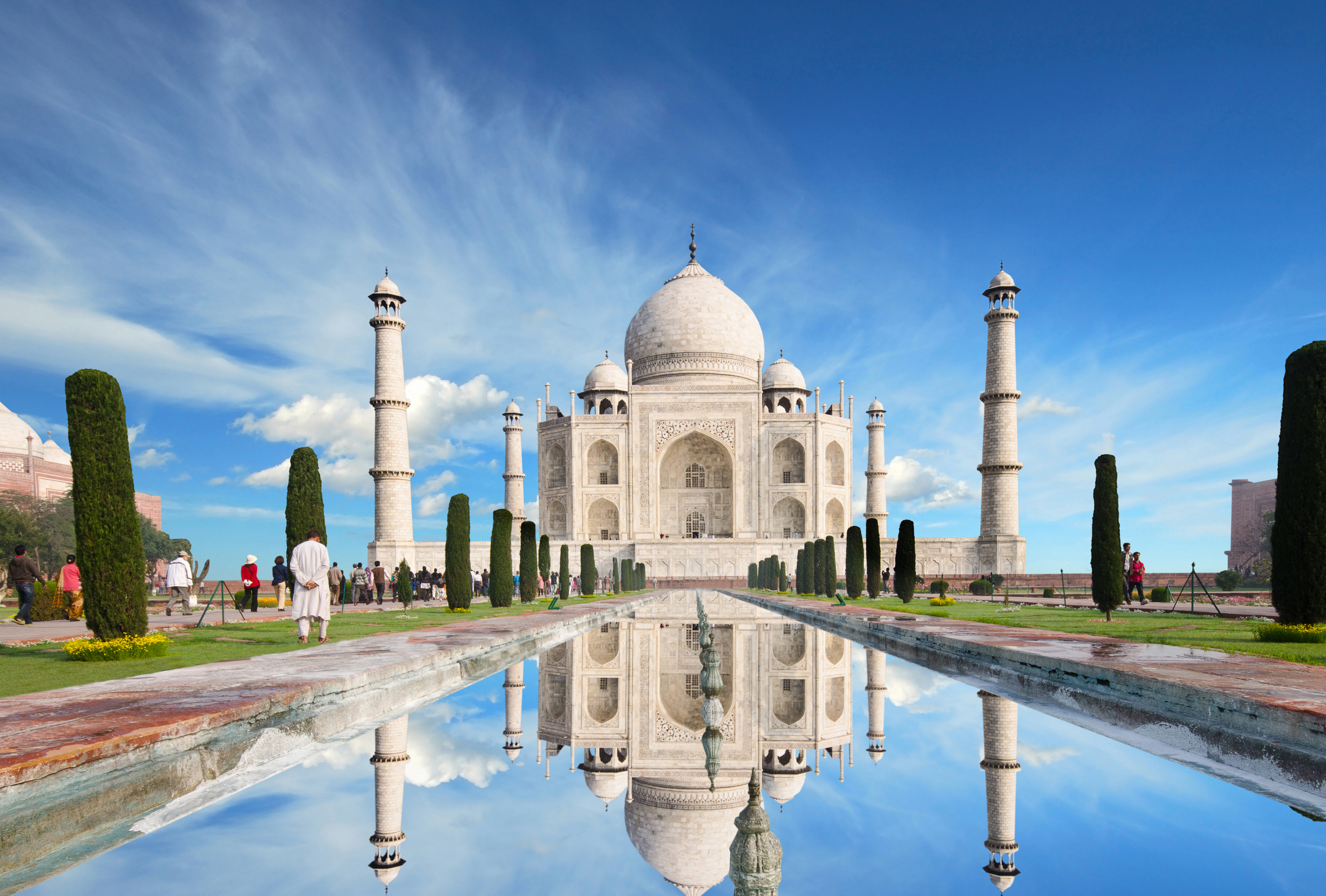
Taj Mahal
The Taj Mahal
Arguably Indias most iconic landmark, the Taj Mahal is an architectural marvel. The mausoleum is a beacon of love commissioned by emperor Shah Jahan in memory of his wife Mumtaz Mahal. The mausoleum blends Persian, Islamic, and Indian design elements, featuring a symmetrical layout, a soaring central dome, four minarets, and intricate inlay work using precious and semi-precious stones making it a breathtaking feat of architecture admired worldwide.
The Agra Fort
The Agra Fort
The Agra Fort served as a residence for Mughal dynasty until 1638. The massive red sandstone fortress is situated on the banks of the Yamuna River not far from the Taj Mahal. Notably, it was here that Shah Jahan was imprisoned by his son Aurangzeb in his final years, reportedly gazing across the river at the Taj Mahal he had built for his wife. Today the Agra Fort is one of Indias most visited historical landmarks.
Jaipur

The Pink City
The Pink City
Jaipur, the capital of Rajasthan, is famously known as the "Pink City" for the terracotta pink hue of its old city buildings. The colour was adopted in 1876 to welcome the Prince of Wales and is traditionally associated with hospitality in Rajasthani culture. Within its pink-washed walls sit some of India's most iconic landmarks, including the honeycombed Hawa Mahal (Palace of Winds), the City Palace, and the Jantar Mantar observatory.

City Palace
The City Palace
The City Palace sits at the heart of the old Pink City, built in the early 18th century by Maharaja Sawai Jai Singh II, the founder of Jaipur. It is an architectural marvel with its sprawling courtyards, ornate gateways, and buildings that showcasing intricate carvings, frescoes, and mirror work. Part of the complex still serves as the residence of the former royal family, while much of it has been converted into a museum housing royal costumes, weapons, and artifacts. It is one of Jaipur's most visited landmarks, offering a glimpse into the city's regal history.

The Jantar Mantar Space Observatory
The Jantar Mantar Space Observatory
Jantar Mantar in Jaipur is one of five astronomical observatories built by Maharaja Sawai Jai Singh II in the early 18th century and is the largest and best-preserved of the group. It houses a collection of massive stone and marble instruments designed to track celestial bodies, measure time, and predict eclipses with remarkable precision using the naked eye alone, no telescopes were involved. The centrepiece is the Vrihat Samrat Yantra, a giant sundial that can tell local time accurate to within about two seconds. Reflecting a blend of Hindu, Islamic, and European astronomical traditions, the site was declared a UNESCO World Heritage Site in 2010 and remains a striking example of pre-modern scientific ingenuity.

Amber Fort
The Amber Fort
The Amber Fort is a stunning Rajput palace-fortress perched above Maota Lake on the outskirts of Jaipur, known for its sandstone-and-marble architecture and the dazzling mirror-inlaid Sheesh Mahal. Built in the late 16th century by Raja Man Singh, it's one of Rajasthan's most iconic sights, offering sweeping hilltop views and a real sense of royal grandeur.
Who does this route suit?
The Golden Triangle route suits people who want maximum impact in minimum time: Delhi to Agra is around 3-4 hours by road (or under 2 by train), and Agra to Jaipur another 4-5 hours, so a week is genuinely enough to cover all three cities without feeling rushed, taking in the big-ticket sights including the Taj Mahal, Amber Fort, Humayun's Tomb, City Palace, along with a solid taste of Mughal history, Rajasthani architecture and big-city India. It's a less natural fit for anyone hoping for a quiet or undiscovered India, since the Taj Mahal and Amber Fort are among the most visited sites in the country and queues are part of the experience, especially in peak season; the pace, while manageable, still involves several long travel days, which can feel like a lot of road time for those who'd rather settle into one place. Whilst a week is a good amount of time to see the big sights it's a snapshot of India rather than an encompassing visit, you get north India's imperial and Mughal history in depth, but nothing of the south, the coast, the mountains or rural India, so it's not the route for anyone expecting a complete picture of the country in seven days.
Best time to visit
Spring
March-May
Spring is pleasant in early March but heats up fast. By April and May, temperatures regularly hit 35–42°C (95.0°F to 107.6°F), especially in Delhi and Jaipur. Early March is workable but by late April, outdoor time, like the Taj Mahal or Amber Fort, is best done early morning or evening.
Summer
June-August
Summer is the beginning of monsoon season with early June being hot and dry (up to 45°C/ 113°F) before the rain arrives around late June/July. Once the monsoon hits, humidity spikes, temperatures ease slightly to 30–35°C (86 °F to 95 °F), and afternoon downpours are common.
Autumn
September-November
Rains taper off through September, and by October the weather becomes noticeably pleasant with lower humidity, clear skies, and daytime temps around 25–32°C (77–89.6°F), dropping further into November but remaining pleasant. This is when the Golden Triangle really starts to shine.
Winter
December-February
Days are mild and sunny (15–22°C/59–71.6°F), though mornings and nights can be quite cold, down to 5–8°C / 41–46.4°F in Delhi and Agra, sometimes colder. Jaipur tends to be slightly milder than Delhi/Agra. Pack layers for this one.
Festivals and Events along India's Golden Triangle
Timing a Golden Triangle trip around a festival can transform the experience, and the route happens to intersect with some of India's biggest celebrations. Jaipur is the standout here: the city hosts the Jaipur Literature Festival each January, a huge draw for a different kind of crowd, and later in the year the Teej Festival (July/August) sees the old city come alive with parades, swings and women in vivid red and green celebrating the monsoon, while the Elephant Festival, traditionally held around Holi in March, brings painted elephants and folk performances to the streets.
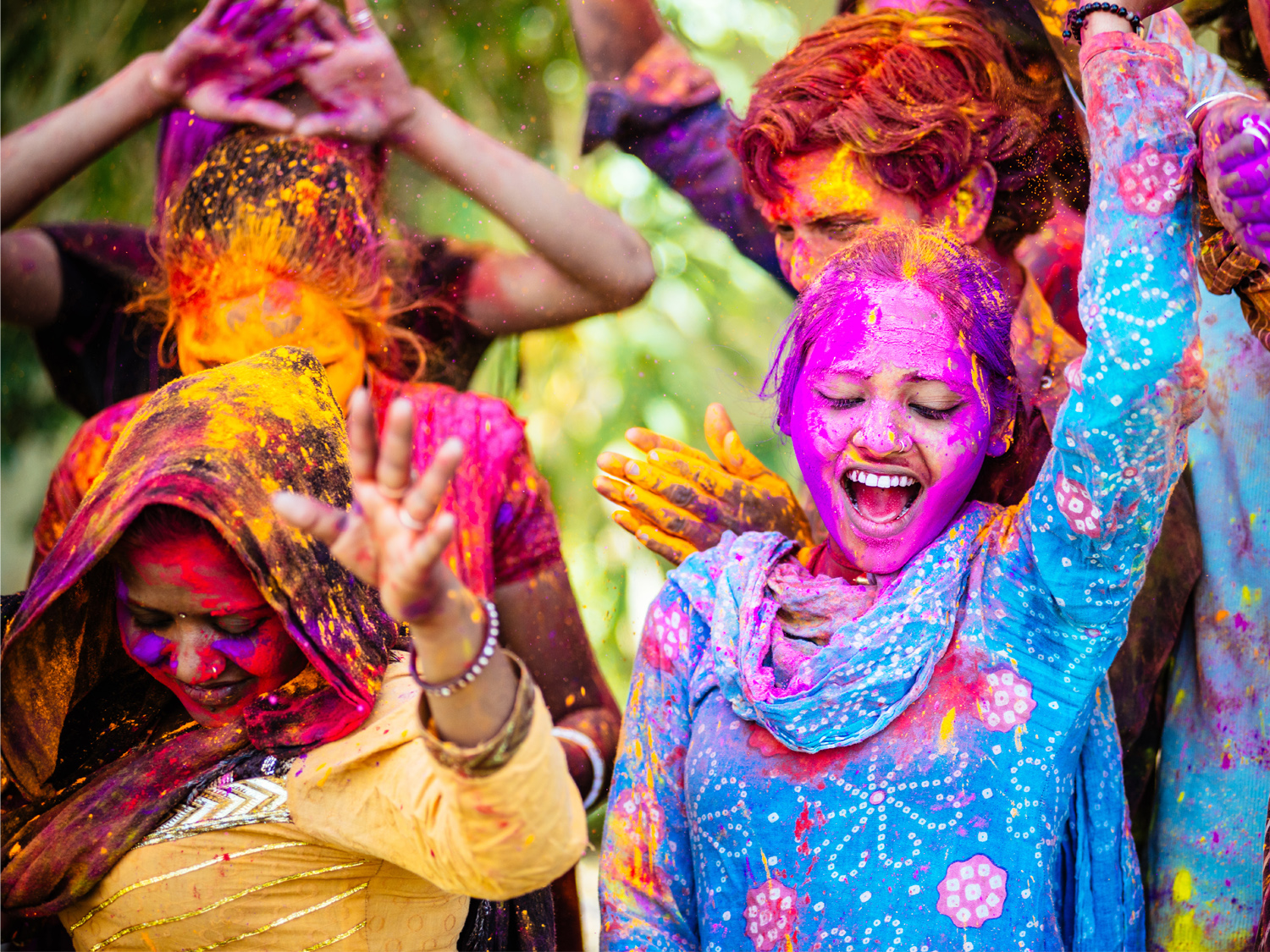
Holi itself (March) is celebrated with genuine intensity across all three cities, with colour-throwing, music and open invitations to join in, particularly in Jaipur's old city and around Delhi's temples.
Diwali (October/November) is arguably the most spectacular time to visit the whole circuit, when Delhi, Agra and Jaipur are lit with diyas and fireworks and markets buzz with shopping and sweets, though it's worth flagging that Agra's Taj Mahal itself can get very busy around these peak festival windows, and some sights or businesses may have adjusted hours.
For travellers happy to trade a little extra crowding for atmosphere, building a trip around one of these festivals adds a layer to the Golden Triangle that a standard itinerary doesn't offer.
Golden Triangle food and cuisine
The cities of the Golden Triangle route are home to some of Indias culinary delicacies. Delhi delivers street food and Mughlai classics at their best: parathas, chaat and kebabs in Chandni Chowk, alongside rich butter chicken and slow-cooked dal at the city's Mughlai institutions. Agra is known for petha, a translucent, syrup-soaked sweet made from ash gourd sold all over the city, plus bedai, a spiced, stuffed fried bread with potato curry, perfect for breakfast before heading to the Taj. Jaipur rounds out the trip with hearty Rajasthani specialities: dal baati churma, gatte ki sabzi, and famous lassi and kachori from the stalls of the old city bazaars.
Money and currency
The currency in India is the Indian Rupee you can exchange your currency for this at money changers and exchange counters that are found at airports and commercial districts, though authorised bureaus or banks tend to be more reliable than independent kiosks.
ATMs are widely available in Delhi, Agra and Jaipur, especially near hotels, airports and tourist areas, and are the most straightforward way to withdraw cash. Card acceptance is solid at hotels and larger restaurants, but markets, street stalls, auto-rickshaws and guides are often cash-only, so it's worth carrying a good stock of small notes for tips, markets and everyday transactions.
Is a tour right for me?
Taking a guided tour of the Golden Triangle is often the smartest way to experience India as it removes the guesswork and safety concerns that can overwhelm a trip. For families with kids, a structured tour means transport, accommodation, and daily pacing are all pre-planned and vetted, reducing the risk of long unplanned waits and confusing travel. For solo female travellers, a tour offers safety with vetted drivers, reputable hotels, group or guide companionship in crowded or unfamiliar places, and someone to navigate cultural norms, which can make a huge difference in confidence and comfort level.
For first-time visitors to India, the Golden Triangle itself (Delhi, Agra, Jaipur) is the ideal starter route being compact, rich in iconic sights, and manageable by road or rail, while a tour adds a knowledgeable local guide who can offer insights into the Golden Triangle as well as ensure travellers see the very best each city offers without the stress of independent planning. In short, a tour trades unpredictability for structure, letting travellers focus on the experience itself rather than the mechanics of getting there.
Sign up to our newsletter for exclusive deals
Exclusive deals, travel tips and inspiration