
On The Go Tours
Our agents are waiting to chat to you...
Are you a Travel Agent or Customer?
Do you have an booking reference?
Glacier Walking in Iceland
Ash-streaked ice, blue winter caves and crevasse fields along the south coast
Glacier Walking in Iceland
Ash-streaked ice, blue winter caves and crevasse fields along the south coast
When do you want to go?
2026
I'm flexible
Passengers
Adults (18+)
Children (0 - 17)
Walking on Iceland's living ice
Glacier walking in Iceland starts with a sound. Crampons bite into old ice with a crunch that carries, and beneath it runs meltwater you cannot see, threading through the glacier on its way down to the sea. This is a country on the edge of the Arctic, with roughly eleven percent of its surface under permanent ice. Most of the walkable tongues spill off a few large ice caps within a few hours of Reykjavik, and you reach them on foot, on crampons, with a guide reading the surface ahead. The ice is never quite the same twice. It cracks, shifts and melts, and it decides the route more than you do.
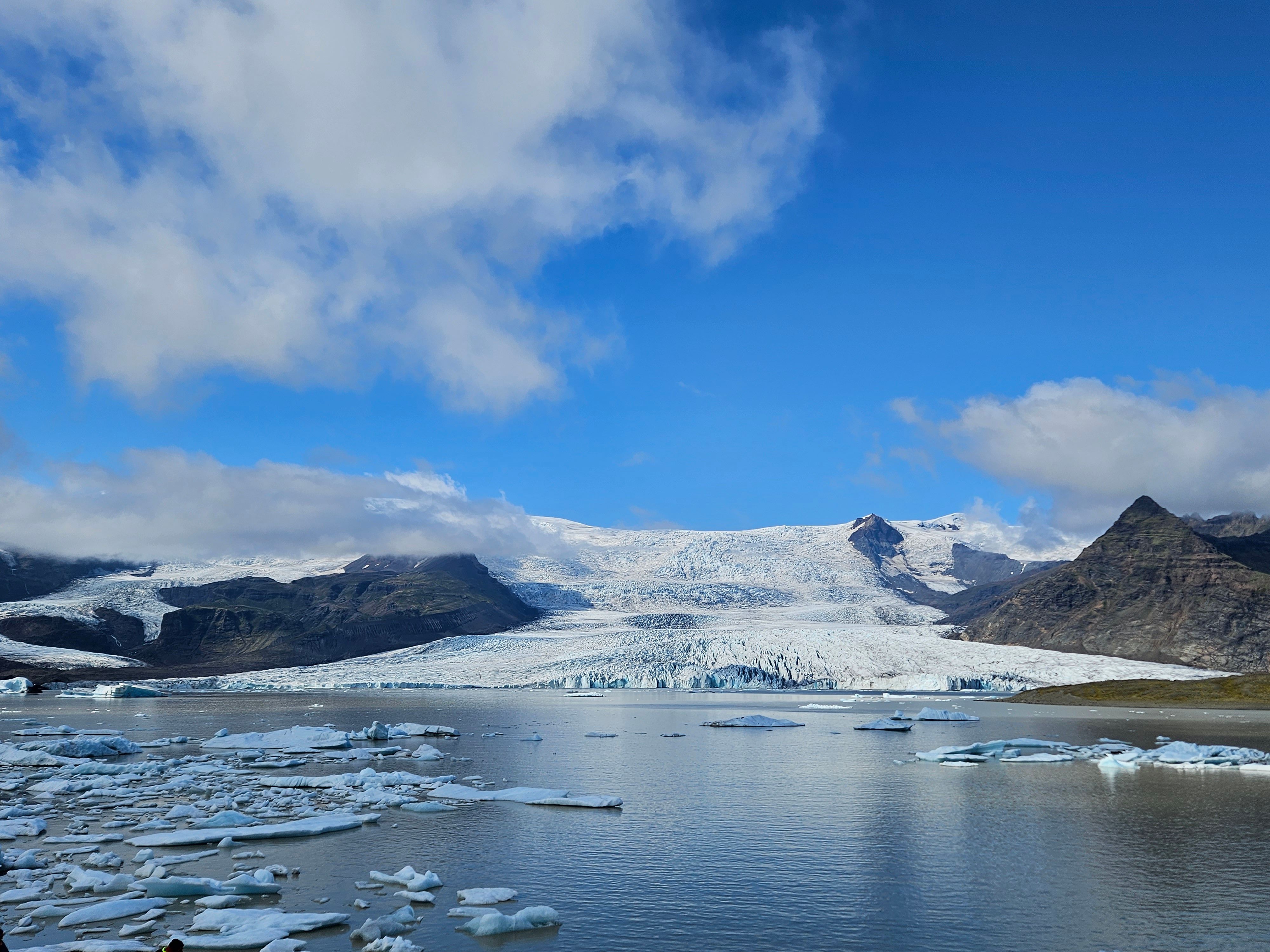
Solheimajokull, the glacier walk closest to the road
Solheimajokull is where most people take their first steps on a glacier in Iceland. It is an outlet tongue of Myrdalsjokull on the south coast, about two and a half hours from Reykjavik, reached by turning off the Ring Road onto a short gravel track. From the car park it is a fifteen to twenty minute walk across black sand to the ice, past a lagoon that did not exist a generation ago.
That lagoon is the first thing a guide will point out. Solheimajokull has pulled back more than two hundred metres in recent decades, and the meltwater pooling at its snout carries a faint sulphur smell from the geothermal ground beneath. Locals call the outflow the stinky river. Further up, small marker posts along the trail record where the snout reached in earlier years, each one now stranded well short of the present ice.
Then the crampons go on. The surface here is not white. It is streaked and ridged with black volcanic ash, some of it from the 2010 Eyjafjallajokull eruption, some far older, laid down over centuries and surfacing now as the ice above it melts away. You walk between low ridges of grit and sudden bands of blue, where the oldest and densest ice, up to around five hundred years old, shows through.
The walking itself is steady rather than strenuous, suitable from about age eight, and the guide keeps the group to firm ground between the crevasses and moulins, the near-vertical shafts where surface water drills straight down into the glacier. Peer into one and the blue deepens until it goes black
The blue ice caves under Vatnajokull in winter
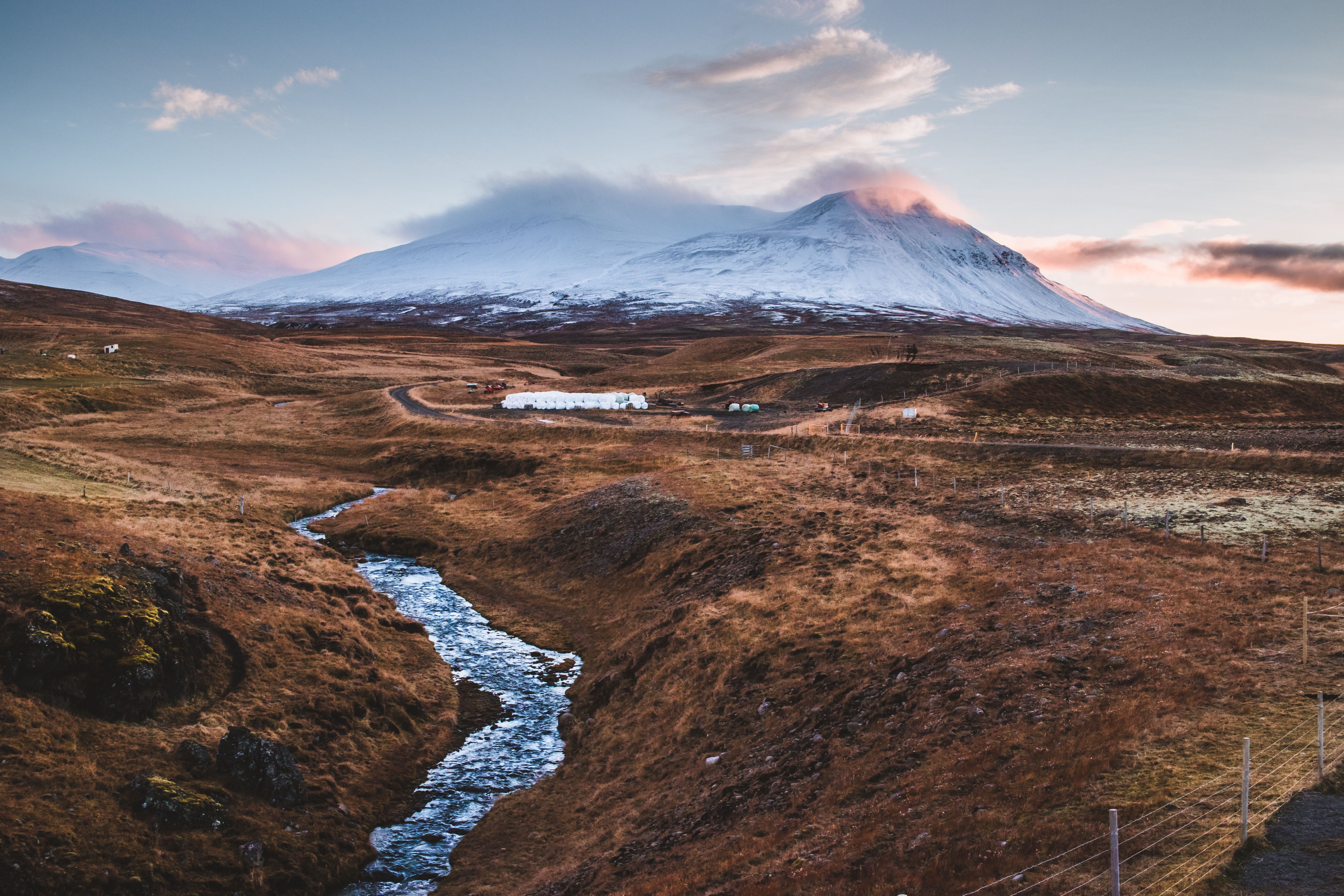
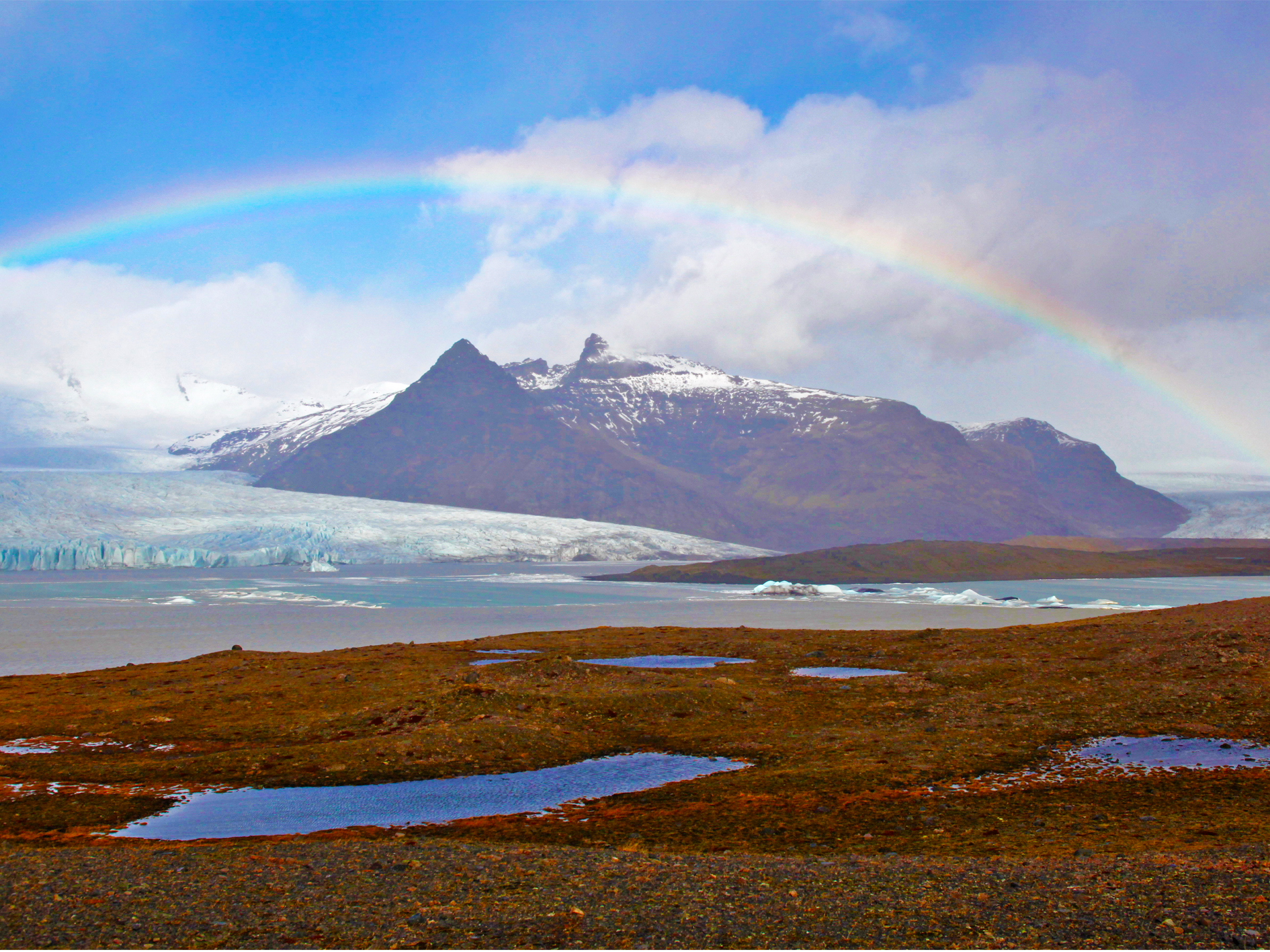
In winter, the ice worth seeking out is not on top of the glacier but inside it. Each summer, meltwater bores tunnels and chambers deep into Vatnajokull, Europe's largest ice cap. Each winter, when the cold locks everything in place, guides go looking for the caves the water has left behind.
The most reliable of these open up in Breidamerkurjokull, the southeastern tongue that feeds the icebergs of Jokulsarlon lagoon. Getting there means meeting a guide near the lagoon, about four and a half hours east of Reykjavik, then climbing into a modified super jeep for the last rough stretch to the glacier edge. From there it is a short walk on crampons to the mouth of the cave.
Inside, the light changes. Dense glacier ice absorbs almost every colour except blue, so the walls glow a deep, saturated blue that seems to come from within the ice rather than from outside. Run a hand across it and the surface is smooth where meltwater polished it, ribbed where the flow slowed. Bands of black ash thread through some caves, frozen mid-drift. It is colder in here than outside, and quiet enough that you can hear the odd drip of the glacier still working somewhere overhead.
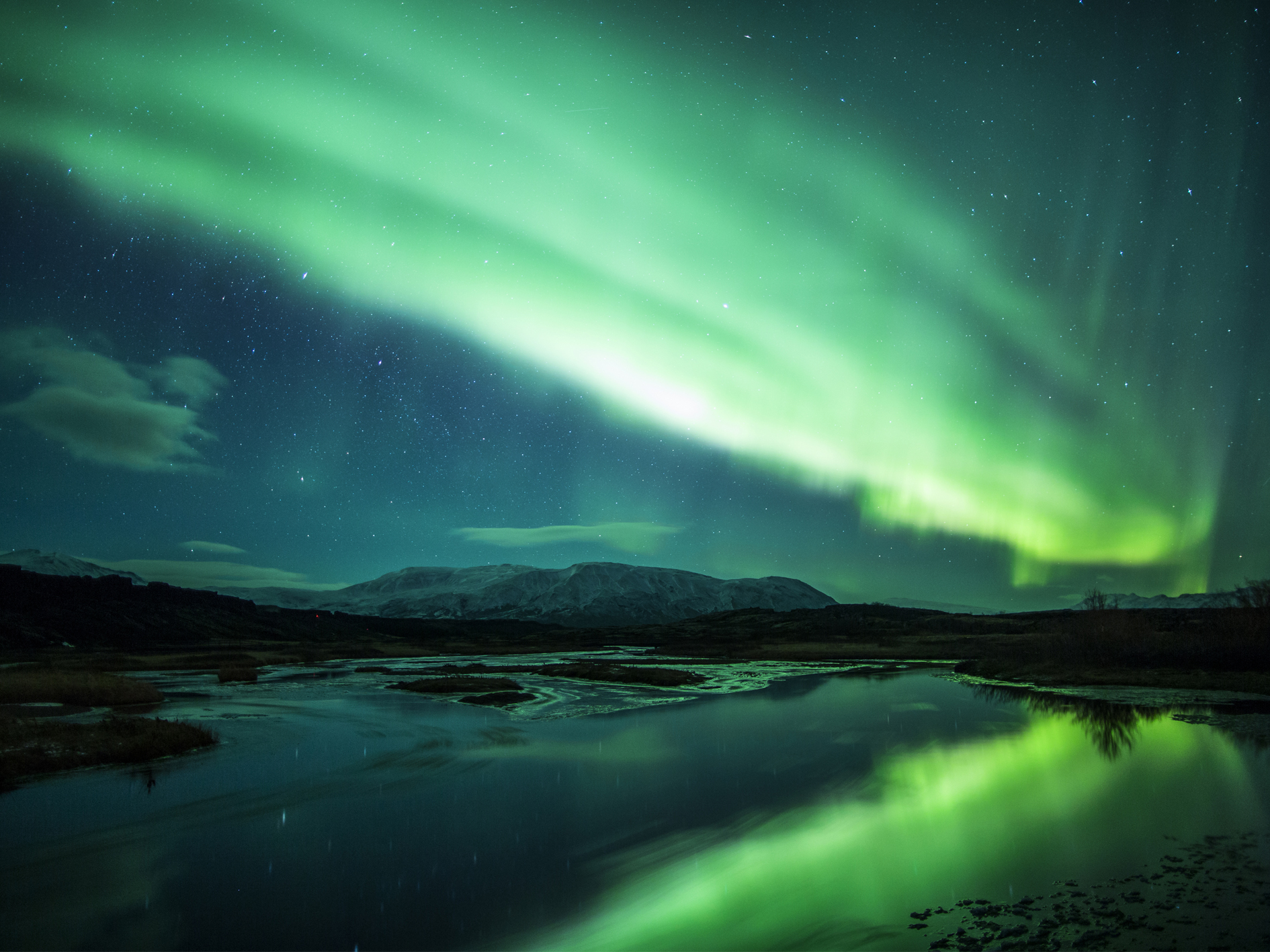
No two winters produce the same cave. The names you see, crystal cave, sapphire cave, describe the quality of the ice, not a fixed place, because the location shifts every season and guides scout fresh ones each autumn. The season runs roughly from mid November to late March. By late March the thaw starts to make the roofs unstable and the caves close. This is weather-dependent in a way the summer walks are not. Tours get cancelled when conditions turn, so a clear morning is worth grabbing when you get one. The upside of the dark months is that cave season lines up almost exactly with the aurora, so the same trip can end with the sky doing something of its own.
Into the crevasse fields of Falljokull at Skaftafell
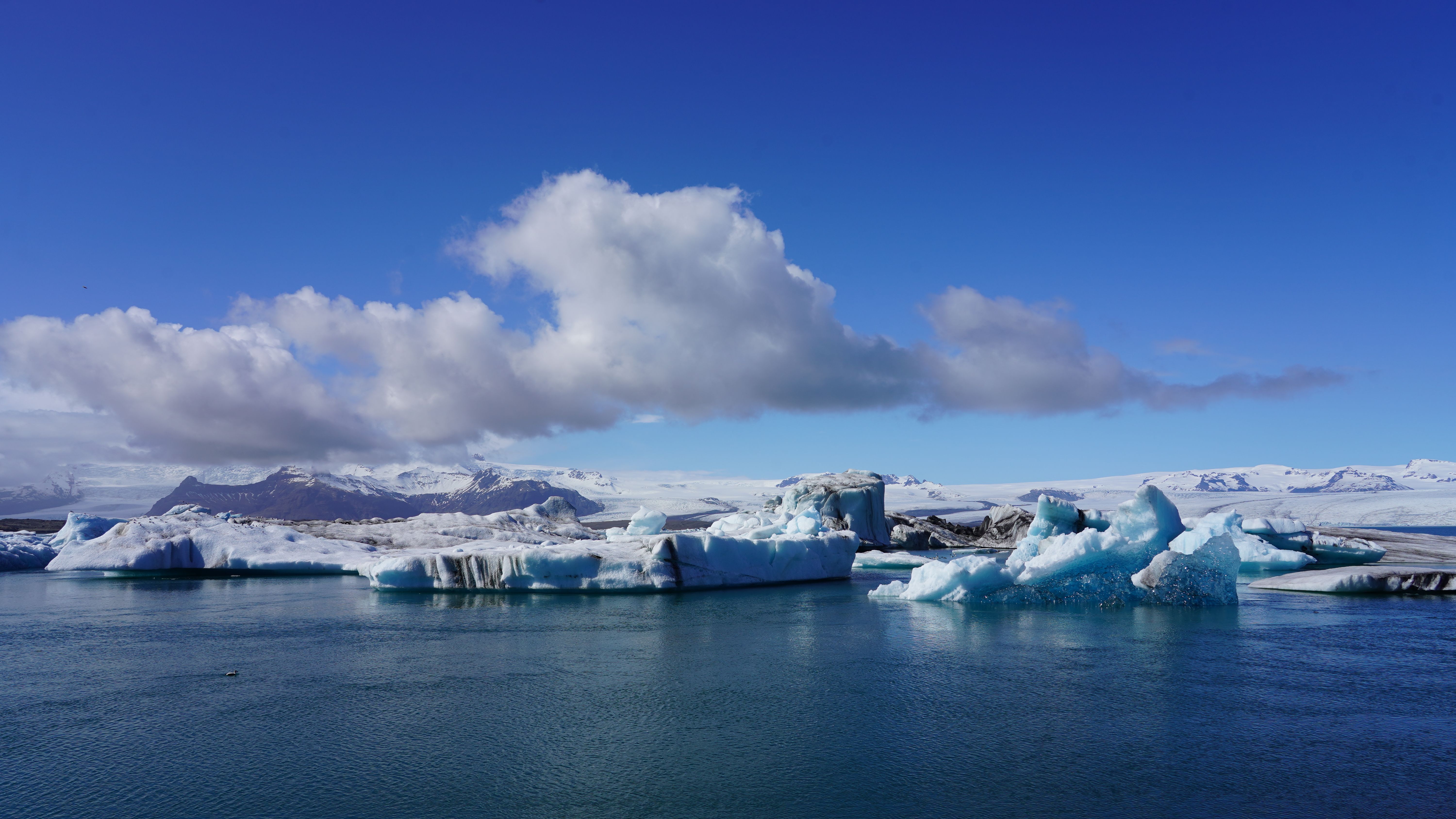
For a walk that goes deeper into the ice, the outlet glaciers at Skaftafell reward the extra drive. Skaftafell sits inside Vatnajokull National Park, on the southern rim of the ice cap, about five hours east of Reykjavik and a little beyond the ice caves at Jokulsarlon. Guided hikes here start at the visitor centre before a short transfer and a half-hour approach on foot.
The tongue most walks head for is Falljokull, whose name means the falling glacier. It tumbles off the ice cap in a frozen icefall, broken into blocks and towers where the ice has cracked apart under its own weight coming downhill. Walking it means threading a route between crevasses, some narrow enough to step over, others dropping away into corridors of blue you would not want to test.
This is where a glacier stops being scenery and starts being terrain. The guide picks the line, tests the ground and sets the pace, and the surface underfoot shifts from grippy grey ice to smooth blue within a few strides. Above you sit the peaks of Oraefajokull, the volcano that carries Hvannadalshnukur, the highest point in Iceland. Fire and ice is a tired phrase, but standing on a glacier that flows off a volcano makes the sense of it plain.
Conditions decide everything. Some days the walks run on Falljokull, other days on neighbouring Svinafellsjokull, depending on where the ice is safe and stable that week. Wind and rain can close the whole area at short notice. On the walk in, seals sometimes appear in the meltwater channels below the ice, hauled out on the grey banks where the glacier meets the moraine. If you only have the legs and the time for one proper glacier walk in Iceland, this is the one that leaves you understanding what a glacier actually is. A river of ice, moving too slowly to watch but fast enough to reshape the valley it grinds through.
You do not walk an Icelandic glacier alone
Every walk described here runs as a guided trip, since crampons, safety gear and a guide who can read the current state of the ice are not optional on a glacier. Group walks suit most reasonable fitness levels, while ice climbing and longer crevasse routes ask for more. Winter dates and the ice cave season fill up early, so it is worth securing a place ahead of your trip rather than turning up on the day.

Frequently asked questions
Do you need a guide to go glacier walking in Iceland?
Yes. Glacier walking in Iceland is only safe with a certified guide, because crevasses and moulins are often hidden under snow or a thin crust of ice. Guides supply the crampons, helmet and ice axe, check the route for stability, and keep the group on firm ground. Walking onto any glacier alone is genuinely dangerous and strongly advised against.
Which glacier is easiest to walk on in Iceland?
Solheimajokull on the south coast is the most accessible, which makes it the usual choice for a first glacier walk. It sits about two and a half hours from Reykjavik, just off the Ring Road, with a short walk from the car park to the ice. The standard hikes are graded easy to moderate and suit most reasonably fit people from around age eight.
When is ice cave season in Iceland?
Natural blue ice caves are open roughly from mid November to late March. They form under glaciers such as Vatnajokull when summer meltwater carves tunnels that refreeze over winter, and they close in spring once the thaw makes the roofs unstable. Because the caves shift each year, guides scout new ones every autumn.
Can beginners go glacier walking in Iceland?
Yes. Many glacier walks in Iceland are graded easy to moderate and need no previous experience, only reasonable fitness and a willingness to walk on uneven ice. Solheimajokull and the Skaftafell tongues both offer beginner-friendly routes with a guide setting the pace. More demanding options such as ice climbing and longer crevasse routes exist for anyone who wants them.