On The Go Tours
Our agents are waiting to chat to you...
Are you a Travel Agent or Customer?
Do you have an booking reference?
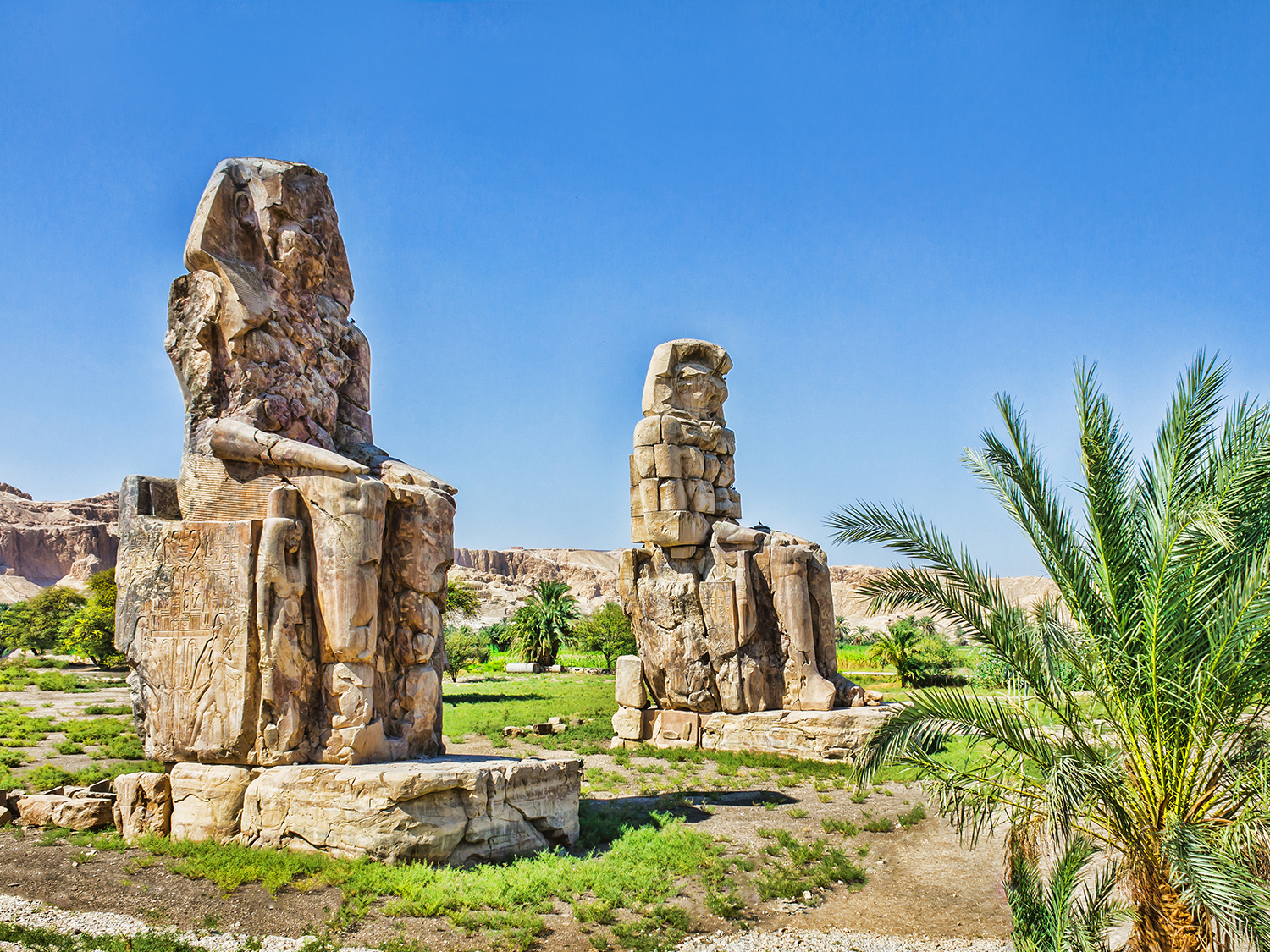
Egypt Travel Tips and Useful InfoEssential Tips and Insights for an Unforgettable Journey Through Egypt
When do you want to go?
2026
I'm flexible
Passengers
Adults (18+)
Children (0 - 17)
Planning a trip to Egypt?
We're sure you'll have a fabulous trip, and to help make the process even smoother, we've put together this handy guide. This page is full of tips to help you prepare for your adventure. There's information regarding vaccinations, what to expect from the food and much more.
Here are some common questions that travellers have:
What vaccinations do I need for Egypt?
You should seek medical advice from your local health practitioner before travelling to Egypt and ensure that you receive all of the appropriate vaccinations. As a guide, Tetanus, Diphtheria, Typhoid, Hepatitis A and Rabies are strongly recommended. For more information on health precautions for Egypt, check out the NHS Fit to Travel page or the CDC Traveler's Health page.
Is it safe to drink tap water in Egypt?
Tap water in Egypt is actually safe to drink but as it is heavily chlorinated we do not recommend that you do as it causes stomach upsets. Bottled mineral water is easily available from hotels, restaurants and shops at low cost. The tap water in Egypt is fine for brushing your teeth and showering.
What's the food like in Egypt?
With succulent grilled meats, fish and vegetables, Egyptian cuisine has something to appeal to most eaters, though in order to avoid stomach troubles while on holiday, it's worth taking a few precautions. As tap water is highly chlorinated it's best to avoid salads unless dining in upmarket restaurants, hotels and cruise boats. Any food you do eat should be piping hot to ensure it's been cooked properly - avoid food that looks like it has been sitting around for a while. Try taking a probiotic a few weeks before and during your holiday to build your own natural defence against bugs that may come into contact with your stomach.
Egyptian cuisine is not unlike the cuisine of Turkey, Jordan and other Middle Eastern countries. The basic staple centres on pulses - fuul medames (fava beans often served with vegetables and boiled egg) and ta'amiyya (chickpea patties), though visitors to Egypt are more likely to encounter a delicious spread of meats accompanied by salads, rice, seasoned vegetables, and mezzes. Houmous and other yoghurt-based dips, coupled with fresh pitta, schwarma (similar to a Turkish doner kebab), kofta (a skewered spiced meat dish) and fiteer (a kind of pizza) are other popular dishes.
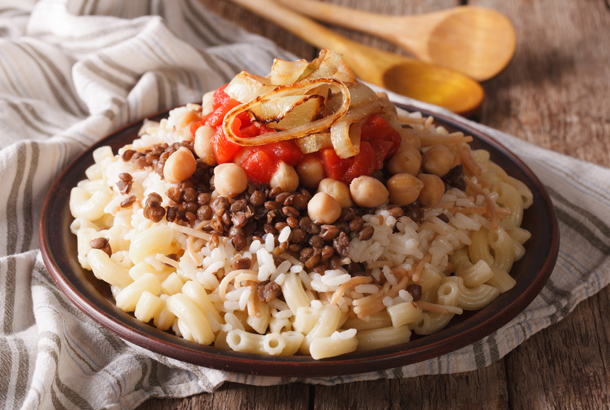
The lunchtime bargain has to be kosheri, which is a curious but delicious mix of noodles, rice, lentils, fried onion and spicy sauce. It's very tasty and exceedingly cheap. Bread is a staple of Egyptian cuisine and you'll be offered a variety of some sort with every meal. Vegetarians should find plenty of options with stuffed peppers, grilled aubergine and baked squash popular meat-free dishes in Egypt.
Exotic juices freshly squeezed from the fruits of mango, guava and other seasonal varieties are also widely available, as is fresh fruit. Alcohol is not readily available as Egypt is a predominantly Islamic country. Despite this, the major hotel chains usually offer a well-stocked bar for guests to use.
Is it standard to tip in Egypt?
The word 'backsheesh' can refer to a tip or a bribe and it is a word you are likely to hear when travelling around Egypt, as tipping is a natural part of daily life. Anyone who provides you with a service is likely to expect a tip - think waiters, drivers, security guards, porters and the like. A rough guide would be to tip restaurant staff with 10% (assuming a service charge has not already been added), housekeeping staff at hotels around USD $2 per day, taxi drivers around $1 and cruise staff $4-5 per day to be divided between the on-board crew. When delivering your backsheesh, fold the notes in your hands and pass the money in the form of a handshake.
Our Tipping Made Easy policy takes the hassle out of tipping while on tour with a nominal pre-determined amount collected from all tour participants on the morning of day 2 in local currency. This tipping kitty is then divided among bellhops, luggage handlers, local guides and other support staff that assist throughout the tour. The amounts collected for tips per person are as listed in your tour Trip Notes for your convenience:
Please note that our Tipping Made Easy amount does not include a tip to your group tour leader, where we suggest an amount of USD $3-$6 per day of your tour. Naturally, though, the amount is up to you. If travelling on a group tour with less than 6 participants or on a tailor-made holiday, in place of Tipping Made Easy we recommend the following amounts per person per day be allocated to cover tips paid directly by you to bellhops, luggage handlers, your driver and local guides: USD $10 if the day includes a local guide and sightseeing and USD $5 if the day does not include a guide or sightseeing.
Is bargaining common in Egypt?
Bargaining and haggling over prices is a fundamental part of shopping in the markets and bazaars of Egypt. Vendors will often inflate their prices considerably so that after a back-and-forth exchange of numbers, a final price will be agreed on that suits both parties. The key is to go in low and work your way up but always have a maximum amount in mind. It's a good idea to suss out prices in the fixed price souvenir stores that often accompany many of the popular tourist sites so that you know what you should be paying for goods.
What to shop for in Egypt?
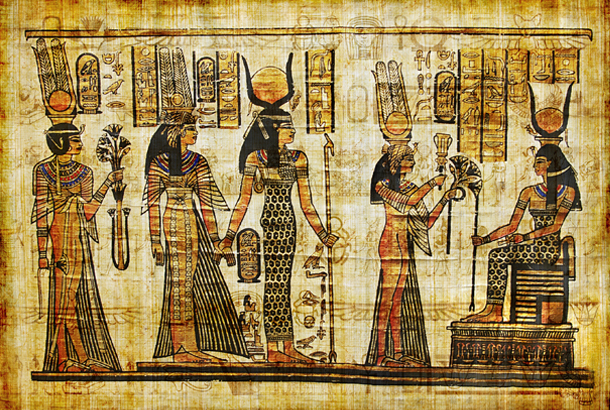
Egypt is a virtual Aladdin’s Cave. While Cairo's Khan al-Khalili bazaar is cavernous and full of unusual and everyday objects, smaller souks and bazaars abound in other towns and cities too. Top buys include cotton shirts, brass wear, leatherwear, mosaic lamps and mirrors, backgammon boards, hand-crafted sheesha pipes, Pharaonic objects fashioned in marble and alabaster, Egyptian cotton sheets, clothing and, of course, authentic papyrus.
Is it safe to visit Egypt as a solo woman?
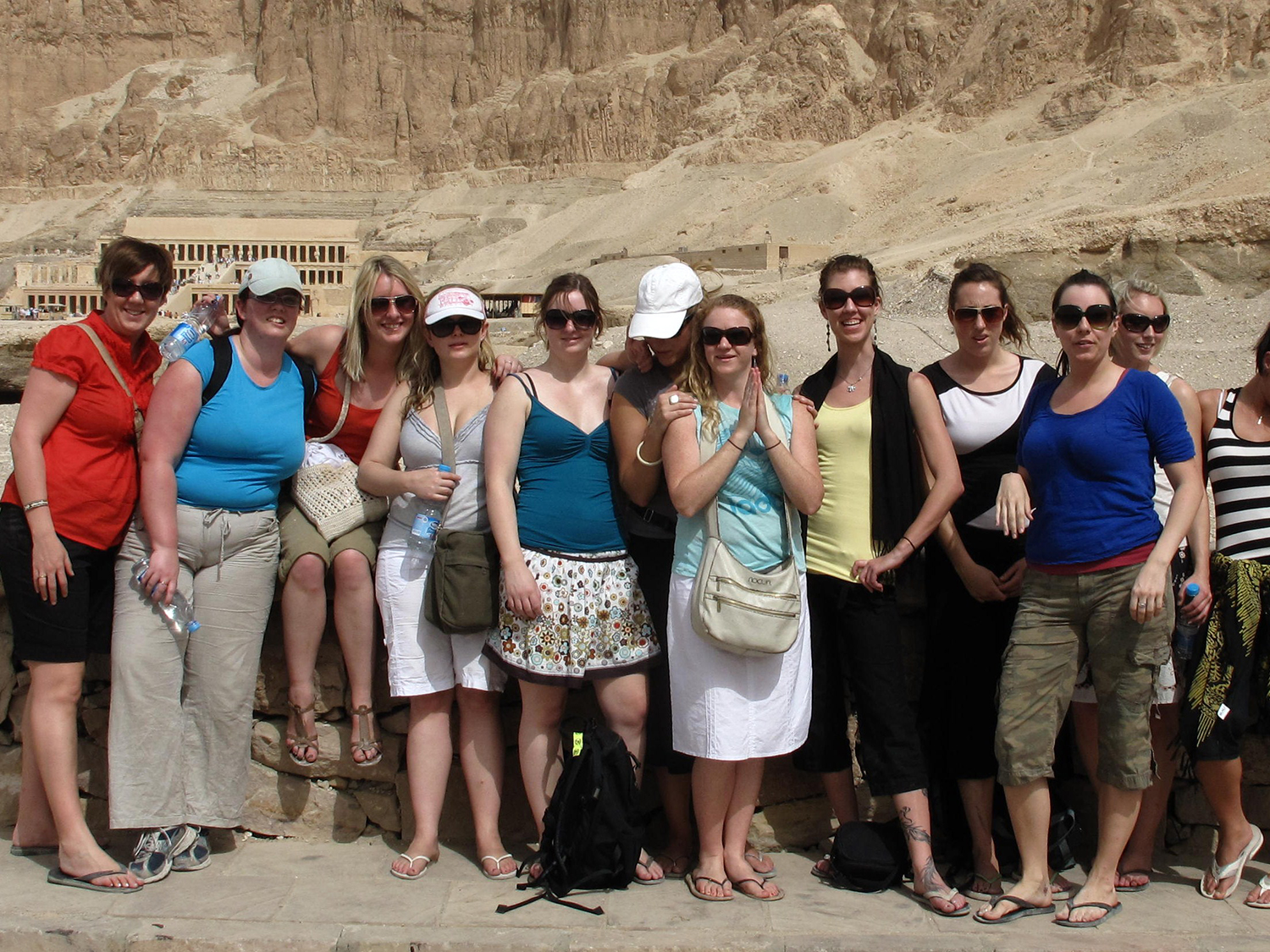
The cultural attitude towards women in Egypt is different to that of the West so travelling as a solo female does require consideration to ensure a more comfortable travelling experience. The best way you can avoid unwanted attention is to dress conservatively at all times and this means keeping shoulders and upper arms, legs and chest covered with loose-fitting and opaque clothing. The hot Egyptian sun might tempt you to do the complete opposite in order to perfect your tan but you'll demonstrate respect for the local culture if you make an effort to dress more appropriately. In the Red Sea resorts the Egyptian staff are more familiar with Western culture and therefore a more relaxed attitude to clothing is generally not a problem.
Like any large city anywhere in the world, it's advisable to avoid walking the streets of downtown Cairo at night. If you do receive any unwanted attention, it is best to appear standoffish as any friendliness can be misconstrued. Egypt is by no means a dangerous place for female visitors - Egyptians are hospitable, friendly and humorous people and are likely to leave a lasting, positive impression of their country. It is sensible, however, to be cautious and respectful of the local customs in order to make the most of your time in this incredible country.
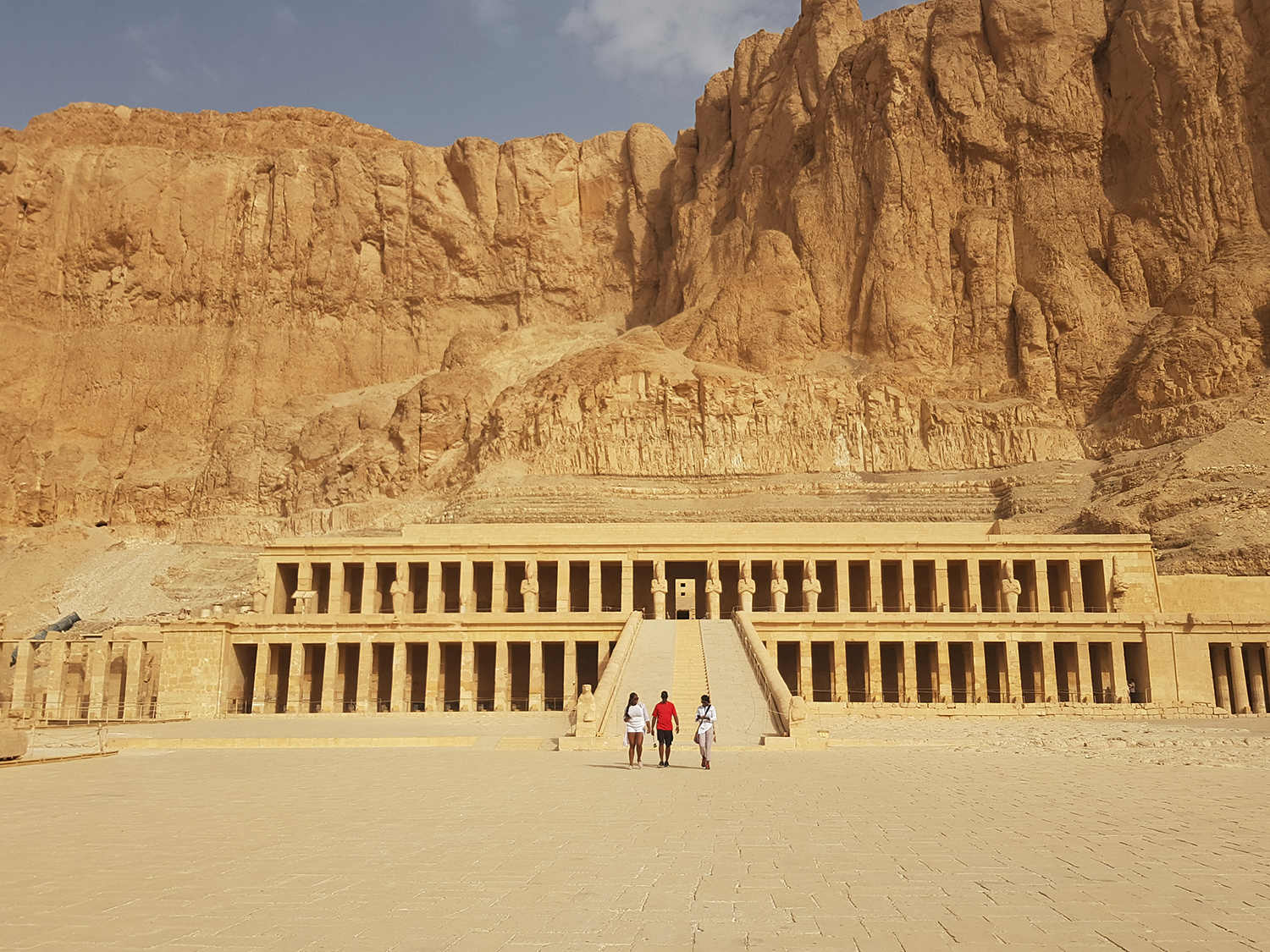
Cultural Hints and Etiquette
It's not just women that need to consider how they dress when visiting Egypt - it's also best for men to wear trousers and keep their shoulders covered, keeping in line with how Egyptian men dress. Shorts are only acceptable at beach resorts but it's surprising how many visitors to Egypt ignore this. When visiting a mosque both men and women will need to be completely covered with women also required to wear a headscarf. Remember to remove shoes before entering.
Displays of physical affection should not be made in public. It's common to see Egyptian men greet one another with hugs and kisses but members of the opposite sex should refrain from any such contact outside the privacy of their hotel room.
When visiting bazaars, markets and shops, you may encounter persistent offers in an attempt to sell you something. The best way to respond is by being polite and when refusing an offer do so with your right hand over your heart - this is seen as a sign of humbleness and gratitude in Egypt and an extremely polite way of declining any offer.
In Egypt the left hand is considered unclean as it's used to remove shoes and wipe your bottom after going to the toilet so to avoid any embarrassment around the dinner table, use your right hand for eating and when presenting gifts or money to anyone.
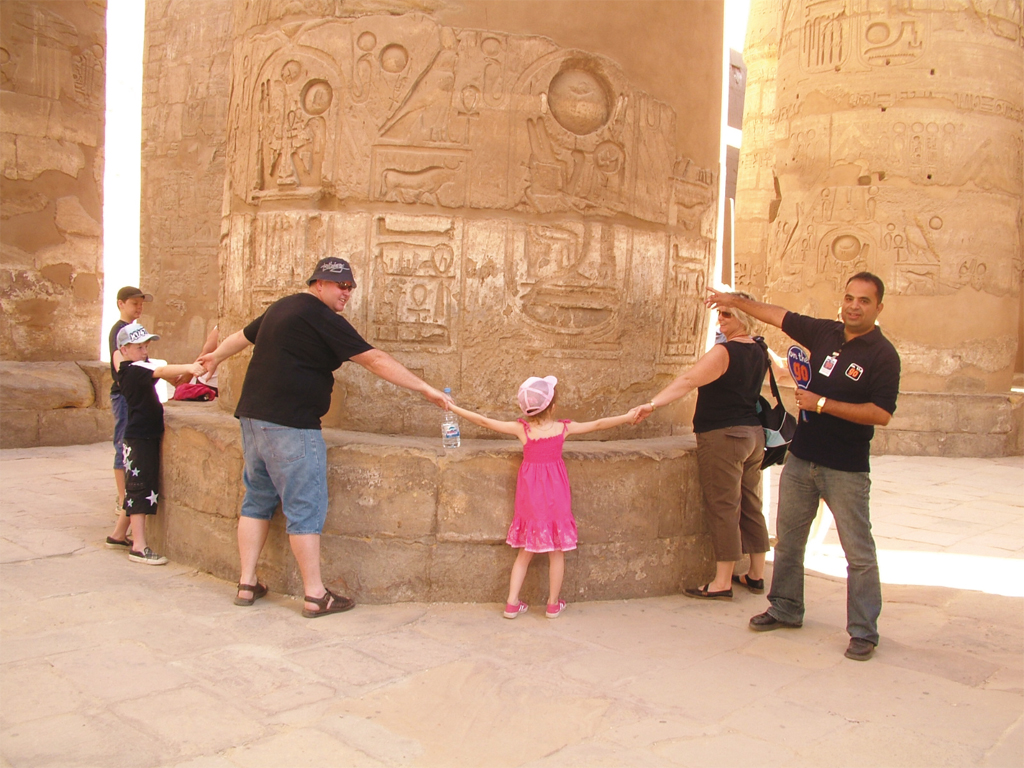
Is Egypt a suitable family holiday destination?
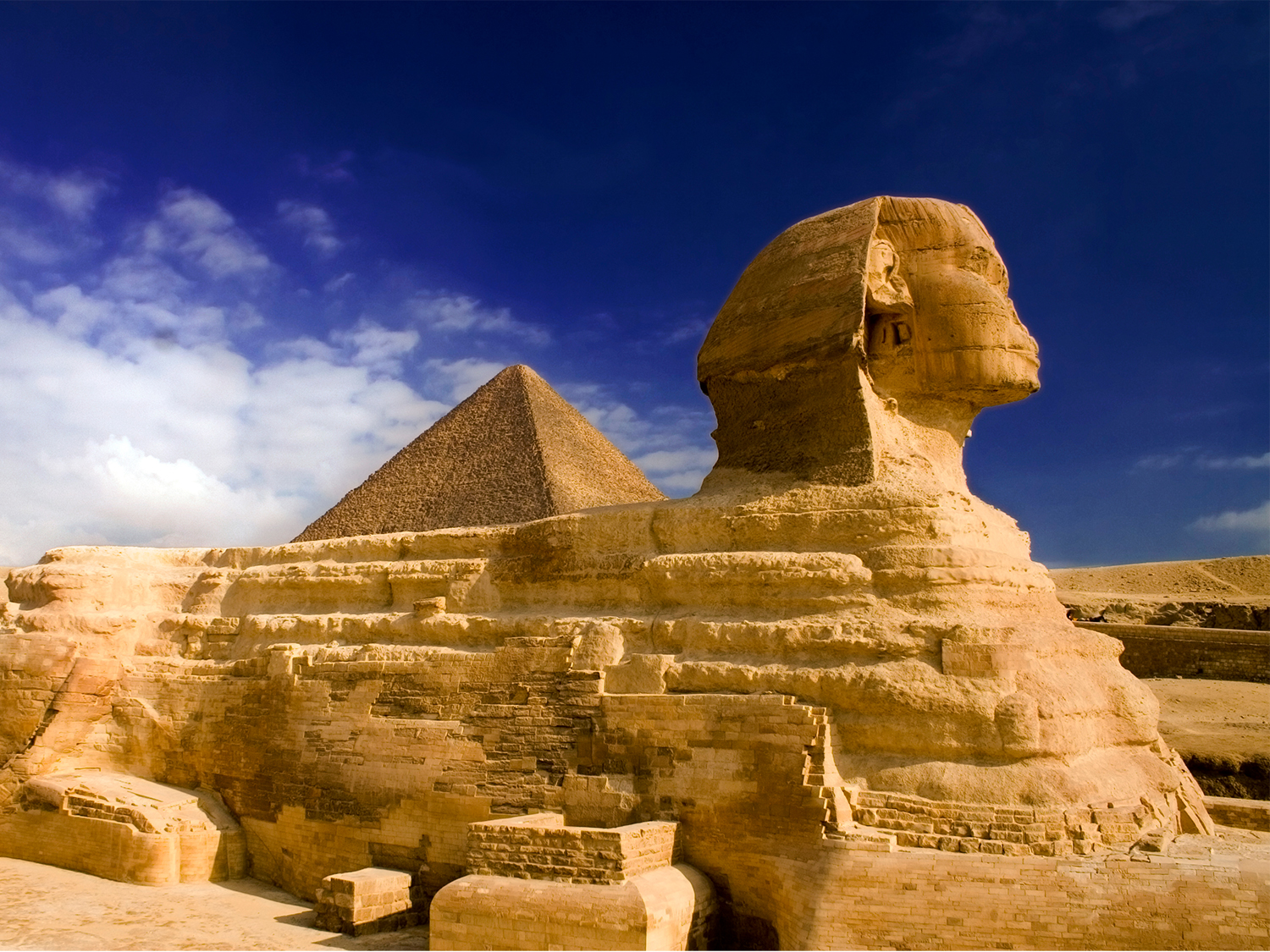
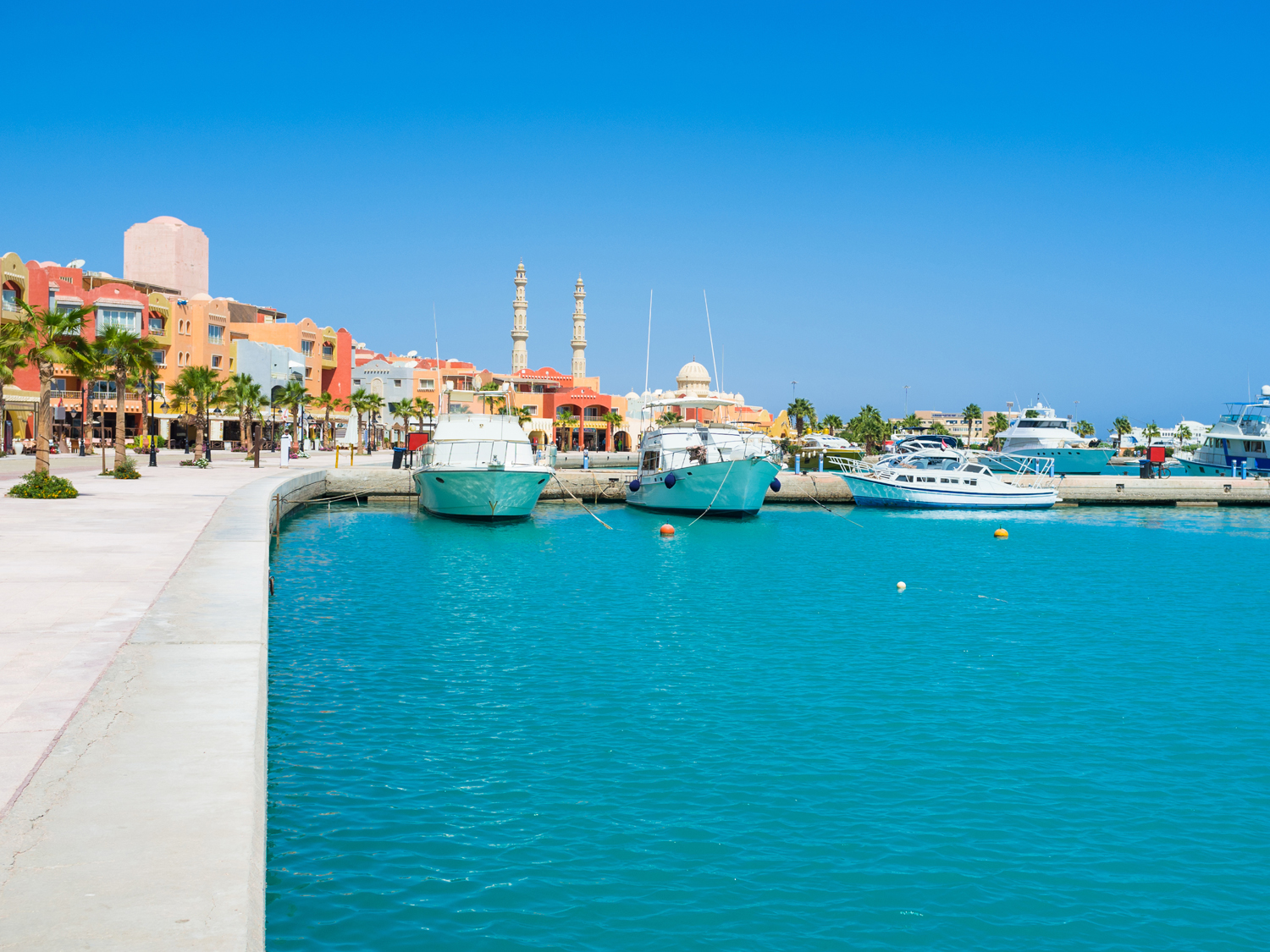
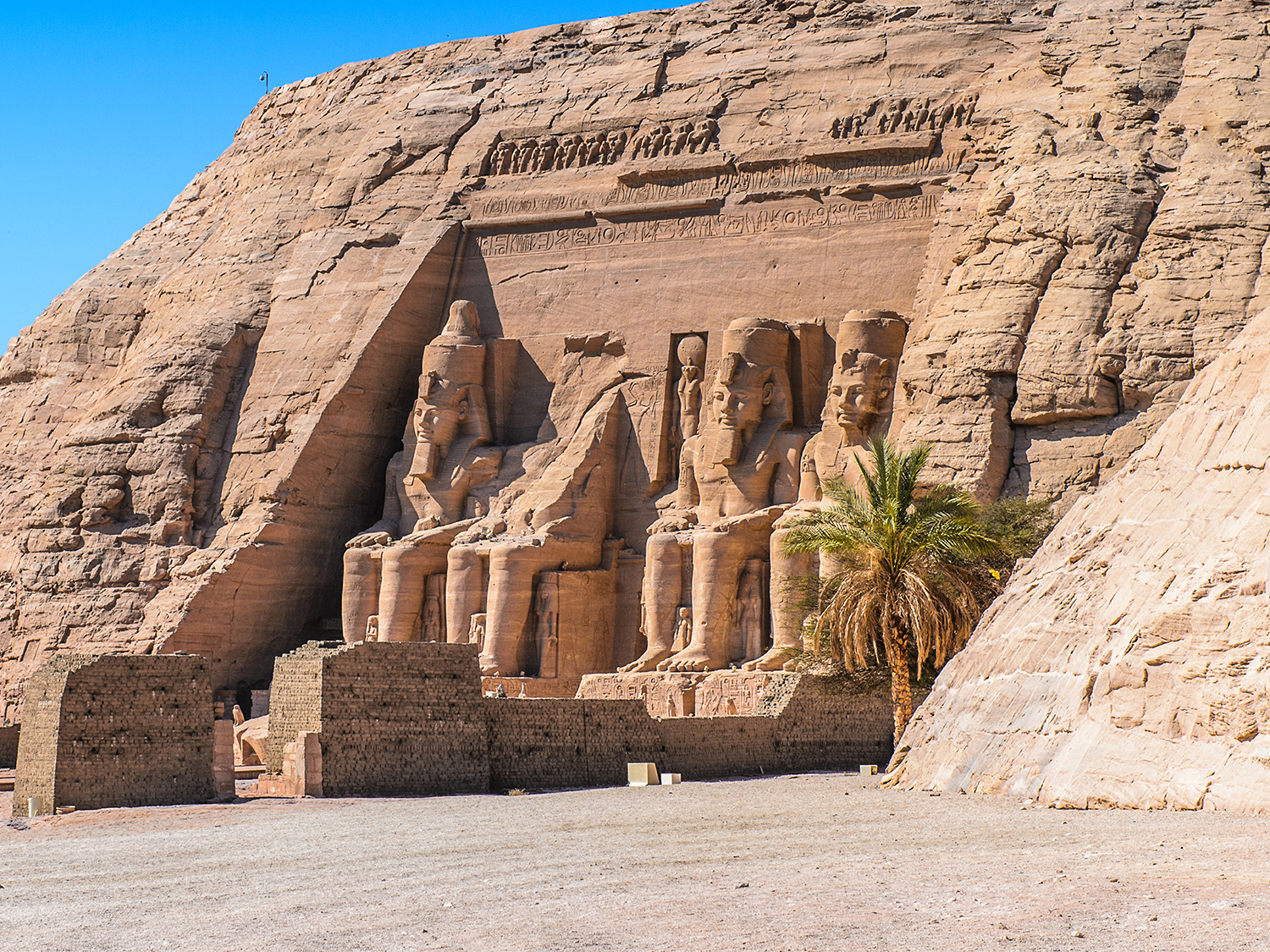
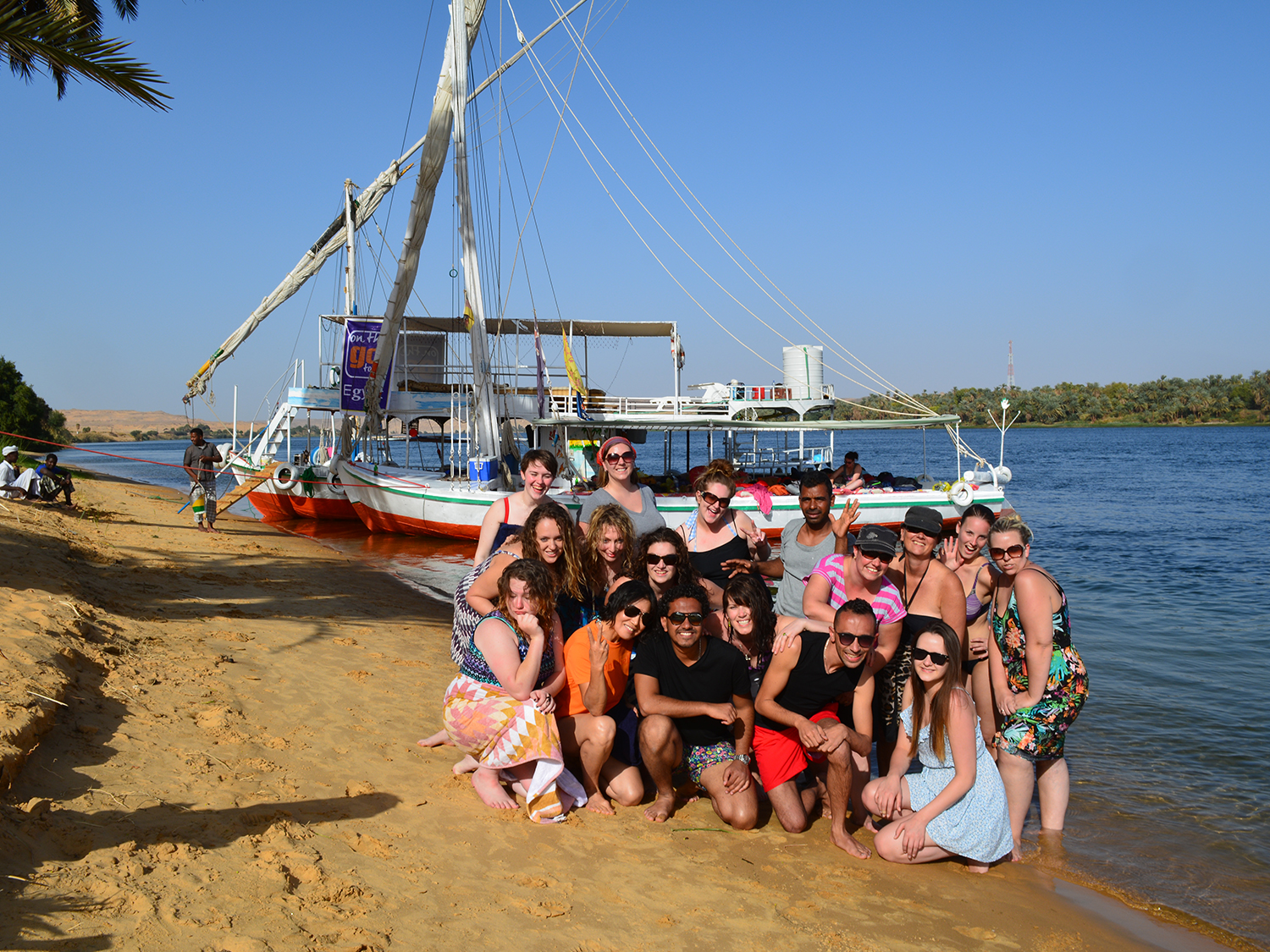
Definitely! Young and old alike are sure to be wowed by Egypt's legendary treasures, from the Pyramids to Karnak and the Valley of the Kings. Activities such as camel rides and felucca cruising on the Nile are also perfect for the whole family. Along the Red Sea there are plenty of family-friendly resorts with dedicated kids' play areas, swimming pools and activities. This means parents can relax while the children are entertained and looked after.
On our group tours we welcome young adults aged between 16-18 years accompanied by a parent/guardian. If your chosen tour includes nights on board a felucca, those aged between 16-18 years are required to upgrade to our Nile Cruiser for this section of the holiday. Our private journeys and Tailor-made holidays cater for all travellers of any age.
What is the duty free allowance for Egypt?
The following items may be imported into Egypt by travellers over 18 without incurring customs duty:
200 cigarettes or 25 cigars or 200g of tobacco
1L of alcoholic beverages
What is the currency in Egypt?
The currency of Egypt is the Egyptian Pound (LE), which is divided into 100 piastres. Banknotes come in denominations of 5, 10, 20, 50, 100 and 200.
Pound Sterling, US Dollars, Euro and other major currencies can be exchanged in Egypt. Exchange facilities are available at various bureau de changes and all major towns have ATMs. Check OANDA for the latest exchange rates. It's advisable to request bank notes in smaller denominations, as it can sometimes be hard to get change from large notes and smaller notes are handy for smaller purchases and gratuities. Credit and debit cards are widely accepted in the government-run stores, most hotels and Red Sea resorts.
Traveller's Cheques are not recommended as they're often difficult to exchange and incur high fees.
What do things cost in Egypt?
Egypt is a very price-competitive destination, so much so in fact that in 2015 it was ranked the world's second cheapest country for international visitors based on hotel prices, taxes and purchasing power parity. Issued by the World Economic Forum, the annual Travel and Tourism Competitiveness Report highlights that Egypt is a bargain travel option, especially for those coming from the West. In terms of eating out, you can expect to pay around $10 per person for an inexpensive restaurant meal, though of course you will pay more depending on how many courses you have! A litre bottle of water will cost around $1.20, whilst a bottle of beer tends to be priced at around $4, though it is likely to be a bit more expensive in the hotels.
When travelling on a group tour, which includes your accommodation, sightseeing, breakfast and transportation, we recommend budgeting between USD $40-50 per person per day to cover additional meals, snacks, drinks, souvenir and odd purchases.
Additional Questions
What sort of plugs do I need for Egypt and what is the voltage?
Standard voltage is 220 volts. Primary sockets require the European, 2-pronged variety. We recommend that you pack a universal travel adaptor. You will need a voltage converter and plug adaptor in order to use U.S. appliances.
Is WiFi widely available in Egypt?
Getting online in Egypt is relatively easy. In the larger cities, most cafes and restaurants offer free wi-fi. All four and five star hotels in Egypt must provide internet access. Often it will be free WiFi access in the hotel lobby, and free or chargeable WiFi, or dial-up access in your hotel room. So don't worry, you'll be able to post that perfect Instagram shot in front of the Pyramids with no trouble whatsoever!
What time zone is Egypt on?
Egypt is 2 hours ahead of Greenwich Mean Time (GMT).
Emergency Resources for Egypt
The local government and police officials provide comprehensive help to tourists visiting the nation. Here are some of the crucial emergency hotline numbers that any traveler visiting the nation ought to know:
Ambulance: 123
Traffic Police: 128
Emergency Police: 122
Tourist Police: 126
Fire Department: 180
Electricity Emergency: 121
Travelling during public holidays
Ramadan - what to expect
One of the pillars of Islam requires Muslims to fast during the Holy Month of Ramadan, the month which commemorates the divine gift of the Koran to the Prophet Mohammed. From sunrise to sunset, those who fast must refrain from eating, drinking and smoking. There are good and bad aspects of visiting the country during Ramadan. On the bright side, people hit the streets after the sunset "breakfast" ready to sing, play cards, enjoy some of the special musical and theatrical entertainments and just generally have fun. Shops re-open until the early hours, and many hotels create special Ramadan Tents where they offer traditional holiday snacks and drinks, live entertainment, water pipes, backgammon boards, card games and the like.
The other side of the coin is that many aspects of "business as usual" don't apply during the month. Banks and offices all have shorter working hours, some restaurants close for the entire month, and about an hour before sunset the roads and streets will be full of people racing to buy last-minute supplies and get home in time for Al Iftar(the evening meal). If you plan to visit during Ramadan, you should understand that the touring day will be shortened. There will still be plenty of restaurants open and serving lunch, especially in the tourist areas, but it would be very bad manners to eat, drink or smoke in the sight of passers-by.
Do remember, if you visit during Ramadan, that your dress should be a bit more circumspect than usual. Some women who do not normally cover their heads do so during Ramadan, and often feel that make-up, perfume and other "vanities of the flesh" should be given up during this month.
The precise dates of Ramadan vary from year to year. Ramadan lasts for about a month and is dependent on the lunar cycle and the Islamic lunar calendar.
What is train travel in Egypt like?
Many of our holidays include an overnight sleeper train journey from Cairo - Luxor or Aswan and vice versa. The sleeper train is the highest class of rail travel available in Egypt, though by western standards it would be considered of a moderate standard. Cabins on board the sleeper train are equipped with two bunk beds and fresh linen is supplied. There is also a washbasin and towel and the cabin door can be locked from the inside. Wash rooms including western toilets can be found at the end of each carriage. Dinner and breakfast (of a basic standard) are included within the fare. There is a bar carriage located toward the centre of the train where hot and cold beverages can be purchased, and sometimes alcohol.
We always request that our cabins are side by side, allowing the group to socialise before turning in for the night, though ultimately the location of our cabins and whether they are together rests with the rail authority.
Highlights of Egypt
Explore the wonders of Egypt. Our multi-day tours are filled with unforgettable experiences and must-see sights.